

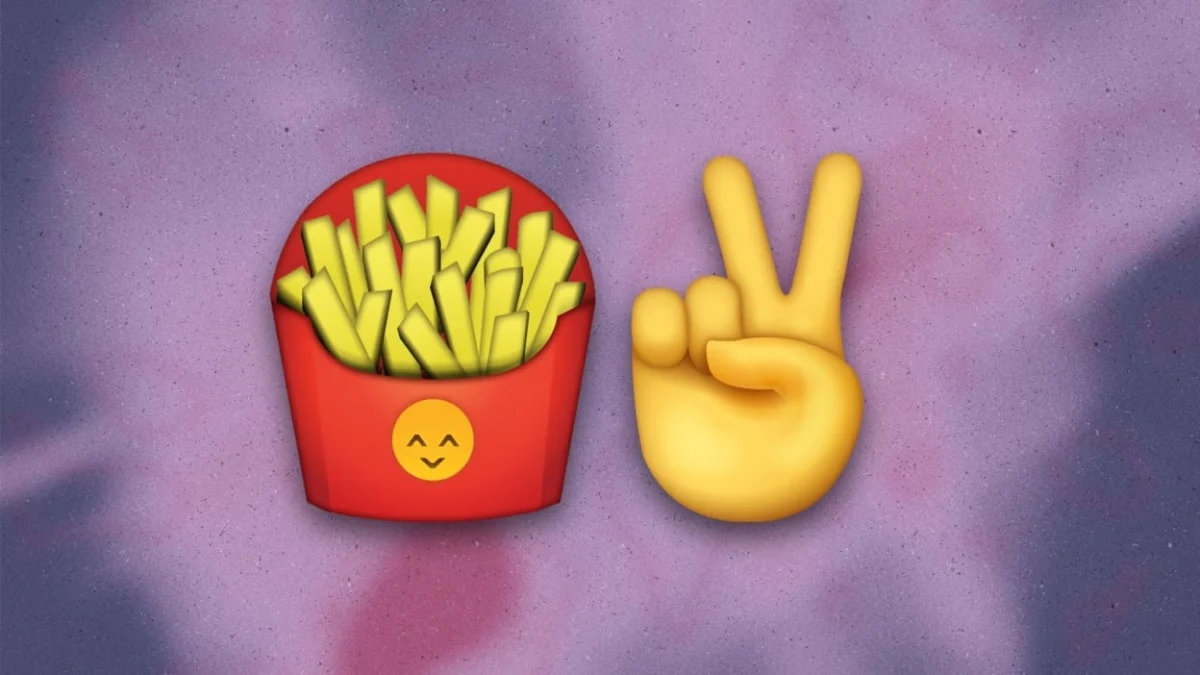
If you have spent any time scrolling through TikTok comments recently, you might have noticed a sudden, puzzling spike in fast-food cravings—or so you would think. A growing digital dialect has taken root across social media platforms, spearheaded by Generation Alpha. The French fries emoji (🍟), frequently accompanied by a peace sign (✌️), has rapidly transformed from a harmless symbol of a favorite diner side-dish into a biting, multi-layered digital insult.
In the fast-moving ecosystem of modern internet slang, this new symbol shorthand serves as a direct command: stop talking, your opinion doesn’t matter, and frankly, you are embarrassing yourself. Think of it as the ultimate millennial- and Gen Z-bridging equivalent of telling someone to "wrap it up."
Yet, like many hyper-fast cultural phenomena born in the crucible of algorithmic feeds, this emoji-based put-down carries a deeper lineage. It is a linguistic artifact born from years of viral internet humor, evolving from spoken-word mockery into streamlined digital hieroglyphics. Beneath the surface of youthful irony and digital shorthand, however, lies a complex cocktail of generational communication trends, fast-food labor tropes, and the relentless velocity of meme culture.
Main Facts: The Anatomy of a Digital Burn
The mechanics of the trend are remarkably simple, yet highly coded. To the uninitiated observer, dropping a single French fries emoji on a video looks completely random. In the lexicon of Gen Alpha and younger Gen Z users, however, its deployment is precise.
Depending on the context, the symbol carries specific weight:

- The Standalone Sarcasm (🍟): When used by itself, the French fries emoji functions as a quick-fire reaction to content deemed "corny," "cringe," or unnecessarily try-hard. If a creator delivers a joke that completely misses the mark or shares an over-the-counter hot take with unearned confidence, the fries emoji acts as an instant reality check.
- The Dismissive Exit (🍟✌️): When paired with the peace sign, the combination translates roughly to "wrap it up" or "just put the fries in the bag, bro." The peace sign introduces a casual, almost dismissive attitude—the digital equivalent of waving a hand in the air and walking away from a conversation that has long outstayed its welcome.
This symbolic evolution represents a broader shift in how internet users communicate. Instead of typing out full sentences, younger digital natives continue to compress complex cultural references into single unicode characters. The symbol only works if you share the contextual frame of reference; otherwise, it is entirely indecipherable.
Chronology: The Evolution of "Put the Fries in the Bag"
To truly understand how a simple potato product became a weapon of mass digital dismissal, one must trace the timeline of the linguistic meme that birthed it. The journey from spoken phrase to emoji shorthand spans several years of viral internet culture.
Phase 1: The Ketchup Genesis (2022)
The conceptual roots of the insult began appearing on platforms like Facebook and early-stage TikTok around 2022. Users circulated variations of the phrase, most notably, "Just put the ketchup in my bag, bro." Initially, the phrase was deployed in specific, niche online arguments to invalidate someone’s grandstanding by reducing their social status, implying that their opinions carried no more weight than the employee handing over a fast-food drive-thru order.
Phase 2: The TikTok Mainstream Explosion (2024)
By 2024, the phrase underwent a linguistic mutation, morphing into the widely recognized internet idiom: "Just put the fries in the bag, bro." According to internet culture archives tracked by researchers at Know Your Meme, the trend exploded across TikTok as a universal counter-troll mechanism. Whenever a creator or commenter began delivering an unsolicited, dramatic monologue, or acting as if their worldview was critically important, commenters flooded the section with the phrase. It became the internet’s favorite way to deflate inflated egos.
Phase 3: The Emoji Abbreviation (2026)
As internet culture accelerates toward ultimate linguistic efficiency, typing out an entire sentence became too cumbersome for fast-paced short-form video comment sections. By mid-to-late 2026, the entire phrase was successfully compressed into iconographic shorthand. The words vanished, replaced entirely by the French fries and peace sign combination. What started as a spoken insult had officially evolved into emoji code.

Supporting Data: The Mechanics of Modern Internet Slang
The rapid adoption of the fries emoji is not an isolated event; it sits within a broader landscape of generational lexicon shifts that linguists and digital culture researchers track closely.
Platform analytics from TikTok and X (formerly Twitter) indicate that shorthand insults and emoji-based reactions have grown exponentially year-over-year. According to digital culture trend reports, Gen Alpha—broadly defined as those born from 2010 onward—is currently driving a linguistic wave characterized by hyper-ironic detachment.
Terms like "sigma," "rizz," "gyatt," and now emoji-based dismissals like 🍟✌️ spread through a process sociolinguists call "peer-group cryptophasia." This is a phenomenon where a subculture develops a private language or modified code specifically to signal in-group belonging while excluding older generations (such as Millennials and older Gen Z).
When adults or older peers attempt to adopt these terms, they often trigger the very "cringe" reaction the slang was designed to punish—a phenomenon humorously dubbed the "dead slang lifecycle." Consequently, younger users constantly pivot to newer, more abstract markers, such as converting common food items into direct insults, to stay ahead of the cultural curve.
Implications: The Darker Undercurrent of Fast-Food Humor
While digital natives view the fries emoji as a harmless, playful way to tell someone to "wrap it up," cultural critics and internet anthropologists point out a more uncomfortable implication embedded in the meme’s origin.

At its core, the phrase "just put the fries in the bag, bro" relies heavily on class-based irony. It uses fast-food service work as the ultimate punchline, operating on the implicit, cynical assumption that manual labor or service-sector employment equates to a lack of intelligence or societal worth. The joke inherently suggests that a person working a fast-food job is fundamentally unqualified to have an opinion, weaponizing economic precarity as a tool for online humiliation.
When an entire socio-economic critique is stripped away and condensed into a cheerful yellow-and-red emoji combination, the original context evaporates. For a twelve-year-old scrolling through TikTok, sending a 🍟 emoji to a classmate might simply mean "you’re talking too much." However, the meme’s architecture remains built upon a foundation of casual elitism.
This tension highlights a fascinating paradox of modern digital spaces: internet culture can take complex, systemic socio-economic biases, flatten them into a cartoon graphic, and distribute them globally to millions of children within a matter of months, entirely divorced from their original weight.
Conclusion: The Future of Emoji Lexicons
As digital communication continues to outpace traditional language development, the transformation of the French fries emoji serves as a textbook case study in how internet culture operates today. It demonstrates the relentless drive toward brevity, the power of algorithmic meme transmission, and the subtle ways language can shift overnight.
Whether the trend will endure or fade into the graveyard of dead internet fads remains to be seen. But one thing is certain: the next time you post a video online and see a sudden influx of fried potato and peace sign icons in your comment section, you don’t need to order takeout. You just need to accept the digital reality—your audience has officially decided it is time for you to wrap it up.
 Nana Wu
 Neng Nana
 Reynand Wu
