

By Global Tech & Civil Liberties Desk
Updated: October 2025
Executive Summary: The Main Facts
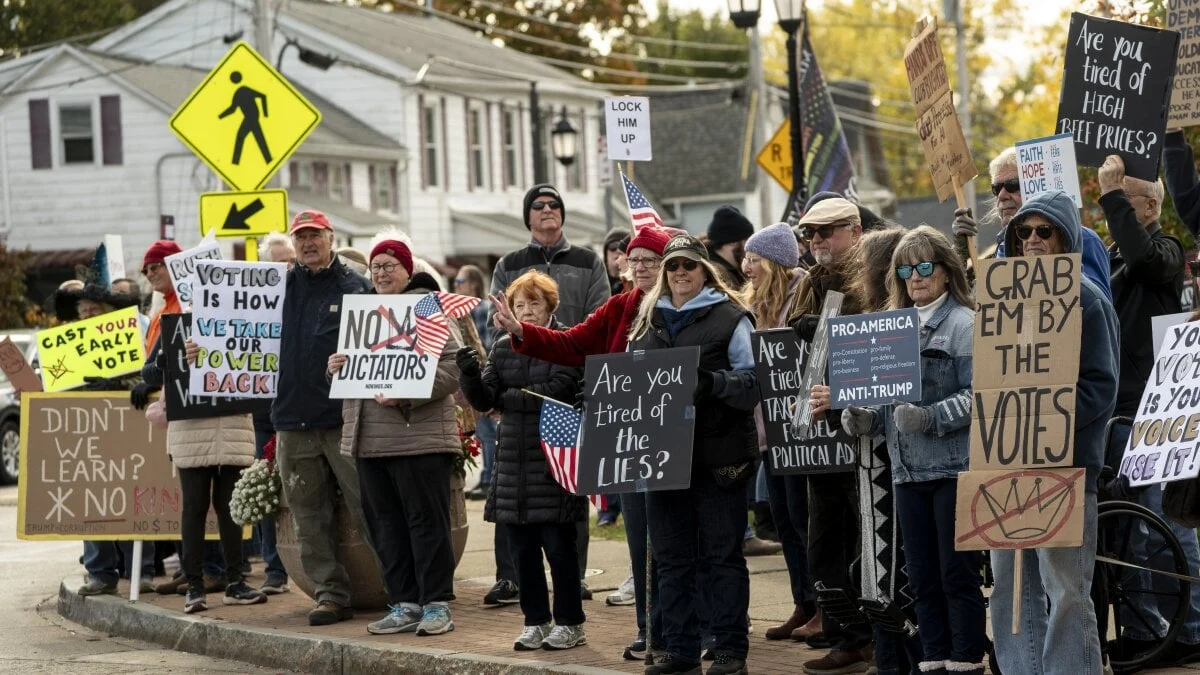
Meta has issued a formal and public apology to the No Kings Coalition—a prominent social justice movement behind a wave of historic nationwide demonstrations—following the abrupt and unexplained suspension of its official Instagram account. The shutdown occurred on October 17 during a critical weekend of coordinated nationwide mobilization, blocking the organization from communicating with hundreds of thousands of supporters.
According to Meta, the disruption was the result of an "incorrect enforcement" action triggered by automated platform security systems. The tech giant claimed that "abrupt, high-volume" requests resembling automated bot traffic targeted the account. Specifically, Instagram’s automated security protocols flagged a Claude AI tool that was reportedly accessing the coalition’s profiles, posts, and hashtags at an abnormally high frequency.
While Meta moved to restore the account within approximately 90 minutes, human administrators faced prolonged administrative lockouts that extended the outage well past the initial platform recovery. The incident sparked immediate, widespread public outrage, intensifying ongoing scrutiny regarding the reliability of automated moderation tools, corporate transparency, and the fragility of digital communication channels for political and social advocacy groups during high-stakes civic events.
Chronology of Events: The October 17 Shutdown
The sequence of events surrounding the October 17 suspension highlights the precarious relationship between digital infrastructure and grassroots political organizing:
- Pre-Demonstration Phase: The No Kings Coalition was in the final stages of organizing nationwide voter activations, rallies, and digital mobilization campaigns ahead of upcoming midterm elections. Instagram served as their primary channel for disseminating real-time logistics, safety information, and calls to action.
- The Incident (October 17): Automated security filters on Instagram detected a sudden surge of inbound digital traffic interacting with the coalition’s account. Attributing the traffic to malicious bot activity—linked to third-party data extraction via a Claude AI tool—the system executed an automatic enforcement protocol, wiping the profile from public view.
- The Blackout Window: For roughly 90 minutes, the account remained completely offline. Organizers on the ground found themselves effectively silenced during peak mobilization hours, unable to broadcast updates to attendees or coordinate real-time responses to local events.
- Partial Restoration and Prolonged Lockout: Although Instagram’s automated systems lifted the suspension after an hour and a half, human administrators discovered they were still locked out of their dashboard. Restoring full administrative capabilities required high-level intervention, stretching the functional blackout period significantly longer than the initial downtime window.
- Immediate Backlash (October 18): As news of the suspension spread, allied organizations and digital rights advocates mobilized across alternative networks to demand explanations and accountability from Meta.
Supporting Data and Context: A History of Automated Moderation Failures
The incident is not an isolated occurrence but rather part of a broader pattern of automated enforcement errors and content suppression on Meta platforms. Over the past several years, civil rights organizations, reproductive health advocates, and LGBTQ+ community groups have repeatedly accused Meta of disproportionately targeting, shadow-banning, and deleting accounts for seemingly innocuous posts or vague policy violations.
Automated Tool Vulnerabilities
Meta relies heavily on automated moderation tools and artificial intelligence to police billions of accounts worldwide. While these systems are designed to detect malicious botnets, coordinated harassment campaigns, and spam, they frequently struggle with context, nuance, and sudden surges in legitimate user engagement. In the case of the No Kings Coalition, automated algorithms misinterpreted high-volume scraping or access by an AI tool as a hostile attack, penalizing the account rather than mitigating the external traffic source.
The Timing Factor
The operational impact of the shutdown was magnified by its precise timing. Civil rights experts emphasize that digital suppression—even when temporary—carries disproportionate weight during active political demonstrations. Cutting off a movement’s primary communication pipeline during a live mobilization disrupts public safety communications, obscures protest logistics, and undermines democratic participation.
Official Responses and Statements
Following intense public backlash and condemnation from civil society groups, representatives from Meta and the affected coalitions issued detailed statements addressing the incident.
Meta’s Official Statement
Andy Stone, a spokesperson for Meta, took to social media to clarify the technical root cause of the error and extend a formal apology to the organization:
"This activity caused our automated protections to incorrectly take the No Kings Instagram account offline," Stone stated in a public post. "It unfortunately took additional time for us to straighten out the situation with admin access to the IG account. We want to reiterate our sincere apology for the error."
The company maintained that the enforcement action was entirely algorithmic and driven by defensive protocols against perceived bot traffic, rejecting accusations of intentional political censorship in this specific instance.
Coalition and Ally Reactions
The No Kings Coalition expressed deep concern over the vulnerability of their digital infrastructure. Representatives emphasized that an apology does not reverse the operational damage caused during a critical window of political organizing.
Ally organizations quickly rallied behind the movement. On October 18, the League of Women Voters published a scathing critique of the platform’s reliability on Instagram:
"The timing matters. When people are gathering, organizing, and seeking information about civic participation, cutting off a movement’s primary communication channel — even temporarily — is deeply troubling," the organization wrote.
Broader Implications: Censorship, Policy Shifts, and Political Pressure
The accidental blackout of the No Kings Coalition unfolds against a turbulent backdrop for Meta, which has faced a relentless series of accusations regarding platform censorship, biased content moderation, and shifting corporate policies over the preceding months.
Mounting Accusations of Suppression
In the weeks leading up to the October incident, a coalition of feminist organizations publicly accused Meta of systematically suppressing content related to the high-profile Cornell sexual assault case. This added to a long-standing grievances list from reproductive health advocates and LGBTQ+ business owners, many of whom have documented years of unexplained account removals and visibility restrictions. Critics argue that Meta’s opaque moderation standards create an uneven playing field where marginalized voices and progressive movements bear the brunt of algorithmic errors.
The 2025 Policy Rollbacks
These ongoing controversies have intensified following Meta’s controversial decision in 2025 to scale back significant hateful conduct protections across its platforms. Industry analysts and digital watchdogs widely interpreted the policy rollback as a strategic capitulation to external political pressures, particularly aligning with anti-Diversity, Equity, and Inclusion (DEI) initiatives pushed by conservative political figures and the Trump administration.
As Meta rolls back protective guidelines while simultaneously increasing its reliance on automated enforcement algorithms, civil rights advocates warn of a compounding crisis. The combination of weakened human oversight, relaxed safety standards, and brittle automated security systems creates an environment where political speech, social justice movements, and civic organizing are increasingly vulnerable to arbitrary silencing—whether by design or by algorithmic accident.
Conclusion
Meta’s formal apology to the No Kings Coalition provides a measure of institutional acknowledgment, but it does little to resolve the deeper systemic anxieties plaguing digital activism today. As social justice movements rely almost exclusively on corporate-owned platforms to organize, communicate, and mobilize, the unchecked power of automated moderation tools remains a profound threat to free expression. Without increased corporate transparency, robust human oversight, and fail-safes designed to protect civic discourse during critical political events, incidents like the October 17 blackout are bound to repeat, leaving grassroots democracy at the mercy of unpredictable code.
 Reynand Wu
 Dwi Wanna
 Sagoh
