

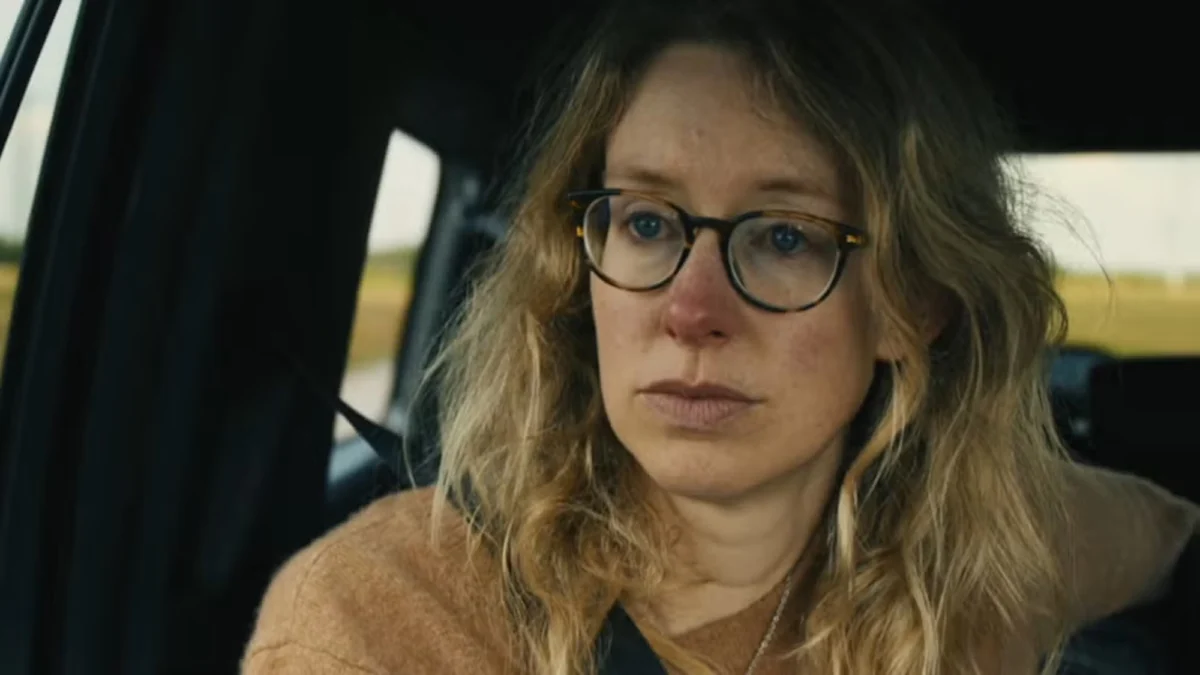
The enduring fascination with Elizabeth Holmes, the disgraced founder of the defunct blood-testing startup Theranos, has proven to be a cultural phenomenon that refuses to fade. While the legal saga of Holmes—who was sentenced to over 11 years in federal prison for fraud—seemed to reach a quiet conclusion upon her incarceration, the release of the A24 documentary You Can See Everything has reignited a nationwide obsession.
Directed by Lance Oppenheim and featuring the distinct, observational creative influence of Nathan Fielder, the film—which chronicles the haunting, surreal weeks leading up to Holmes’s entry into prison—has done more than just achieve box-office success. It has acted as a catalyst, driving audiences back to the vast ecosystem of media that has chronicled the rise and fall of Silicon Valley’s most infamous "visionary." From streaming series to investigative journalism, the "Holmes Effect" is currently dominating digital consumption metrics, proving that the public’s appetite for the Theranos narrative remains insatiable.
Main Facts: A Convergence of Documentarian Vision and True Crime
The success of You Can See Everything lies in its unconventional approach to a well-trodden story. Rather than opting for a traditional, dry recount of the Theranos fraud, the collaboration between Fielder and Oppenheim provides a voyeuristic, meditative look at the final moments of Holmes’s freedom.

By capturing the mundane yet unsettling atmosphere surrounding a person transitioning from the heights of billionaire status to a federal inmate, the film has managed to capture the cultural zeitgeist. This success has spilled over into the broader "Elizabeth Holmes universe," creating a rising tide that has lifted all boats. Data-tracking services, including Luminate, have confirmed that the documentary’s release on October 16 triggered a statistical surge across streaming platforms and publishing lists, validating the hypothesis that a new, high-profile project can act as a "re-entry point" for legacy content.
Chronology of a Cultural Resurgence
The timeline of this renewed interest is remarkably compressed, highlighting the speed at which modern streaming audiences react to new cinematic releases.
- Pre-September 2026: Interest in Elizabeth Holmes-related media had largely stabilized, settling into a "long-tail" viewership pattern where legacy content saw steady, low-volume engagement.
- September 2026 (Telluride Film Festival): The premiere of You Can See Everything generates significant buzz among critics. Concurrently, interest in source material begins to tick upward.
- September 23 – October 13: A massive spike in audio consumption occurs. Spotify data shows a 715% increase in listening to John Carreyrou’s Bad Blood audiobook.
- October 16–22: The wide theatrical release of the documentary triggers the most significant surges in viewership for television series like The Dropout, The Rehearsal, and Nathan for You.
- Late October 2026: The ripple effect reaches traditional print media, with Bad Blood: Secrets and Lies in a Silicon Valley Startup climbing back onto The New York Times bestseller lists.
Supporting Data: The Numbers Behind the Craze
The metrics provided by Luminate and other industry trackers paint a clear picture: when audiences engage with a new perspective on a known story, they often seek to "binge" the entire library of available content to contextualize their experience.

Streaming Television Surges
The Hulu limited series The Dropout (2022), which features an acclaimed performance by Amanda Seyfried, saw an explosive increase in viewership. During the week of October 16–22, the series garnered approximately 105,000 views, compared to just 13,000 the previous week—a staggering 700% jump.
The surge was not limited to direct Holmes-related content. Because of the involvement of Nathan Fielder, his previous work also saw significant "halo effect" viewership increases:
- The Rehearsal (HBO): Recorded 66,000 views, up from 14,000 (a 360% increase).
- Nathan for You (Comedy Central): More than doubled its audience, reaching 86,000 views from 42,000 (a 110% increase).
- The Curse (Showtime): Experienced a notable uptick, jumping from fewer than 1,000 views to 2,000 in a single week.
Audio and Print Dominance
The demand for deep-dive journalism has been equally intense. The ABC News podcast The Dropout, hosted by Rebecca Jarvis, saw a 673% increase in listenership. Simultaneously, the podcast Bad Blood: The Final Chapter enjoyed a 342% boost in streams. In the literary world, sales of John Carreyrou’s investigative book Bad Blood have surged, with year-to-date sales figures showing a 36% increase compared to this time last year, according to Circana BookScan.

Implications: The Future of True Crime Media
The success of You Can See Everything offers several implications for the entertainment industry. First, it suggests that the "True Crime fatigue" often discussed by critics may be overstated—provided the narrative approach evolves. Audiences are less interested in re-watching the same facts and more interested in artistic, auteur-driven interpretations of the characters involved.
Furthermore, the "halo effect" demonstrated by the jump in Nathan Fielder’s non-Holmes content suggests that in the age of streaming, "brand" loyalty (the director/star) is just as powerful as the subject matter itself. When a director with a distinct voice like Fielder attaches their name to a project, it brings their entire back catalog into the spotlight, essentially creating a "creator-led" viewing cycle.
Finally, this trend underscores the interconnectedness of multi-platform media. A documentary in theaters does not exist in a vacuum; it acts as an advertisement for the entire digital library surrounding a specific topic. Platforms that own both the content and the distribution—or those that cross-promote aggressively—are uniquely positioned to capitalize on these spikes in curiosity.

The Persistent Shadow of Theranos
Why does Elizabeth Holmes remain such a potent figure in our cultural consciousness? Experts suggest it is a combination of the "Silicon Valley myth" and the sheer absurdity of the fraud. Unlike many crimes of greed, the Theranos saga involved the disruption of the healthcare industry, a field that touches every human life.
The fascination persists because the story provides a masterclass in human psychology, ego, and the dark side of corporate ambition. By focusing on the "human" element of her pre-prison days, You Can See Everything has successfully transitioned the narrative from a dry legal case to a character study that feels both intimate and expansive.
As we look toward the future of true crime documentaries, the success of this project serves as a blueprint. It proves that the public is not just interested in the "what" of a crime, but the "who" and the "how"—and that a well-crafted lens can make a familiar story feel brand new. For as long as there is curiosity about the limits of human ambition, the Elizabeth Holmes universe will likely remain one of the most consistently revisited chapters of 21st-century American history.

With viewership and reading metrics showing no immediate signs of a downturn, it is clear that the "Holmes Effect" will continue to influence content consumption for the foreseeable future, ensuring that the legacy of Theranos remains, for better or worse, firmly embedded in the cultural conversation.
 Siti Muinah
 Nana
 Asro
