

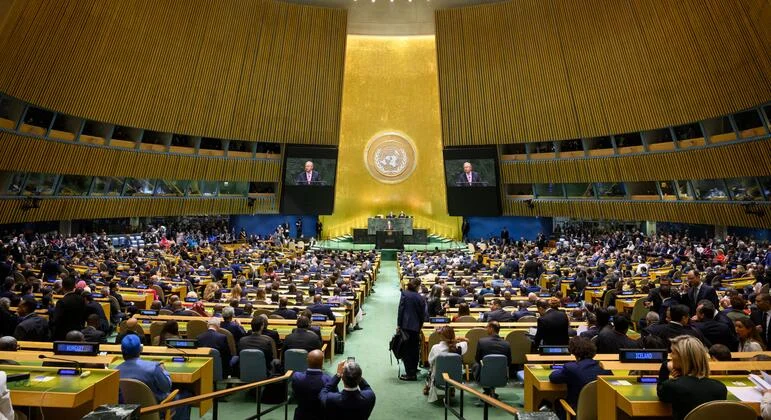
NEW YORK — As the calendar turns to October 24, 2026, the global community observes United Nations Day, marking the 81st anniversary of the organization that has served as the bedrock of international order since the ashes of the Second World War. Eight decades after the UN Charter entered into force, the institution finds itself navigating a complex geopolitical landscape, balancing its historical mandate with the unprecedented challenges of the 21st century.
The Pillars of Global Governance: Main Facts
United Nations Day commemorates the 1945 ratification of the UN Charter, a landmark document that remains the foundational constitution for international relations. Born from the collective desire to prevent the recurrence of global conflict, the UN has evolved from a post-war peacekeeping body into a vast network of agencies, programs, and funds addressing the multifaceted needs of a modern, interconnected world.
The core mandate of the UN remains remarkably consistent with its original intent:
- Maintenance of International Peace and Security: Through diplomacy, mediation, and the deployment of peacekeepers.
- Humanitarian Relief: Delivering life-saving aid to victims of conflict, natural disasters, and displacement.
- Development and Poverty Eradication: Addressing the systemic inequalities that fuel social and political instability.
- Protection of Human Rights: Serving as the global arbiter and monitor of fundamental civil, political, and economic rights.
As of 2026, the UN continues to operate under the governance structure established in 1945, with the Security Council serving as the primary executive body for peace and security, while the General Assembly functions as the deliberative chamber for all 193 member states.
A Chronological Perspective: From 1943 to 2026
To understand the significance of this 81st anniversary, one must look back to the dark days of 1943, when the vision for a global cooperative body began to materialize even before the war had concluded.
- November 1943: The creation of the United Nations Relief and Rehabilitation Administration (UNRRA) marked the first concrete step toward organized global cooperation. It was a pioneering experiment that addressed the immediate needs of millions facing hunger, disease, and displacement in war-torn regions.
- October 1945: The UN Charter officially enters into force following ratification by the majority of its signatories, including the five permanent members of the Security Council (the P5).
- October 1948: The UN General Assembly declares October 24 as United Nations Day, a tradition that has persisted annually for 78 years.
- 1948–2026: The organization expands its scope significantly, shifting from post-war reconstruction to decolonization, the promotion of nuclear non-proliferation, the advancement of the Sustainable Development Goals (SDGs), and the urgent coordination of global climate action.
Supporting Data: The Scope of Global Impact
The United Nations’ reach is difficult to quantify, yet its impact on the daily lives of millions is profound. Through its specialized agencies like UNICEF, the World Food Programme (WFP), and the World Health Organization (WHO), the UN provides a safety net for the world’s most vulnerable populations.
- Humanitarian Reach: In the current fiscal year, UN-coordinated humanitarian operations have provided essential food security to over 100 million people living in conflict-affected zones.
- Developmental Milestones: Despite significant setbacks in the early 2020s, UN-backed programs have continued to push for universal primary education, with school rehabilitation projects—such as those highlighted in Côte d’Ivoire—serving as models for community-led recovery.
- Diplomatic Mediation: The UN remains the primary venue for international treaty-making, overseeing thousands of multilateral agreements ranging from maritime law and space exploration to chemical weapons prohibition.
Official Responses: A Reflection on the Future
As the organization marks its 81st year, Secretary-General António Guterres delivered a poignant message regarding the future of the body. In what serves as one of his final addresses on this day, Guterres emphasized that the relevance of the United Nations is not in question, but its efficacy is under severe strain.
"Humanity’s future depends on our ability to work together to advance peace, development and human rights," Guterres stated. He acknowledged the "profound challenges" that currently threaten to erode the international order, citing specifically the intensification of regional conflicts, the existential threat of the climate crisis, and the rapid, often unmanaged, development of frontier technologies like artificial intelligence.
"The United Nations is an essential part of the fabric of our world," Guterres noted. "And it is needed more than ever." His remarks serve as a rallying cry for member states to recommit to the principles of multilateralism at a time when nationalistic and isolationist tendencies are resurging globally.
The Implications: Challenges in an Era of "Polycrisis"
The 81st anniversary occurs at a moment of significant global tension. The "polycrisis"—a term used to describe the convergence of overlapping crises—has tested the UN’s ability to respond.
1. The Geopolitical Standoff
The Security Council, the very heart of the UN’s peace-making apparatus, remains frequently deadlocked by the veto power of its permanent members. This has led to mounting calls for reform, with many nations arguing that the 1945 structure no longer reflects the demographic or political realities of the 21st century.
2. Technological Governance
The rapid advancement of technology has outpaced the ability of international law to govern it. The UN is currently at the forefront of debates regarding the ethical use of AI in warfare, the regulation of autonomous weapon systems, and the protection of digital privacy on a global scale.
3. Climate Insecurity
The climate crisis acts as a "threat multiplier," exacerbating existing resource scarcity and forcing mass migration. The UN’s role in facilitating climate finance—transferring resources from developed to developing nations to help them transition to green economies—is arguably its most critical mission for the coming decade.
4. The Legacy of UNRRA
Reflecting on the history of UNRRA, as seen in the archival documentation Before the UN: The Forgotten Story of UNRRA, serves as a reminder that the UN was born from an act of solidarity. Critics and supporters alike often forget that the UN is not a supranational government, but an assembly of sovereign states. Its successes are the successes of its members, and its failures are likewise collective.
Conclusion: Looking Toward the Future
As the United Nations moves into its 82nd year, the challenge lies in its capacity to adapt. The organization is tasked with the impossible: maintaining the peace in a world that is increasingly fractured, while simultaneously addressing the long-term sustainability of the planet.
For the billions of people who rely on the UN for food, medicine, and the protection of their basic rights, the institution remains the only viable mechanism for global survival. While the debates regarding its structure and efficacy will undoubtedly continue, the 81st anniversary serves as a reminder that without a forum for dialogue and a mechanism for collective action, the international community would be far more vulnerable to the chaos of conflict and the indifference of neglect.
The story of the UN is, at its heart, the story of humanity’s attempt to organize its own survival. Whether it can meet the challenges of the next 81 years will depend not on the strength of its charter, but on the political will of the nations that continue to sit at its table.
For those interested in the ongoing work of the organization, the UN encourages citizens worldwide to download the UN News app for real-time updates or subscribe to topic-specific newsletters to stay informed about the critical issues facing our global community.
 Nana
 Evan Lee Salim
 Iffa Jayyana
