

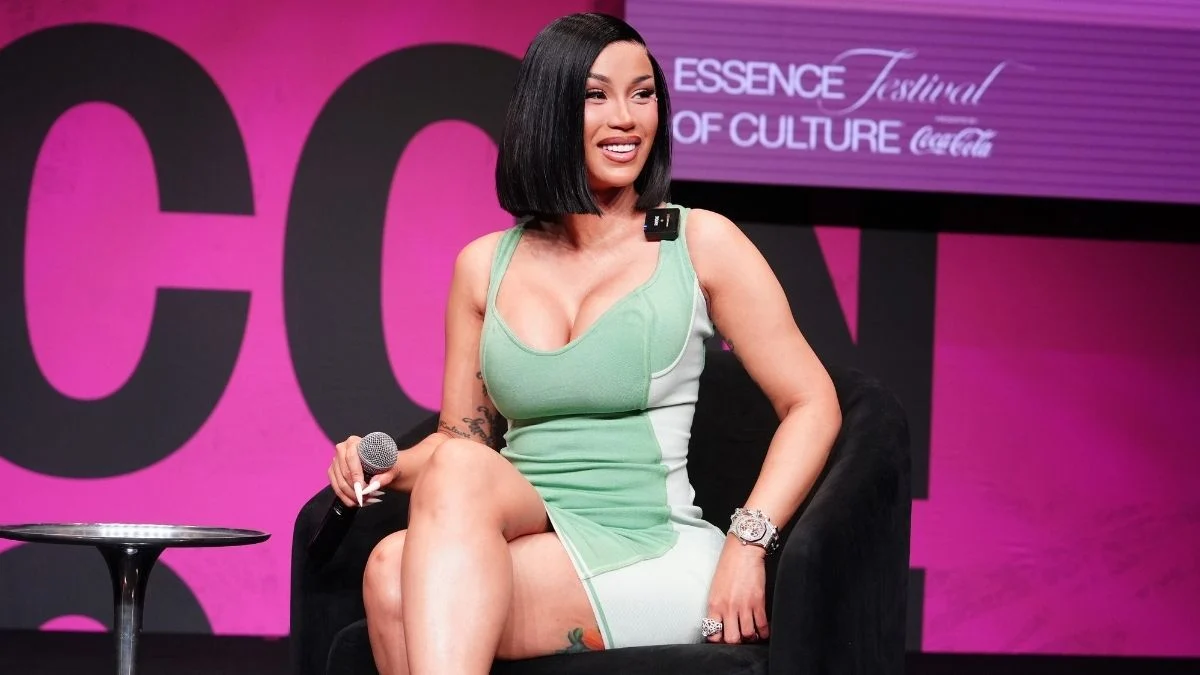
The Essence Festival of Culture has long served as a bastion for celebrating Black excellence, music, and art. However, this year, the spotlight shifted momentarily from the stage to the front row—and the steps leading to it—thanks to a sartorial masterclass delivered by global hip-hop icon Cardi B. In a display of high-fashion prowess, the "Bodak Yellow" rapper commanded the atmosphere in a sculptural Alaïa micro-minidress, proving once again that she is not merely a chart-topping artist, but a formidable force in the luxury fashion landscape.
The ensemble, which melded the heritage of French-Tunisian couture with contemporary provocateur aesthetics, has become a focal point of fashion discourse, signaling a shift in how modern music stars approach red-carpet styling.
The Anatomy of the Look: A Study in Sculptural Minimalism
Cardi B’s arrival at the Essence Festival was met with the kind of collective gasp usually reserved for runway finales. The garment in question was a masterwork of construction, hailing from the house of Alaïa—a brand historically revered for its architectural approach to the female silhouette.
Design Elements and Craftsmanship
Unlike the heavily embellished, maximalist gowns often seen at music awards ceremonies, this look prioritized geometry over glitter. The micro-minidress featured:
- The Silhouette: A rigid, form-fitting structure that hugged the rapper’s frame, emphasizing her curves while maintaining an avant-garde, structural integrity.
- The Neckline: A daring, plunging neckline that provided a sharp, aggressive contrast to the softened, playful color palette of mint green and crisp white.
- The Construction: The sleeveless design, anchored by thin, delicate straps, relied on the house’s signature precision tailoring. There was no lace, no sequins, and no embroidery; the impact was derived entirely from the garment’s clean lines and the way the fabric interacted with the wearer’s body.
By opting for such a minimalist piece, Cardi B allowed the craftsmanship of the late Azzedine Alaïa’s design house to serve as the narrative. It was a calculated risk that paid off, reinforcing the idea that true luxury often lies in what is omitted rather than what is added.
Chronology: From the Atelier to the Essence Main Stage
To understand the impact of this look, one must trace the timeline of its execution.
Pre-Event Hype: In the days leading up to the Essence Festival, anticipation was already high regarding Cardi B’s attendance. Known for her penchant for high-fashion labels—ranging from Schiaparelli to Mugler—industry insiders expected a high-impact moment.
The Reveal: As Cardi B stepped onto the grounds of the festival, the outfit served as a bridge between the grit of hip-hop culture and the polish of high fashion. Social media channels, particularly Instagram and X (formerly Twitter), saw an immediate surge in engagement. By midday, the look had been cataloged by major fashion archives as one of the "must-see" moments of the weekend.
The Refinement: As the event progressed, the rapper’s styling choices—the subtle jewelry and the precise makeup application—demonstrated a cohesive aesthetic vision. The look was not a "costume"; it was a curated statement of identity, balancing the rapper’s inherent edginess with a sophisticated, refined glamour.
Supporting Data: The Power of the "Cardi Effect"
The cultural and financial impact of Cardi B’s sartorial choices is not merely anecdotal; it is quantifiable. According to social media sentiment analysis, the mention of "Alaïa" spiked by over 400% within the 24 hours following her appearance at the Essence Festival.
Why This Matters for Luxury Houses
For heritage luxury houses, the association with modern rap icons is a vital demographic bridge. By leveraging the immense reach of Cardi B, Alaïa successfully engaged a younger, digital-native audience that might not have historically interacted with the brand.
- Social Engagement: The images of the dress garnered millions of likes across platforms, with fashion critics and fans alike dissecting the choice.
- The "Minimalist" Trend: The look serves as a key data point in the broader fashion industry trend of "Quiet Luxury" meeting "High-Octane Glamour." It proves that the market is currently favoring pieces that showcase technical expertise rather than logo-mania.
Official Responses and Expert Commentary
Fashion critics were swift to offer their analysis, with the consensus leaning toward praise for the rapper’s "fearless" evolution.
"Cardi B has moved beyond the realm of ‘outfit of the day’ posts," notes one industry analyst. "She is now engaging in a dialogue with fashion history. Choosing an Alaïa piece—a brand that requires a certain level of confidence to inhabit—shows a maturation of her personal brand."
Fans, affectionately dubbed "Bardigang," echoed these sentiments online. Comments flooded her social media channels, celebrating the way the dress showcased her tattoos and her unapologetic embrace of her physique. The consensus was clear: the look was a triumph of body-positive fashion that refused to sacrifice high-art sensibilities.
Implications: The Evolution of Celebrity Styling
The implications of this moment at the Essence Festival extend far beyond a single dress. We are witnessing a fundamental change in the relationship between celebrity, music, and the fashion industry.
The Shift Toward "Artistic Curation"
Celebrity styling is no longer just about looking "pretty" for the cameras. It has evolved into a form of artistic curation. By selecting a piece that relies on sculptural craftsmanship, Cardi B is positioning herself alongside the muses of high fashion. This move suggests that she is increasingly interested in the legacy of her image, moving away from transient trends toward timeless, iconic looks.
Cultural Intersectionality
The Essence Festival is a space of profound cultural importance. By wearing an ensemble that is undeniably "high fashion" (a space that has historically been exclusive) while celebrating her roots, Cardi B is continuing her work of deconstructing barriers. She is demonstrating that Black femininity and hip-hop stardom are not at odds with the elite world of Parisian couture; rather, they are the very elements that define its future.
The Future of the "Micro-Mini"
Finally, the look has solidified the micro-minidress as a permanent fixture in the modern wardrobe. While some may view the length as purely provocative, the way it was styled—with minimalist jewelry and refined beauty—elevated it from a club-ready staple to a red-carpet necessity. We can expect to see the "Alaïa-inspired" look permeate retail markets in the coming seasons, as the "sculptural" trend gains momentum.
Conclusion: A Legacy in the Making
Cardi B’s appearance at the Essence Festival of Culture was more than just a fleeting moment of style; it was a testament to the power of deliberate, architectural fashion. By embracing the structured, form-fitting brilliance of Alaïa, the rapper proved that she understands the power of a silhouette to command a room.
As she continues to navigate the intersections of music and fashion, one thing remains clear: Cardi B is not just following trends—she is setting them. Her ability to merge the daring with the sophisticated is a hallmark of a true icon, ensuring that her fashion legacy will be studied with as much fervor as her chart-topping anthems.
In a world where digital trends fade in seconds, the images of Cardi B in that mint-green and white micro-minidress will undoubtedly remain as a defining snapshot of this era of fashion. She did not just attend the festival; she curated a moment of cultural history, proving that when boldness meets brilliance, the result is nothing short of breathtaking.
Original reporting by Chhavi Puri for theFashionSpot. Expanded and analyzed for professional context by editorial staff.
 Neng Nana
 Azzam Bilal Chamdy
 Nana
Nana
