

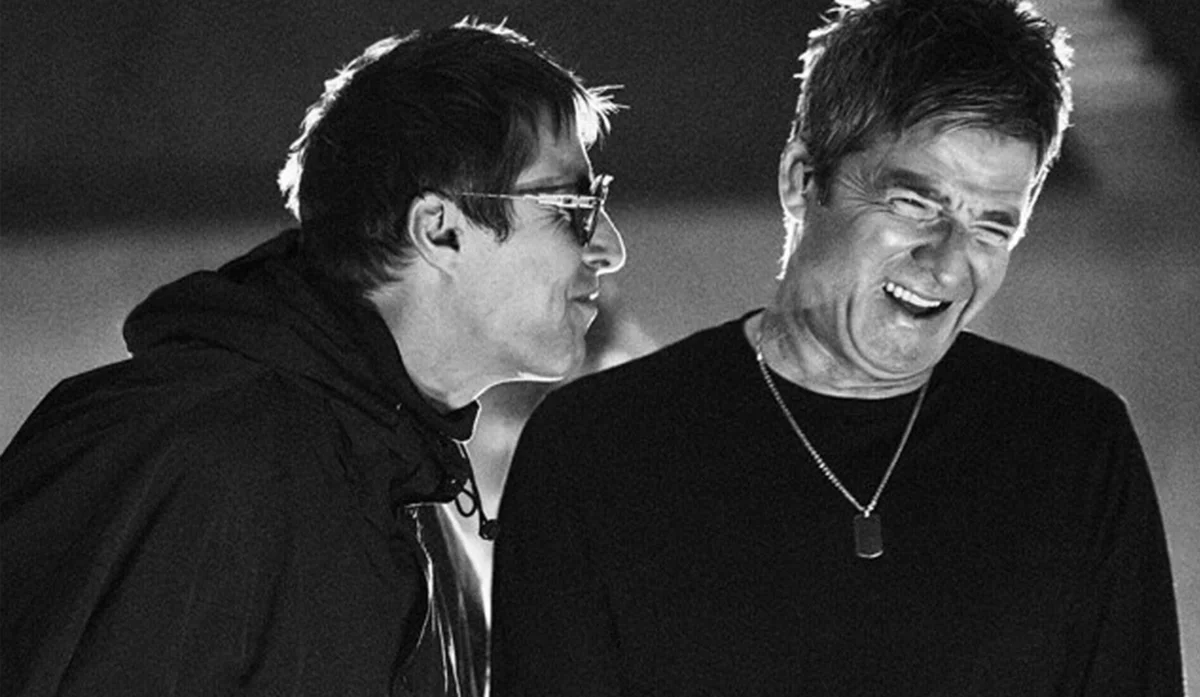
For over two decades, the Gallagher brothers—Liam and Noel—served as the primary architects of rock and roll’s most infamous estrangement. Their public spats, fueled by a potent mix of sibling rivalry and global fame, became a cornerstone of music lore. However, the release of the new documentary Oasis: Don’t Look Back in Anger has provided a dramatic, if not entirely expected, epilogue to that long-running drama.
Directed by the acclaimed duo Will Lovelace and Dylan Southern, the film captures the monumental Oasis Live ’25 reunion tour. With a staggering 96% approval rating on Rotten Tomatoes and an 80/100 "generally favorable" score on Metacritic, the documentary has emerged as both a critical darling and a cultural touchstone. It offers fans an unprecedented look at the rehearsals, the backstage logistics, and the quiet, intimate moments that preceded the brothers’ return to the stage.
Main Facts: A Landmark Documentation of Rock’s Greatest Reconciliation
Oasis: Don’t Look Back in Anger is not merely a concert film; it is a clinical, yet deeply emotive, observation of two men navigating the wreckage of their past to reclaim their collective legacy. The film serves as the primary visual record of the Oasis Live ’25 tour, a global phenomenon that saw the band return to stadiums in cities as diverse as Dublin, Manchester, São Paulo, and Tokyo.
The most significant draw of the project is the inclusion of the first joint interviews featuring both Liam and Noel in over twenty years. These segments are punctuated by fly-on-the-wall footage that strips away the rock-star artifice, presenting the brothers in a light that is often startlingly vulnerable. Following its world premiere at the Venice Film Festival—a prestigious launching pad that signaled the film’s artistic weight—the documentary is set for a limited theatrical run this Friday, with a wider release scheduled for Disney+ later this year.
Chronology: From Discord to the Global Stage
To understand the weight of this film, one must understand the timeline of the "Gallagher Cold War." For fifteen years, the band existed in a state of suspended animation, with the brothers exchanging barbs through social media and press outlets.
The production of the film began in the shadow of the announcement of the Live ’25 tour. Lovelace and Southern were granted access to the band’s inner circle during the high-stakes rehearsal process. The documentary follows a clear arc: it begins with the tension of the reunion’s infancy, moves through the logistical hurdles of mounting a world tour of such magnitude, and culminates in the euphoric, cathartic performances that defined the summer of 2025.
While the film does not dwell heavily on the specific legal or personal mechanisms that led to the peace treaty, it documents the evolution of their dynamic in real-time. By the time the camera captures the band playing to thousands in Cardiff, the narrative focus shifts from the "why" of the breakup to the "how" of the healing process.

Supporting Data: The Critical Consensus
The reception of the film has been polarized between those who value the "fan experience" and those who seek "journalistic rigor."
On the side of high praise, Glenn Kenny of The New York Times highlighted the visceral power of the music. "It’s hard not to get emotional watching Liam turn the singing of ‘Live Forever’ over to a stadium crowd. This movie is both a headbanger and a tear-jerker," he noted.
Similarly, Richard Lawson of The Hollywood Reporter found himself surprised by the depth of the portrayal. "Maybe they’re just putting on a good act for the cameras, but the film endearingly softens their image while still giving us some of their famously witty insouciance," Lawson wrote. He emphasized that the film’s strength lies in its "holistic charge"—the ability to capture the collective emotion of a crowd that had waited fifteen years for this specific moment of resolution.
Perhaps the most philosophical take came from Matt Zoller Seitz of RogerEbert.com, who argued that the film transcends the band itself. "This is one of the best music documentaries ever made because… the Oasis reunion tour is a way of drawing us into the movie’s true subjects: what music means to people, and the practical value and personal importance of art in everyday life." With a script structure contributed by acclaimed screenwriter Steven Knight, the film is elevated from a standard "tour diary" to a thematic exploration of human connection.
Dissenting Voices: The Search for Narrative Depth
Despite the glowing reviews, the documentary has faced scrutiny for its perceived lack of transparency. Mark Savage, writing for the BBC, expressed frustration at the film’s avoidance of the "nitty-gritty" of the feud. "Nobody explains the fallout. We don’t find out who instigated the rapprochement, nor do we hear how it affected their family," Savage pointed out.
Furthermore, Savage noted a structural fatigue: "In a biopic, the triumphant night in Cardiff would have been the final scene. Here, it comes about 40 minutes into the action. Every subsequent concert just rinses and repeats the same story."
This sentiment was echoed by Elena Lazic of Variety, who described the film as "an uncharacteristically polite and sentimental portrait." Lazic noted that while the sound design and technical execution are impeccable, the film feels "guarded." She argues that the documentary fails to capture the "trademark volatility" that made the brothers, and their band, so compelling in the 1990s. In her view, the film prioritizes the "brand" of the reunion over the authentic, messy reality of the individuals involved.

Implications: What the Film Means for the Oasis Legacy
The implications of Oasis: Don’t Look Back in Anger are twofold. First, for the music industry, it establishes a new template for the "Legacy Tour Documentary." By focusing on the emotional resonance of the audience rather than the internal mechanics of the band, the film demonstrates how a documentary can effectively manage a public image following a high-profile reconciliation.
Second, for the brothers themselves, the film acts as a permanent seal on their new chapter. By allowing cameras into their rehearsals and interviews, they have effectively ended the era of "will-they-won’t-they" speculation. They are now, for better or worse, a functioning unit.
However, the mixed criticism regarding the film’s "polite" nature suggests that the public still craves the authentic, raw, and often abrasive personalities that made Oasis a household name. Whether this "softened" version of the Gallaghers will satisfy long-term fans remains to be seen. What is certain, however, is that for ninety minutes, the world was reminded of the undeniable power of their catalog.
Conclusion: A Mirror to the Past
As the film moves from the festival circuit to a broader audience on Disney+, it serves as a testament to the endurance of Britpop’s most iconic exports. While it may not satisfy those looking for a definitive, tell-all exposé on the secrets of the Gallagher rift, it succeeds as a celebration of the music that soundtracked a generation.
The documentary succeeds in its primary mission: to make the audience feel the magnitude of the Live ’25 tour. It captures the sound of thousands singing in unison, the sweat on the brow of the performers, and the quiet, almost unspoken acknowledgment that the war is over. In the final analysis, Oasis: Don’t Look Back in Anger may be an incomplete story, but it is an undeniably beautiful one—a snapshot of a band that, against all odds, decided that the future was worth the effort of reconciling with the past.
As we look toward the wider release, the film stands as a reminder that even the most fractured foundations can, with enough time and distance, be rebuilt into something that, while perhaps not the same as it once was, is still capable of moving the world.
 Ammar Sabilarrohman
 Siti Muinah
 Iffa Jayyana
