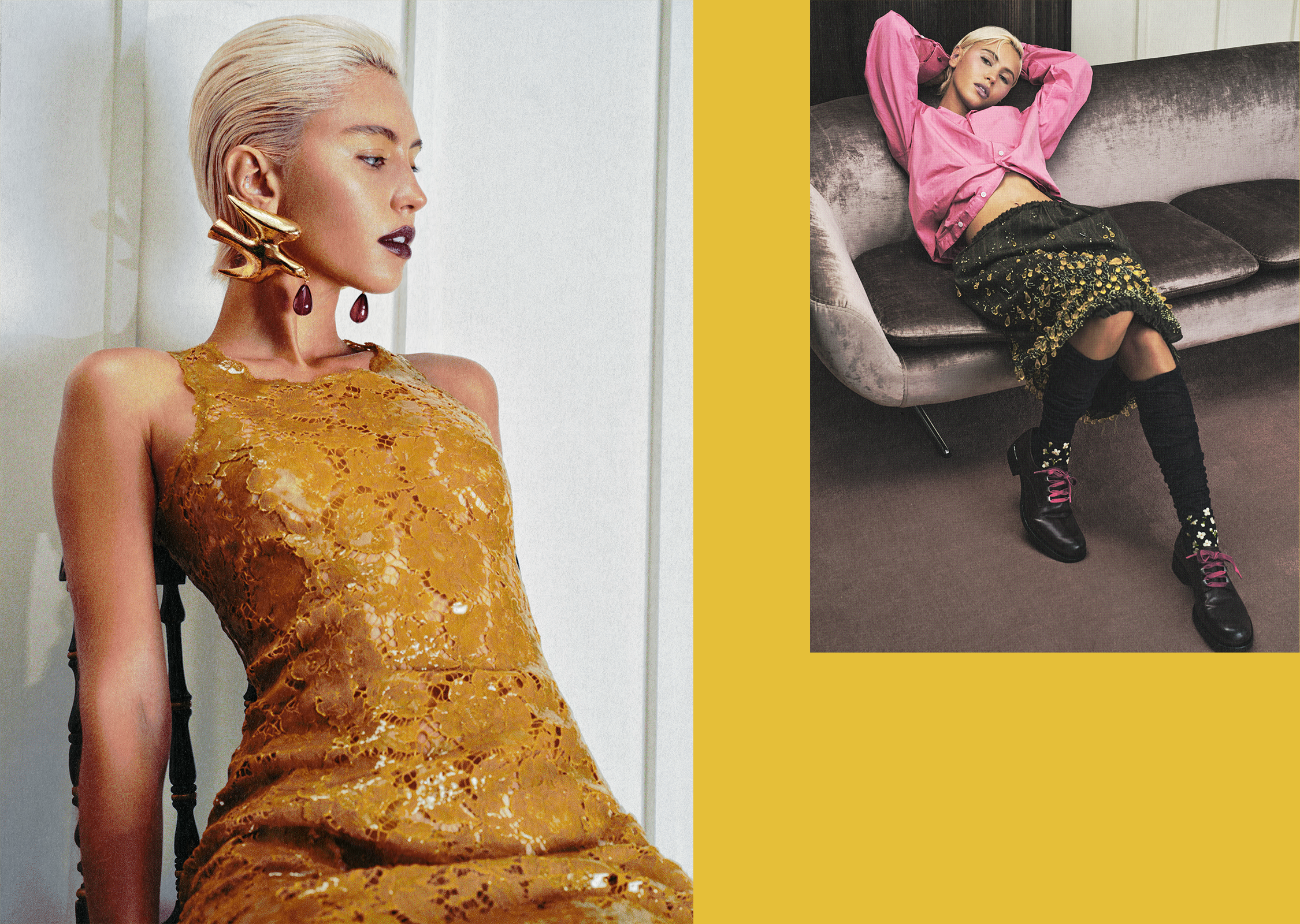
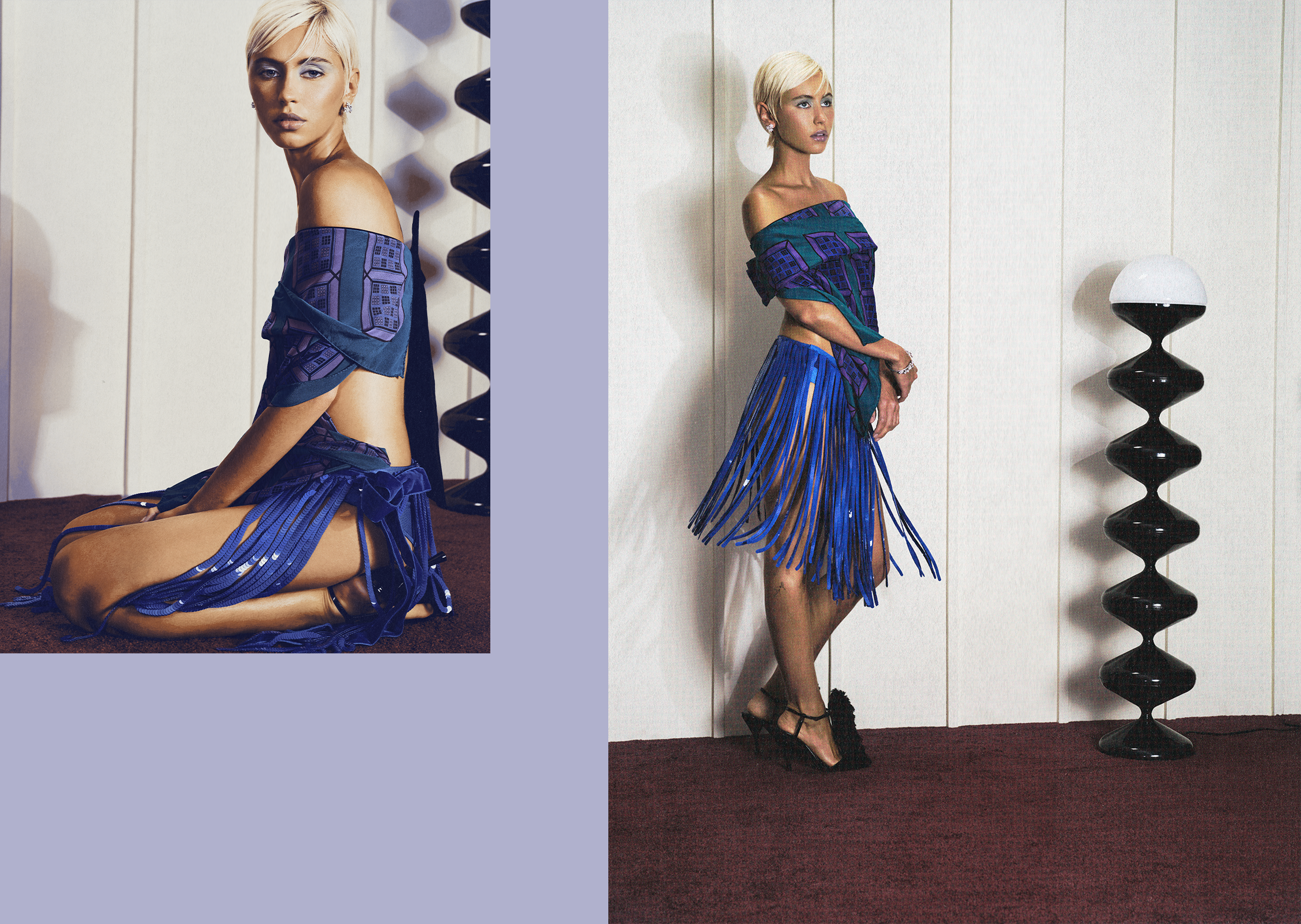
At just 25 years old, British model, entrepreneur, and rising creative force Iris Law occupies a rare echelon in modern culture. Known as a blueprint for contemporary "It-girlhood," Law has spent a decade navigating an industry that voraciously consumes youth, trends, and imagery. Yet, rather than capitulating to the relentless machinery of fast fashion and viral content cycles, Law has carved out a deliberate path defined by autonomy, deep research, and personal comfort.
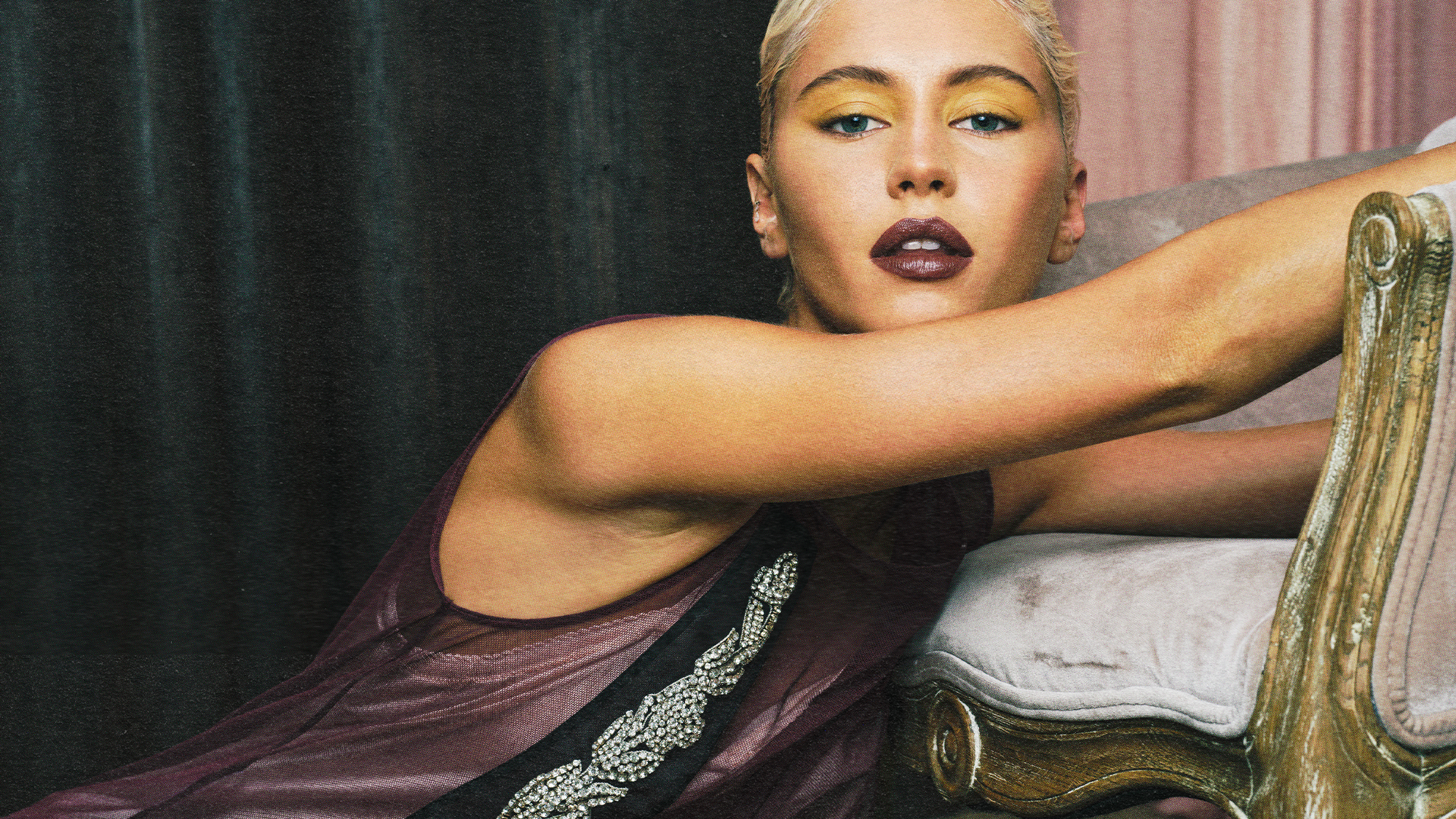
Whether pairing ruffled bloomer shorts with collegiate Adidas tops, stepping back from a thriving TikTok presence to protect her mental peace, or spending months immersed in Japanese culture to authentically launch her tea brand, Little Sip, Law is rewriting the rules of modern celebrity. This deliberate approach was recently commemorated by her cover feature for Who What Wear’s 20th-anniversary October 2026 issue, cementing her status not merely as a muse for luxury houses like Miu Miu, Burberry, and Fendi, but as an active architect of her own multi-hyphenate career.
Chronology: From Adolescent Muse to Deliberate Multi-Hyphenate
Early Beginnings and the Miu Miu Breakthrough
Law’s journey into the public eye began at the tender age of 15, when her distinct aesthetic caught the attention of legendary stylist and former Love magazine editor Katie Grand. Thrust into high-profile campaigns—most notably with Miu Miu—Law was immediately confronted with the heavy machinery of the global fashion industry.
Unlike many young stars who might have felt purely like passive canvases, Law possessed an early, precocious reverence for fashion history. She approached her early jobs not just as modeling gigs, but as extensions of the design and magazine archives she had spent her adolescence studying. Working alongside icons like Grand, Law learned early on to shoulder the gravity of the spaces she occupied without losing her innate sense of wonder.
A Decade of High-Fashion Dominance
Over the ensuing ten years, Law’s face became ubiquitous across the runways and marketing campaigns of fashion’s most prestigious houses, including Versace, Burberry, Marc Jacobs, David Yurman, and Fendi. She built an impressive digital footprint, amassing hundreds of thousands of followers across Instagram and TikTok.
However, as the digital landscape shifted toward hyper-curation and parasocial exhaustion, Law began a quiet internal pivot. Recognizing the disconnect between her online persona and her real-life circle—none of whom actively use social media—she made the conscious decision to step away from TikTok, trading viral validation for peace of mind.
Entrepreneurship and Cultural Immersion: Little Sip
Rather than simply slapping her name onto a licensing deal—a common pitfall for modern celebrities—Law delayed entering the consumer goods market until she felt an authentic sense of earned validity. Driven by a deep affinity for Japanese culture, seasonal living, and artisanal craftsmanship, Law made multiple trips to Japan, including a rigorous three-month stint to study the language.
Immersed in the centuries-old mastery of Japanese tea culture and inspired by the intentional design philosophy of figures like Shigeru Uchida, Law eventually launched her Japanese tea brand, Little Sip. The venture stands as a physical manifestation of her philosophy: creating with purpose and refusing to add to the noise of overconsumption.
Supporting Data and Context
Industry Tenure: A veteran of the fashion industry at 25, having spent a full decade fronting global campaigns since the age of 15.
Digital Footprint: Commands a dedicated following of over 800,000 users on Instagram, alongside former massive traction on TikTok prior to her intentional step back from the platform.
Brand Collaborations: Has served as a primary face and runway fixture for luxury powerhouses including Miu Miu, Burberry, Fendi, Versace, Marc Jacobs, and David Yurman.
Entrepreneurial Milestone: Founder of Little Sip, an artisanal Japanese tea brand built following years of cultural study, language acquisition, and immersion in Japanese craftsmanship.
Future Horizons: Actively expanding into the dramatic arts through rigorous self-tapes, director meetings, and deep-dive research into biographical and psychological genres—with a particular focus on the growing prestige of horror cinema.
Official Responses and Personal Philosophy
In an extensive interview surrounding her landmark magazine cover, Law opened up about the psychological tightrope of modern visibility, her approach to style, and her fierce protection of her creative autonomy.
On Personal Style Versus Trend Culture
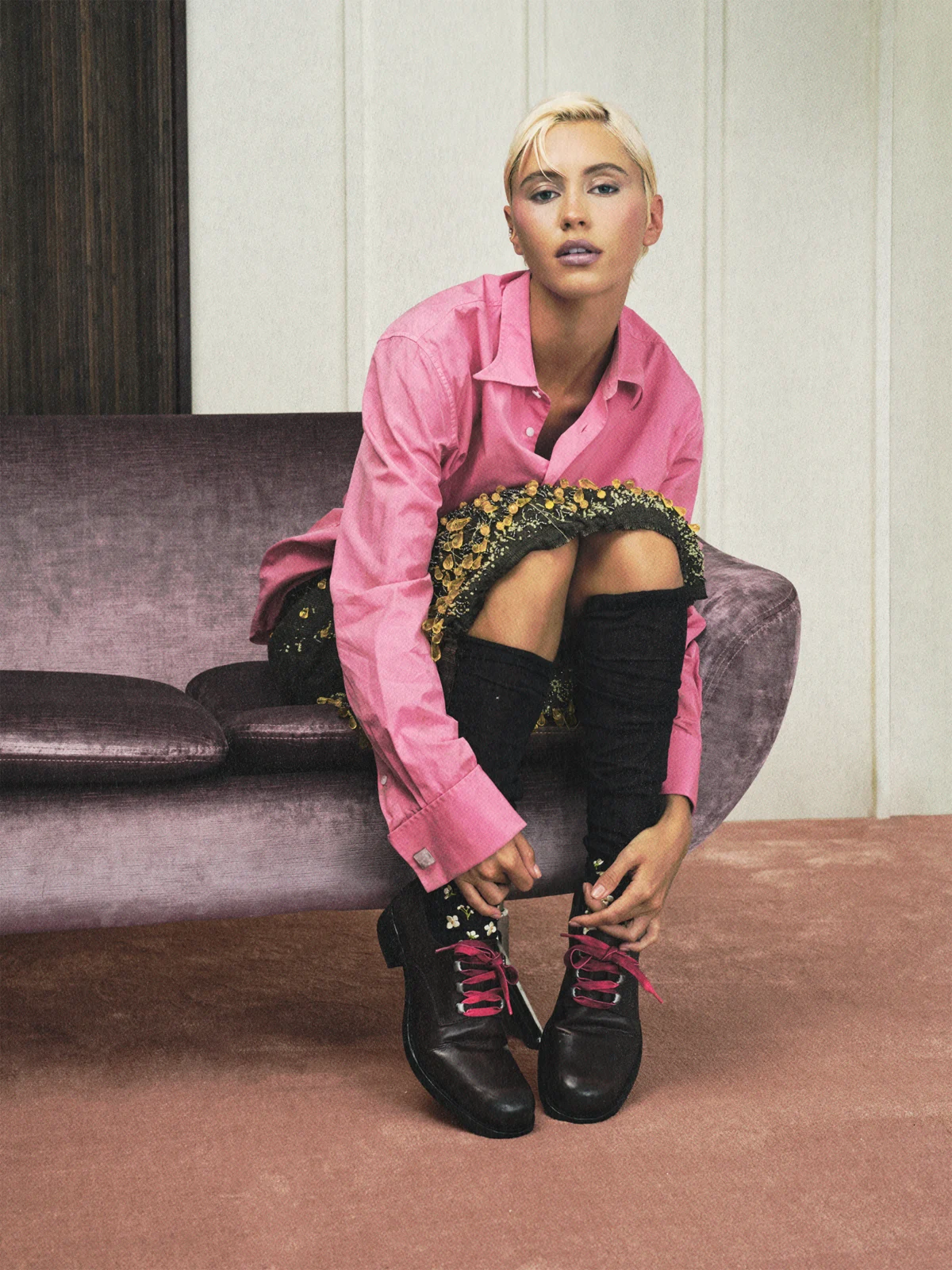
Reflecting on a viral TikTok video that analyzed her eclectic, joyful approach to dressing—where creators noted that she wears items simply because they make her feel good rather than seeking external validation—Law expressed profound alignment with the sentiment:
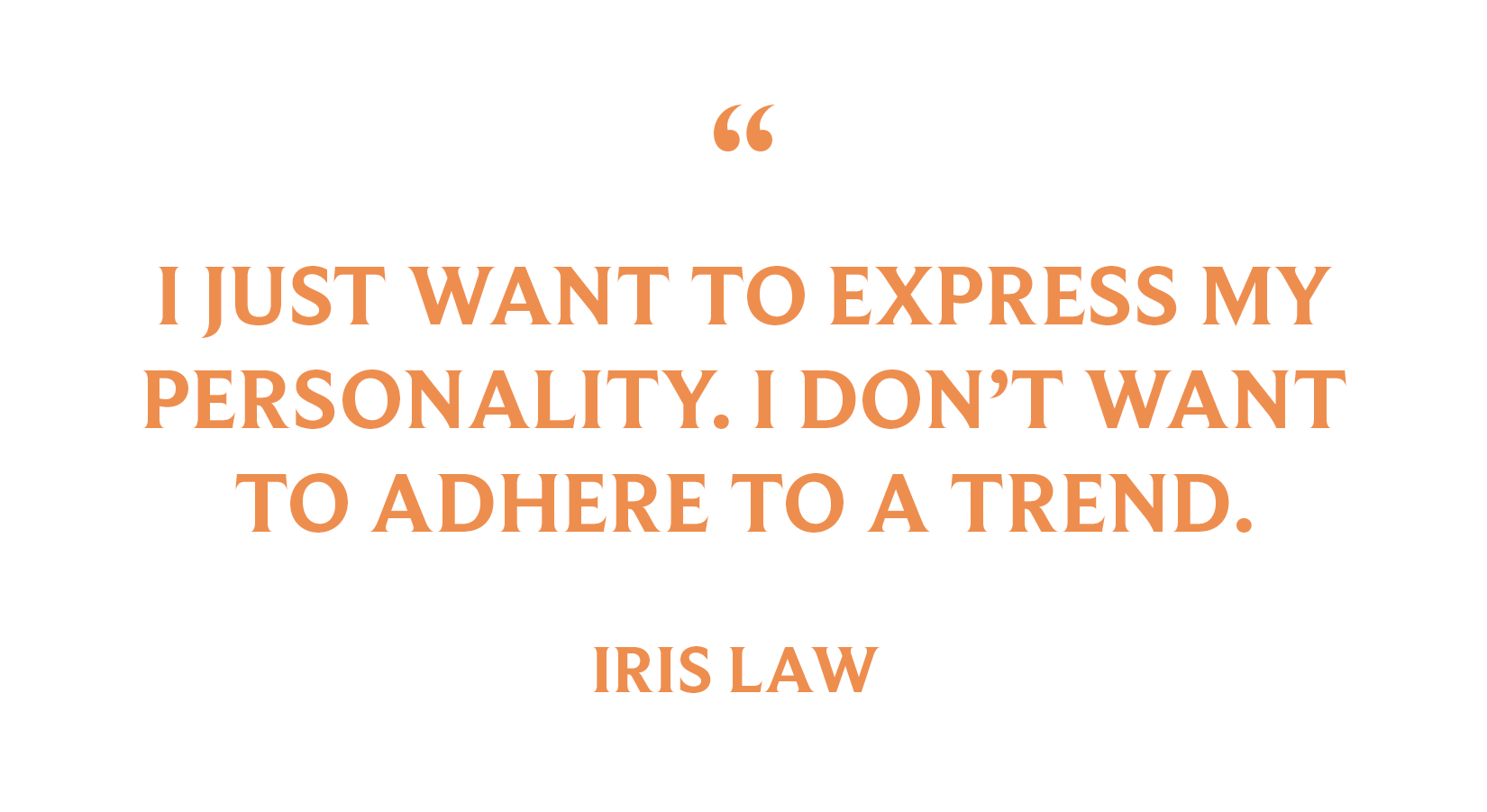
"My friends kept sending me the video… I genuinely pick up clothes and [reach for] whatever makes me feel happy. I won’t sacrifice my comfort for fashion anymore. I just want to express my personality. I don’t want to adhere to a trend."
She admits that being a public figure often ruins certain items for her, noting an instance where she packed a polka-dot bikini on holiday but ultimately refused to wear it out of fear that it looked like she was chasing an expiring trend cycle.
On Leaving TikTok and Creative Fatigue
Detailing her decision to distance herself from short-form video platforms, Law highlighted the exhausting expectation placed on modern creatives to be multifaceted monoliths:
"None of my close, close friends who I speak to daily are on social media. So it alienated me in that way… It’s very tiring to show that you study and you read and you also have fun and you also like snacks. I don’t want to put hours and hours of work into my phone to show every part of myself."
On Earned Privilege and the Art of "Doing Her Homework"
Addressing the inevitable conversations surrounding nepotism and celebrity privilege, Law maintains a grounded, accountable perspective, insisting that authenticity must be earned through labor and study:
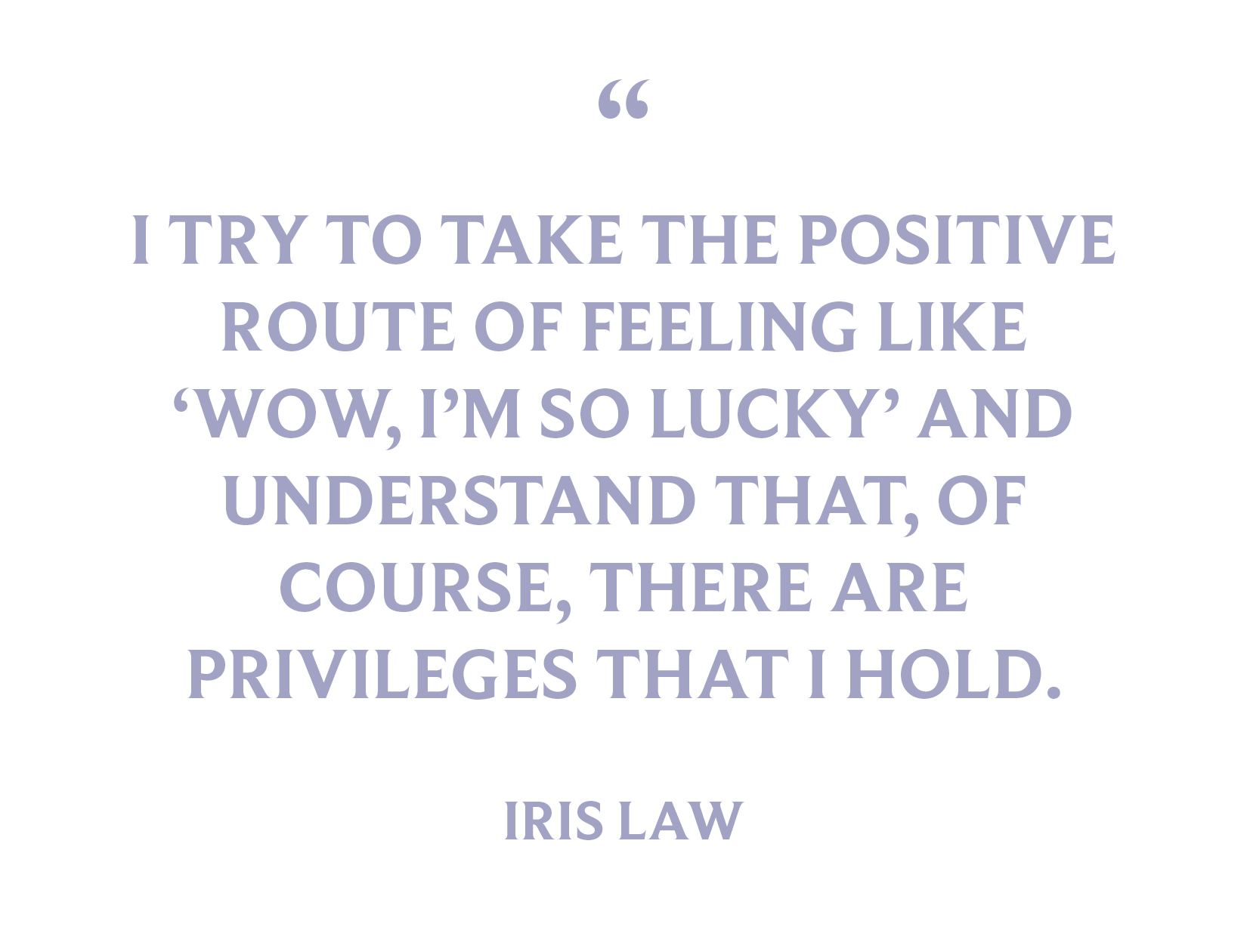
"I don’t want to embody a space that I haven’t mastered. If I’m putting my identity on something, I want to feel like I deserve that title… It’s about being aware of any privilege that I hold and being kind and working hard."
This rigorous preparation extends to her burgeoning acting career, where she approaches every audition and director meeting like an academic research project:
"My favorite part, even if I’m not getting the role, is doing the research behind the people. Say it’s a biopic. It feels like prescribed learning—watching all of the films of one director or a documentary about the person they’re trying to make a film about."
Implications for the Future of Fashion and Celebrity Culture
Iris Law’s trajectory offers a compelling blueprint for how the next generation of cultural figures will navigate fame, enterprise, and identity.
1. The Death of the Passive Influencer
As audiences grow increasingly fatigued by hollow brand partnerships and hyper-curated digital perfection, figures like Law demonstrate that true longevity requires substance. By refusing to commercialize prematurely—whether spending years studying tea in Japan or quietly building an acting portfolio through self-tapes—Law proves that credibility is built on the "slow burn."
2. Radical Authenticity over Trend Adherence
In an era dominated by algorithmic fast fashion and micro-trends, Law’s commitment to personal comfort and instinctive joy serves as a counter-narrative. Her struggle to separate her own genuine tastes from mass-market saturation highlights the occupational hazards of modern tastemaking, inspiring consumers to reclaim their wardrobes from the relentless pressure of online validation.
3. The Multi-Hyphenate Evolution
Law’s evolution from teenage muse to beauty entrepreneur, luxury ambassador, and aspiring dramatic actress signals a shift away from single-lane celebrity. By treating each new chapter as an opportunity for deep, immersive education, she ensures that her expansion into new industries feels earned rather than opportunistic.
As Law quietly plots her next cinematic role and expands Little Sip, her methodology remains unchanged: do the homework, protect your peace, and move exclusively on your own terms.







 Asro
Asro
 Neng Nana
