

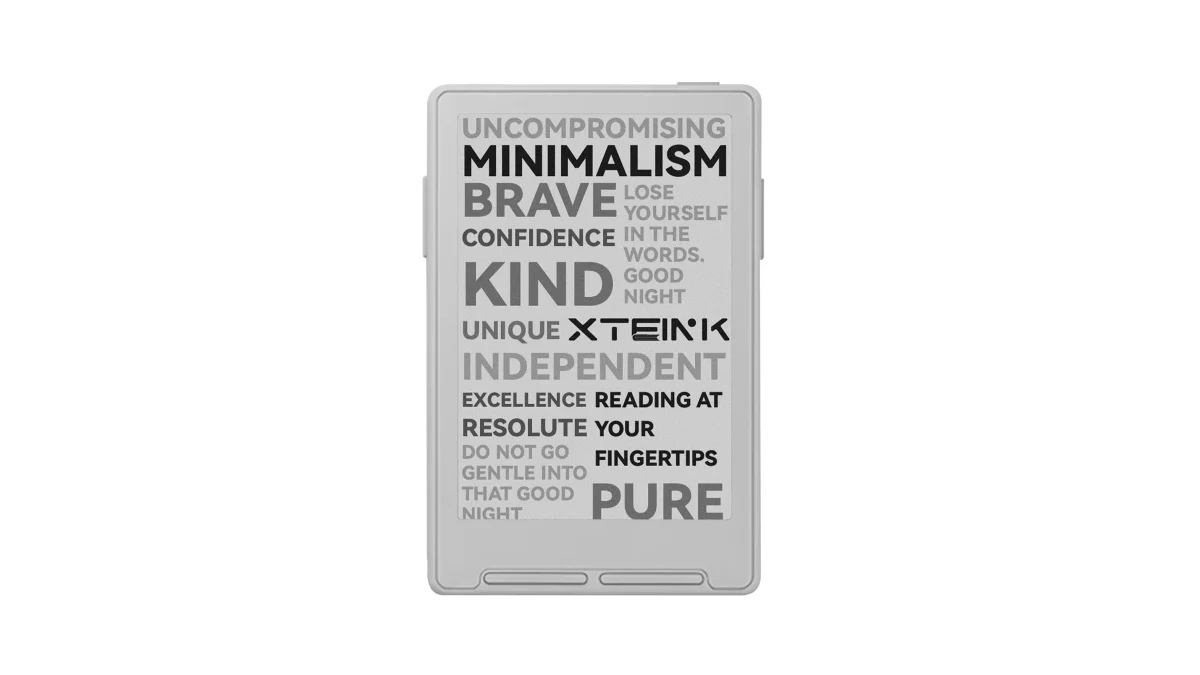
In an era defined by endless scroll loops, algorithmic feeds, and the constant psychological pull of pocket-sized supercomputers, a quiet counter-revolution is taking place. More consumers are seeking refuge from the digital noise not by abandoning technology entirely, but by curating a more intentional relationship with it. For many, that means reclaiming the lost art of reading during transitional moments of the day—waiting for a train, sitting in a coffee shop, or winding down before lunch.
Enter the micro e-reader. While mainstream devices like the Amazon Kindle Paperwhite or Kobo Clara remain the gold standard for long-form reading sessions at home, they can feel burdensome to carry around just in case a spare ten minutes opens up. Recognizing this friction, manufacturers have begun scaling down e-ink technology to smartphone dimensions. Among the wave of ultra-portable devices, the Xteink X3 has emerged as a cult-favorite tool for digital minimalists.
Coinciding with Amazon’s Prime Big Deal Days, the Xteink X3 has hit a record-low price of $58.65 (down 15% from its standard $69 retail price). As shoppers hunt for tech discounts, this pocket-sized alternative is proving that when it comes to e-readers, sometimes smaller, simpler, and cheaper is vastly superior.
Main Facts: The Xteink X3 at a Glance
The Xteink X3 is designed with a singular, uncompromising philosophy: distraction-free reading anywhere you go. Unlike conventional tablets or smartphones that bombard users with notifications, push alerts, and multi-app multitasking, the X3 strips the digital experience back to the printed page.
- Display: 3.7-inch E-ink screen designed to mimic real paper, eliminating eye strain caused by traditional LCD and OLED phone displays.
- Form Factor & Weight: Weighing an astonishingly light 2 ounces, the device is small enough to slip comfortably into a jeans pocket, small purse, or jacket lining without adding noticeable bulk.
- Build & Mounting Options: The device features an integrated magnetic design allowing it to attach directly to the back of a smartphone. However, many users prefer to treat it as a standalone pocket notebook, keeping it tucked away in a slim protective case.
- Pricing & Availability: Normally retailing at $69, the Xteink X3 is discounted to $58.65 for the duration of the Amazon Prime Big Deal Days event.
- The Catch (Lighting Limitations): The X3 does not feature a built-in frontlit display. This means it relies entirely on ambient light, making it ideal for daylight reading, but rendering it useless in total darkness without an external light source. For those requiring nighttime readability, its sibling model—the Xteink X4 Pro—features a larger 4.3-inch frontlit screen and retails for $89.99.
Chronology: The Evolution of the Pocket E-Reader Movement
To understand the sudden rise of devices like the Xteink X3, it helps to look at how consumer habits regarding portable media have shifted over the last two decades.
Phase 1: The Rise of Dedicated E-Readers (Late 2000s – 2010s)
When Amazon introduced the first Kindle in 2007, it fundamentally altered the publishing industry. E-ink technology offered a glare-free reading experience that mirrored physical paper, successfully replacing bulky paperbacks for travelers and avid bookworms. However, these devices were explicitly designed to live in backpacks, nightstands, or tote bags. They were "destination" reading devices rather than everyday carry items.
Phase 2: The Smartphone Encroachment (2010s – Early 2020s)
As smartphones evolved into high-resolution media hubs, tech companies attempted to merge reading with multi-functionality. Reading apps like Kindle, Apple Books, and Google Play Books allowed users to read chapters on their phones. Unfortunately, this convenience came with a massive psychological tax. Reading a book on a phone meant risking exposure to text messages, breaking news alerts, and social media notifications, effectively shattering deep focus.
Phase 3: The Digital Wellness and Micro-Device Boom (2024 – Present)
As public fatigue with screen time and "attention economy" apps reached a tipping point, a new category of minimalist tech began to carve out market share. Consumers started buying "dumb phones," analog alarm clocks, and—crucially—pocket-sized e-readers. Brands like Boox, Hisense, and Xteink recognized that a subset of readers did not want a 6-inch or 7-inch tablet; they wanted a credit-card-sized device dedicated exclusively to text. The Xteink X3 emerged as a frontrunner in this niche, bridging the gap between analog book culture and modern portability.
Supporting Data: Why Consumers Are Shifting Toward Minimalist Tech
Market research and consumer behavior trends over the last few years point to a growing weariness regarding hyper-connected devices.
- The Screen-Time Penalty: According to various wellness studies, the average adult checks their smartphone over 50 to 80 times a day. A significant portion of these checks are unconscious "habit loops"—pulling out the phone simply because of a moment of downtime in an elevator, a waiting room, or a transit line.
- The Ergonomics of Portability: Traditional e-readers typically measure between 6 and 7 inches diagonally and weigh anywhere from 6 to 8 ounces. While lightweight compared to a hardcover book, they require two hands or a dedicated bag. At just 2 ounces and 3.7 inches, the Xteink X3 removes the friction of carriage, ensuring that users always have reading material on hand without sacrificing pocket space.
- Prime Day Buying Trends: During major retail events like Amazon Prime Day and Prime Big Deal Days, consumer electronics trends show an increasing bifurcation: shoppers are either buying high-end productivity gear (such as iPads, noise-canceling headphones, and AirPods) or seeking out single-purpose wellness gadgets designed to reduce digital overstimulation.
Official Perspectives and Expert Analysis
Tech reviewers and digital wellness advocates have weighed in on the micro e-reader trend, highlighting both the brilliant utility and the deliberate constraints of devices like the Xteink X3.
"For the past few months, I’ve been trying to stay off my phone outside of working hours," notes one consumer tech reviewer documenting their transition away from mobile addiction. "My search for a distraction-free alternative led me to pocket e-readers, and I landed on the Xteink X3, which has made it easy to squeeze in a few minutes of reading throughout the day without falling down a social media rabbit hole."
Industry analysts point out that while the absence of a frontlit screen might seem like a drawback to modern consumers accustomed to backlit smartphone displays, it is actually a deliberate design choice that aligns with traditional book-reading habits.
- The Purist Approach: By omitting internal LEDs, the Xteink X3 mimics the exact optical behavior of physical paper. This reduces blue-light exposure before bed (though you still need ambient light to see the words) and drastically improves battery conservation.
- The Modular Choice: For users who refuse to compromise on nighttime reading, the availability of alternative models like the Xteink X4 Pro ($89.99) ensures that the ecosystem caters to different lifestyle requirements without forcing unnecessary compromises.
Implications: What the Xteink X3 Means for the Future of Reading
The popularity of pocket e-readers signals a broader cultural pivot in how hardware manufacturers must think about consumer electronics. For over a decade, the tech industry operated under the assumption that "convergence" was the ultimate goal—every device had to become a camera, a web browser, a gaming console, and a communication hub.
However, consumer fatigue has proved that divergence and specialization have immense market value.
- A New Era of Digital Wellness: Devices that do one thing exceptionally well are finding loyal audiences. Just as vinyl records and film cameras experienced unexpected revivals among younger generations seeking tactile, intentional experiences, micro e-readers are transforming reading into a tactile, pocketable ritual.
- Publishing Opportunities: As hardware gets smaller, publishing models may adapt. Short-form serialized fiction, essays, poetry collections, and micro-books could see a renaissance if readers consistently carry thumb-sized libraries in their pockets.
- Retail Landscape Shifts: Sales figures from events like Amazon’s Prime Big Deal Days demonstrate that niche products can capture significant attention when paired with strategic discounts. Alongside heavy-hitting discounts on standard Kindles, iPads, AirPods, and noise-canceling headphones, specialized tools like the Xteink X3 prove that there is plenty of room in the market for innovative, boundary-pushing form factors.
Whether you are looking to completely overhaul your digital habits, cut down on late-night scrolling, or simply find a more convenient way to finish your reading list this autumn, picking up a pocket e-reader at its lowest price point yet might just be the best investment you make in your personal focus.
(Note: For shoppers looking to build out a complete minimalist or productivity kit during the ongoing sale, Amazon Prime members can also take advantage of fast, free shipping by signing up for a 30-day trial of Amazon Prime.)
 Nana Muazin
 Jia Lissa
