

By Entertainment Desk
Published: October 2026
Main Facts
In what represents one of the most remarkable and improbable narrative arcs in modern Hollywood history, the hybrid live-action and animated feature film Coyote vs. Acme has officially cleared its final major hurdle on the road to industry recognition. Following its dramatic rescue from the corporate scrapheap, distributor Ketchup Entertainment has confirmed that the film is officially eligible for submission in the Best Animated Feature category at the upcoming 99th Academy Awards, set for 2027.
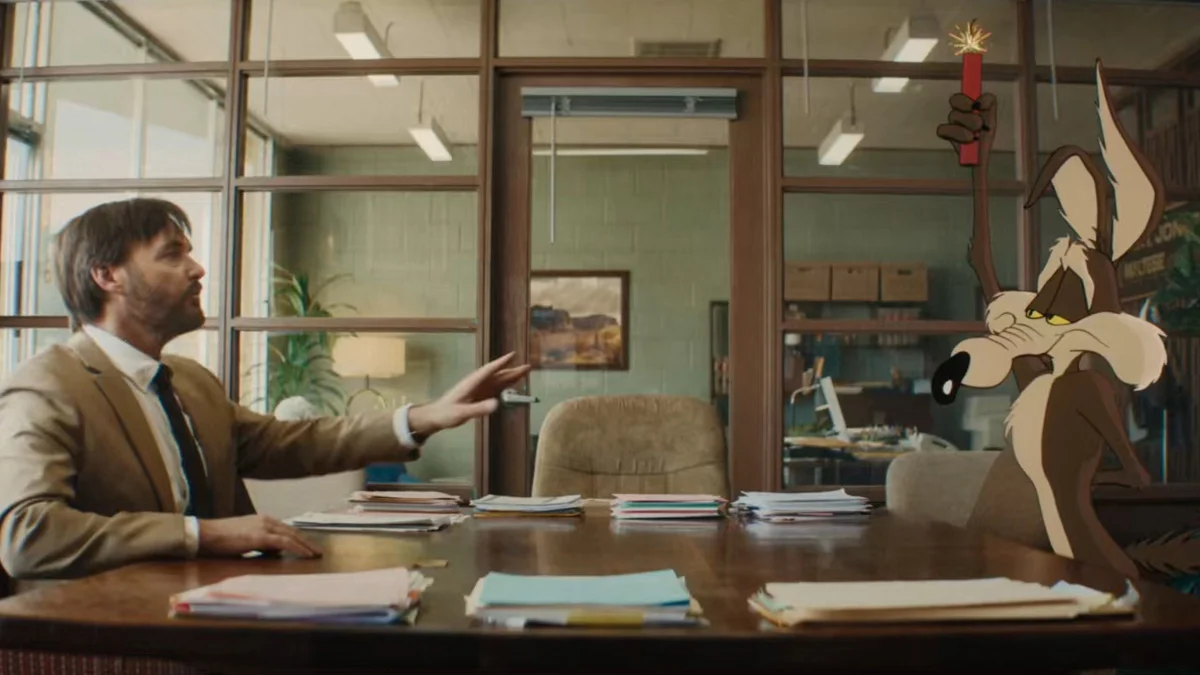
The film, which blends traditional Looney Tunes animation with live-action performances, stars Will Forte as a down-on-his-luck billboard lawyer who takes on Wile E. Coyote as a client in a monumental class-action lawsuit against the Acme Corporation. Professional wrestler-turned-actor John Cena stars as the slick, corporate-defense attorney representing the manufacturing conglomerate, leading an ensemble cast that brings the classic cartoon universe into a modern legal-thriller framework.
While hybrid films often face strict scrutiny from the Academy of Motion Picture Arts and Sciences (AMPAS) regarding their classification, Coyote vs. Acme meets the rigorous criteria required for the animated category. This ruling clears the path for the film to compete against heavy-hitting contenders from major studios. Among those slated for the 2027 race are Laika’s stop-motion fantasy epic Wildwood, Disney’s powerhouse sequels and originals including Toy Story 5 and Hoppers, and veteran director Brad Bird’s long-awaited sci-fi noir Ray Gunn.
Despite nearly being erased for a tax write-down—a fate that initially sparked widespread outrage across the entertainment industry—the film has transformed from a symbol of corporate cost-cutting into a legitimate awards-season player. With physical home media pre-orders already underway via a 4K Ultra HD release slated for December 1, Coyote vs. Acme is transitioning from a controversial internet cause célèbre to a bona fide cinematic event.
Chronology: The Tumultuous Timeline of Coyote vs. Acme
To understand the weight of its Oscar eligibility, one must trace the winding, near-fatal timeline of how Coyote vs. Acme made it to the screen in the first place.
Development and Production (2018–2022)
The project initially entered development at Warner Bros. in late 2018, drawing inspiration from Ian Frazier’s humorous 1990 New Yorker article of the same name. Directed by Dave Green and produced by Chris DeFaria and James Gunn, the film was envisioned as a clever meta-commentary on corporate liability, consumer safety, and the timeless slapstick physics of the classic Chuck Jones cartoons. Principal photography and animation wrapped in early 2022, and early test screenings reportedly yielded overwhelmingly positive responses from audiences, praising its nostalgic heart and sharp comedic timing.
The Axing and the Backlash (November 2023)
In November 2023, Warner Bros. Discovery shocked Hollywood by announcing that Coyote vs. Acme had been shelved indefinitely. Rather than releasing the completed film in theaters or on streaming, the studio opted to take a multi-million-dollar tax write-down, effectively mirroring the controversial shelving of Batgirl and Scoob! Holiday Haunt.
The decision ignited an immediate and unprecedented backlash across the global creative community. Prominent directors, writers, and animators took to social media to condemn the move, arguing that destroying finished art for corporate tax relief was an existential threat to the medium. Pressure mounted internally as well; reportedly, several filmmakers pulled their upcoming projects from Warner Bros. in protest, while the Directors Guild of America and various industry unions expressed grave concern over the studio’s practices.
The Rescue and Acquisition (Early–Mid 2024)
Yielding to mounting public pressure and industry criticism, Warner Bros. leadership made the rare concession of allowing the production team to shop the film to rival studios and distributors. For months, negotiations stalled due to steep asking prices, leaving fans and cast members in limbo.
Finally, salvation arrived when independent distributor Ketchup Entertainment stepped in to acquire the distribution rights. The deal provided the financial pathway necessary to complete final post-production work, secure music licensing, and prepare the film for a wide commercial release.
Release and Critical Reconsideration (Mid–Late 2026)
Following its theatrical rollout in the summer of 2026, Coyote vs. Acme was met with warm critical notices and enthusiastic audience turnout, proving that the public appetite for the beloved Looney Tunes characters remained robust. The film’s transition from a lost artifact to a theatrical success culminated in the recent ruling by Academy arbiters confirming its eligibility for the 2027 Oscars.
Supporting Data: Hybrid Films and the Animated Feature Category
The inclusion of Coyote vs. Acme in the Best Animated Feature race highlights a nuanced precedent set by the Academy regarding hybrid live-action and animated features.
According to Academy rules, a film is eligible for Best Animated Feature if the picture’s prominent characters are animated, and the total running time of animated content constitutes no less than 75% of the picture’s total running time. Furthermore, the overall artistic contribution of the animators must be a substantial component of the film’s creative execution.
Coyote vs. Acme joins a select group of hybrid projects that have successfully navigated these guidelines:
- Marcel the Shell With Shoes On (2022): Dean Fleischer Camp’s poignant stop-motion mockumentary combined physical stop-motion animation with live-action human actors (most notably Jenny Slate and Isabella Rossellini) interacting with miniature sets. It secured a well-deserved Best Animated Feature nomination at the 95th Academy Awards.
- Who Framed Roger Rabbit (1988): Released long before the Best Animated Feature category was established in 2001, Robert Zemeckis’s landmark film nevertheless proved that hand-drawn characters could seamlessly inhabit a physical, live-action world, winning multiple competitive Oscars for technical achievements.
- Space Jam (1996) and Looney Tunes: Back in Action (2003): Earlier theatrical ventures blending the Looney Tunes roster with live-action stars (Michael Jordan and Brendan Fraser, respectively) laid the foundational technical groundwork for how modern studios integrate 2D and CG animation with real-world environments.
By meeting the strict runtime and character-prominence thresholds, Coyote vs. Acme demonstrates that hybrid filmmaking is increasingly recognized not as a compromise, but as a legitimate and vibrant form of contemporary animation.
Official Responses and Industry Reactions
The announcement of the film’s Oscar eligibility has generated significant buzz among the creative team, executives, and awards prognosticators.
Will Forte, who anchors the live-action elements of the film as the beleaguered attorney Wayne Saunders, spoke candidly in recent interviews about the emotional roller coaster of the project. "When the movie was originally put away, we all thought nobody outside of a small screening room would ever see the hard work we poured into it," Forte noted in a recent cover story interview. "To go from thinking it’s locked in a digital dumpster forever to talking about the Academy Awards is something I still wrap my head around daily. It’s a testament to the fans who refused to let Wile E. Coyote go down quietly."
Director Dave Green expressed gratitude toward the film’s supporters in a joint statement with producers: "This journey has been nothing short of surreal. Making a Looney Tunes movie is a sacred responsibility, and seeing how the audience rallied around our characters and our crew has been deeply moving. We are thrilled that the Academy recognizes the incredible artistry and technical skill our animation teams poured into bringing Wile E. and the gang to life."
Industry analysts at outlets like Gold Derby have noted that while the Best Animated Feature race is historically dominated by major studio giants like Disney, Pixar, and international masterworks, the unique cultural narrative surrounding Coyote vs. Acme gives it a distinct narrative edge. Voters love a comeback story, and the film’s underlying status as a champion for artistic preservation could translate into considerable preferential-ballot momentum.
Implications: What This Means for Hollywood and the Animation Industry
The path of Coyote vs. Acme from a discarded tax write-down to an official Oscar contender carries profound implications for the broader entertainment landscape.
1. Re-evaluating the "Tax Write-Down" Business Model
The near-loss of Coyote vs. Acme forced a rare public reckoning within major conglomerates regarding the practice of shelving completed films for immediate financial write-offs. The intense public and internal backlash proved that destroying art carries a heavy reputational cost. By demonstrating that a "discarded" film can find commercial success and critical accolades elsewhere, the trajectory of Coyote vs. Acme establishes a powerful precedent: creators and studios may increasingly demand the right to shop completed projects to rival distributors rather than watch them vanish into corporate archives.
2. The Expanding Boundaries of "Animation"
As hybrid techniques continue to evolve—incorporating sophisticated motion capture, advanced CGI, and traditional stop-motion within live-action environments—the Academy’s willingness to embrace films like Marcel the Shell With Shoes On and now Coyote vs. Acme broadens the horizons of what constitutes an "animated film." This openness encourages studios to take bolder risks, blending mediums without fearing automatic disqualification from the industry’s highest honors.
3. A Triumph for Independent and Rescued Cinema
Finally, the film’s eligibility serves as a victory for independent distribution models. Ketchup Entertainment’s willingness to take a chance on a high-profile studio reject demonstrates that alternative distribution channels can rescue high-caliber art and elevate it to the global stage. As the 2027 Academy Awards race heats up, Coyote vs. Acme stands not just as a slapstick comedy about an indefatigable coyote and an unyielding corporation, but as a living symbol of resilience in modern cinema.
 Ammar Sabilarrohman
 Reynand Wu
