

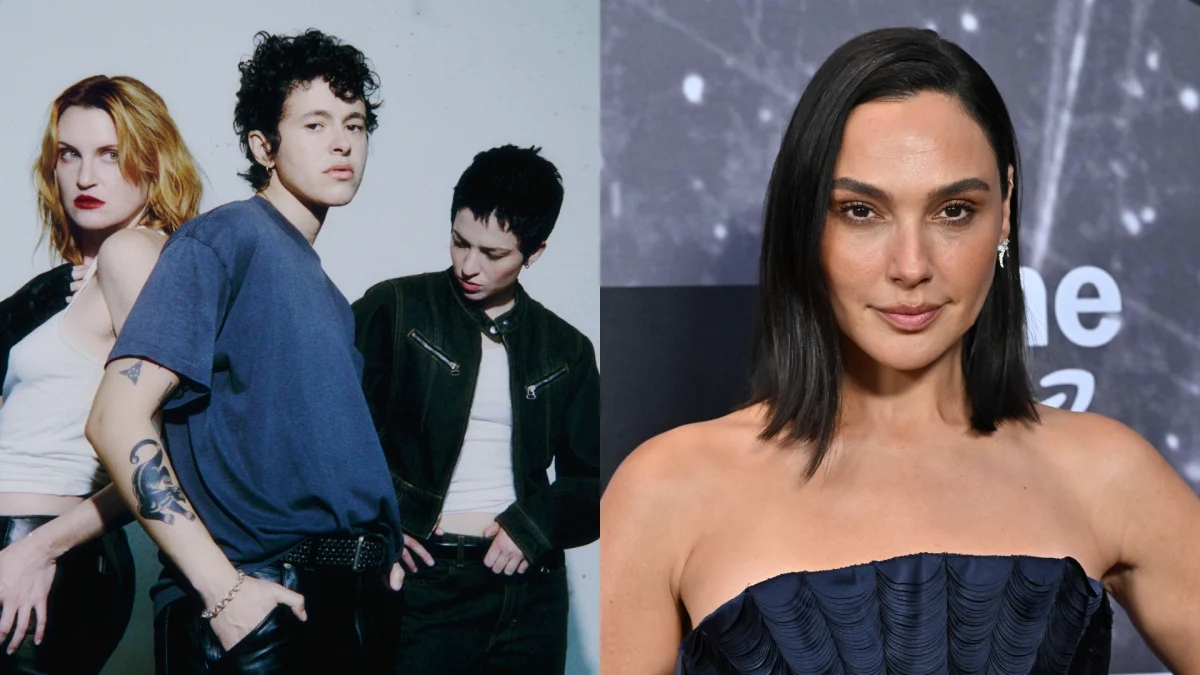
LOS ANGELES — Pop band MUNA used their platform to publicly distance themselves from fellow Jimmy Kimmel Live! guest Gal Gadot this week, delivering a blunt "Free Palestine" message on social media following their appearance on the late-night talk show.
The indie-pop trio served as the musical guest on the Thursday night broadcast of ABC’s Jimmy Kimmel Live!, performing "Dancing on the Wall," the title track from their latest studio album. However, an unexpected lineup overlap prompted band member Naomi McPherson to clarify where the group stands politically after discovering they shared an episode with Gadot, a former Israel Defense Forces (IDF) soldier and one of Hollywood’s most visible pro-Israel public figures.
The incident underscores the ongoing tensions in the entertainment industry regarding geopolitical stances, celebrity activism, and the complexities of late-night television booking logistics.
Main Facts
The controversy centers on a taped episode of Jimmy Kimmel Live! that aired on Thursday night. MUNA appeared as the evening’s musical act, while actress Gal Gadot was booked as a featured interview guest to promote her upcoming Prime Video action film, The Runner.
According to McPherson, the members of MUNA were entirely unaware of who else was scheduled to appear on the episode when they agreed to the booking and recorded their segment days prior. Upon realizing that their appearance shared a bill with Gadot—who has faced substantial backlash for her vocal support of Israel and her military background—McPherson took to Instagram Stories to address the situation directly.
While praising the production staff of the late-night program for being accommodating professionals who "really went the extra mile," McPherson drew a hard line regarding the guest lineup. "This was taped a few days ago & we weren’t told who any of the guests were gonna be," McPherson wrote. "So gotta also just take this moment also to say a nice big huge free palestine."

MUNA’s performance of "Dancing on the Wall" went ahead as planned, but the band’s swift digital statement quickly shifted public conversation away from the music and toward the intersections of pop culture, media scheduling, and international politics.
Chronology of Events
To understand how the late-night crossover unfolded, it is necessary to trace the sequence of events leading up to and following the broadcast:
- Pre-Taping (Early September 2026): MUNA records their musical performance for Jimmy Kimmel Live! in Los Angeles. At the time of the taping, the band is kept in the dark regarding the identities of the other guests appearing on the episode, standard practice for many talk shows looking to manage press leaks and audience expectations.
- Thursday Night Broadcast: ABC airs the episode. Gal Gadot appears in the interview segment to discuss her Prime Video thriller The Runner, followed by MUNA’s live rendition of "Dancing on the Wall."
- Post-Broadcast Social Media Response: Shortly after the episode airs, MUNA member Naomi McPherson publishes a series of posts to Instagram Stories. While commending the Kimmel production crew, McPherson explicitly disassociates the band from the episode’s contents and delivers the "Free Palestine" declaration.
- Fall 2026 Tour Announcement: The incident occurs just as MUNA prepares to launch their extensive North American headlining tour, amplifying media visibility around the band’s political views and upcoming live shows.
Supporting Data and Historical Context
The friction between MUNA and Gal Gadot does not exist in a vacuum; it is the latest chapter in a multi-year discourse surrounding celebrity speech, the Israel-Hamas conflict, and public accountability in Hollywood.
Gal Gadot’s History of Controversy
Gal Gadot has long been a lightning rod for criticism concerning her nationality and her public statements regarding the Middle East. A former combat instructor in the Israel Defense Forces, Gadot achieved global superstardom through roles in franchises like Wonder Woman and the Fast & Furious series.
However, her public positioning has frequently sparked intense online backlash:
- May 2021 Backlash: During a sharp escalation of violence in Gaza and Israel, Gadot posted a statement on social media expressing heartbreak for her country and calling for unity. The post drew immediate, fierce condemnation from critics who accused her of sanitizing Israeli military actions, with some social media users and activists labeling her remarks as supportive of "ethnic cleansing" and "genocide."
- The Snow White Box Office Fallout (2025): The polarization surrounding Gadot resurfaced heavily during the rollout of Disney’s live-action Snow White remake, in which she portrayed the Evil Queen. The film ultimately underperformed at the box office, a result Gadot later speculated was tied, at least in part, to her refusal to distance herself from Israel. In a 2025 interview, she reflected on the intense personal scrutiny she faced, noting: "I felt that those who are against Israel criticized me in a very personal, almost visceral way. They saw me first and foremost as an Israeli, not as an actress."
MUNA’s Political and Artistic Identity
Composed of Katie Gavin, Josette Maskin, and Naomi McPherson, MUNA has consistently used their platform to champion progressive causes, LGBTQ+ rights, and social justice. Formed in Los Angeles, the band has built a deeply loyal fan base—often referred to as "MUNA babies"—not only through critically acclaimed records like Saves the World and their self-titled 2022 release, but also through their outspoken advocacy on human rights issues.

The band’s decision to publicly distance themselves from a prominent pro-Israel voice aligns with their long-standing ethos of aligning their art with transparent political convictions.
Official Responses and Industry Reactions
As of Friday morning, representatives for Jimmy Kimmel Live!, ABC, and Gal Gadot have declined to issue formal statements regarding MUNA’s Instagram post. Late-night talk shows frequently book disparate groups of public figures—ranging from politicians and athletes to actors and musicians—who may hold radically opposing viewpoints, making accidental ideological overlaps a recurring reality in television production.
Industry analysts note that while talk show bookings rarely vet musical guests on their geopolitical alignment with actors or authors appearing on the same night, artists are increasingly asserting individual autonomy over their personal brands. By utilizing Instagram Stories to clarify their stance independently of the network, MUNA successfully separated their artistic contribution to the show from the broader political baggage associated with their co-guest.
Implications for Artists, Networks, and Audiences
The MUNA-Gadot episode highlights several broader trends shaping the modern entertainment landscape:
- The Rise of Instant Digital Counter-Messaging: In the era of social media, artists no longer have to rely on traditional press releases or media training filters to respond to controversial situations. A quick Instagram Story can immediately reframe an artist’s participation in mainstream media events, ensuring their fan base understands where they stand.
- The Politicization of Everyday Media Consumption: Audiences increasingly view cultural consumption through a political lens. For fans of indie-pop music who hold strong pro-Palestinian views, MUNA’s statement provided necessary reassurance, preventing any perception of tacit endorsement through shared platforming.
- Booking Challenges for Late-Night TV: Producers of programs like Jimmy Kimmel Live! may face growing scrutiny regarding how guests are paired. While surprise lineups are designed to generate buzz, they also carry the inherent risk of ideological friction, placing networks in the awkward position of hosting figures with mutually hostile worldviews on the exact same broadcast hour.
As MUNA prepares to embark on their upcoming North American tour, the incident serves as a stark reminder that in contemporary culture, art, politics, and digital commentary remain inextricably linked.
 Pevita Pearce
 Asro
Asro
 Lina Irawan
