

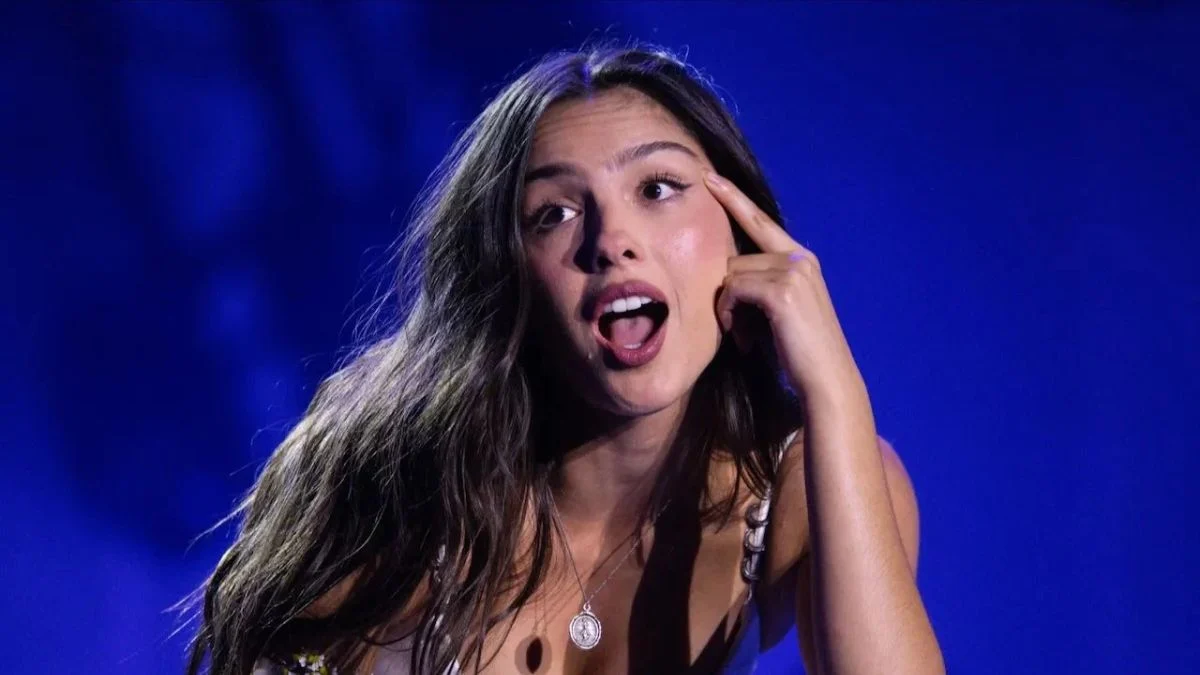
LOS ANGELES — Pop superstar Olivia Rodrigo has drawn a definitive, uncompromising line regarding the integration of artificial intelligence in her creative process. In a sweeping new cover story for The Hollywood Reporter, the Grammy-winning singer-songwriter made her stance crystal clear: when it comes to utilizing AI for songwriting or composition, her answer is an unequivocal "absolutely no."
The remarks offer a rare, candid glimpse into Rodrigo’s artistic boundaries at a time when the music industry is grappling with the ethical, legal, and creative implications of generative AI. While the technology has rapidly evolved to mimic vocal textures, write chord progressions, and generate lyrics, Rodrigo remains staunchly committed to the human element of storytelling.
Beyond her rejection of automated lyricism, the wide-ranging interview captures a pivotal moment of personal and professional maturation for the artist. From spearheading her groundbreaking, women-focused music festival to navigating the intense public scrutiny that has followed her since her teenage years, Rodrigo is aggressively stepping into her power—not just as a chart-topping musician, but as a cultural force.
Main Facts: The AI Stance and Creative Integrity
At the core of Rodrigo’s recent statements is an unwavering defense of human authenticity in music. During her conversation with The Hollywood Reporter, the "vampire" singer was asked if she would ever consider employing artificial intelligence to assist with her notoriously confessional songwriting.
"I would never use AI in any of my music. Absolutely no. Hard line on that," Rodrigo stated firmly.
Despite her absolute rejection of the technology, Rodrigo did confess to a brief, highly skeptical brush with automated tools alongside her longtime producer, Dan Nigro. Out of sheer morbid curiosity, the duo decided to test ChatGPT’s creative capabilities to see what kind of track titles an AI would generate for an Olivia Rodrigo record. The experiment, predictably, did little to sway her opinion.
"The closest I’d ever got is that once, me and Dan were like, ‘God, I wonder what ideas ChatGPT would have for an Olivia Rodrigo title,’ and they’re all fucking awful," she recalled with characteristic bluntness.
For Rodrigo, songwriting is an inherently visceral, deeply personal human experience rooted in pain, heartbreak, irony, and catharsis—qualities she believes an algorithm can simulate but never genuinely feel.
Chronology: From Teenage Breakout to Cultural Stateswoman
To fully understand Olivia Rodrigo’s current worldview, one must trace the trajectory of her meteoric rise to global fame and the profound shifts she has experienced over the past several years.
The 2021 Explosion
In early 2021, at the age of 17, Rodrigo was launched into the stratosphere with the release of her debut single, "drivers license." The track shattered streaming records, dominated global charts, and instantly turned the Disney Channel alumna into a household name. Overnight, her private life, emotional state, and every public appearance became fodder for intense media scrutiny and obsessive fan culture.
The Sophomore Era and Arena Stardom
Following the critical and commercial success of her debut album, SOUR, Rodrigo solidified her status as a rock-pop icon with her second full-length record, GUTS, in 2023. She embarked on massive international tours, performing for arenas packed with tens of thousands of screaming fans, all while grappling with the psychological toll of continuous public visibility.
The Summer of 2026: Daisy Chain Fields and "The Unraveled Tour"
A major turning point in Rodrigo’s relationship with her own fame arrived in mid-2026 with the inaugural Daisy Chain Fields, a women-focused music festival curated by the singer. Featuring legendary and influential acts such as Stevie Nicks, Alanis Morissette, Sarah McLachlan, and Karen O, the festival served as a masterclass in community building and philanthropic impact.
Directly following the festival’s success, Rodrigo kicked off "The Unraveled Tour" in September 2026, treating fans to a sprawling 26-song setlist spanning her three studio albums.
Supporting Data and Philanthropic Impact
Rodrigo’s pivot toward large-scale activism is not merely symbolic; it is backed by substantial, tangible results. The inaugural Daisy Chain Fields festival proved to be a financial and cultural powerhouse, raising an astounding $20 million for various charitable organizations.
The funds raised by the festival were distributed to prominent advocacy and support groups, including:
- Planned Parenthood: Providing vital reproductive healthcare services and advocacy.
- The National Women’s Law Center: Fighting for gender justice in the courts, in public policy, and in society.
- Baby2Baby: Supplying diapers, clothing, and basic necessities to children living in poverty.
This massive financial success fundamentally transformed Rodrigo’s perspective on her own celebrity. For years, she confessed, she viewed public attention as a burden rather than a tool for positive change.
"I’ve had all this attention on me since I was 17, and I’ve only ever looked at it like an albatross around my neck," Rodrigo reflected. "Pero Daisy Chain is a real example to me of how it actually is a real power that you can use for good."
Official Responses and Political Stances
As Rodrigo steps further into her role as a public advocate, she has faced questions regarding whether her art and events carry explicit political motivations. Her response was unambiguous.
When asked if Daisy Chain Fields was political, Rodrigo answered, "One hundred percent, yes." However, she was careful to emphasize that political engagement and joy do not have to be mutually exclusive.
"I think it’s also about joy. I think the two things can exist at the same time, they kind of have to," she explained. "I think young people have lost hope in our leaders and lost hope in each other. I really wanted to galvanize people and be evidence of what can happen when you come together and are part of something and contribute."
This philosophy has bled directly into her recent public statements. Earlier in the week, Rodrigo made headlines when she publicly condemned Cornell University over its handling of a high-profile sexual assault case. Taking to her platform, she did not mince words:
"Shame on Cornell and on every institution who protects rapists and abusers over women."
Broader Implications: The Music Industry and Pop Stardom
The revelations from The Hollywood Reporter profile touch on several broader cultural and industrial implications that extend far beyond one pop star’s career choices.
1. The Battle for Human Creativity in the Age of AI
As major record labels and tech companies experiment with artificial intelligence—ranging from AI-generated vocals to algorithmic hit-making tools—artists are increasingly forced to take a side. By drawing a hard line against AI, Rodrigo aligns herself with a growing contingent of musicians who view generative technology as an existential threat to authentic artistic expression. Her comments reinforce the idea that fans connect with music not just for its sonic pleasantness, but for the human vulnerability embedded within it.
2. The Evolution of the Pop Star Activist
The era of the "apolitical pop star" is rapidly closing. Gen Z and millennial audiences increasingly expect their idols to use their platforms to effect social change. Rodrigo’s ability to seamlessly channel commercial success into multi-million-dollar philanthropic efforts demonstrates a new blueprint for modern stardom—one where massive tour infrastructure and festival curations are leveraged directly for political and social advocacy.
3. Quirky Anecdotes and Humanizing Moments
Amidst heavy discussions of AI ethics, institutional accountability, and systemic misogyny, the interview also highlighted Rodrigo’s grounded, sometimes eccentric personality. She discussed the invasive, exhausting public fascination with her dating life and her long-term aspirations to eventually attend college.
In a particularly charming anecdote, Rodrigo revealed she spent an "exorbitant amount of money"—specifically $25,600—to acquire the vintage Gunne Sax dress worn by Meg White on the iconic cover of The White Stripes’ 2003 masterpiece, Elephant. She had originally planned to wear the historic piece of rock memorabilia during her Daisy Chain festival appearances, but ultimately abandoned the idea for a relatable reason: it was simply "too fucking hot."
Looking Ahead
As Olivia Rodrigo continues to traverse the globe on "The Unraveled Tour," her artistic and personal trajectory points toward an artist who is refusing to be boxed in. Whether she is commanding a festival stage of rock legends, calling out systemic institutional failures, or slamming the door on lifeless algorithmic shortcuts, Rodrigo is proving that modern pop stardom can be defined by integrity, raw emotion, and a fierce refusal to compromise.
For her millions of fans, the message is clear: the future of Olivia Rodrigo’s music will be written by human hands, fueled by real heartbreak, and delivered with uncompromising passion.
 Azzam Bilal Chamdy
 Nana Wu
