

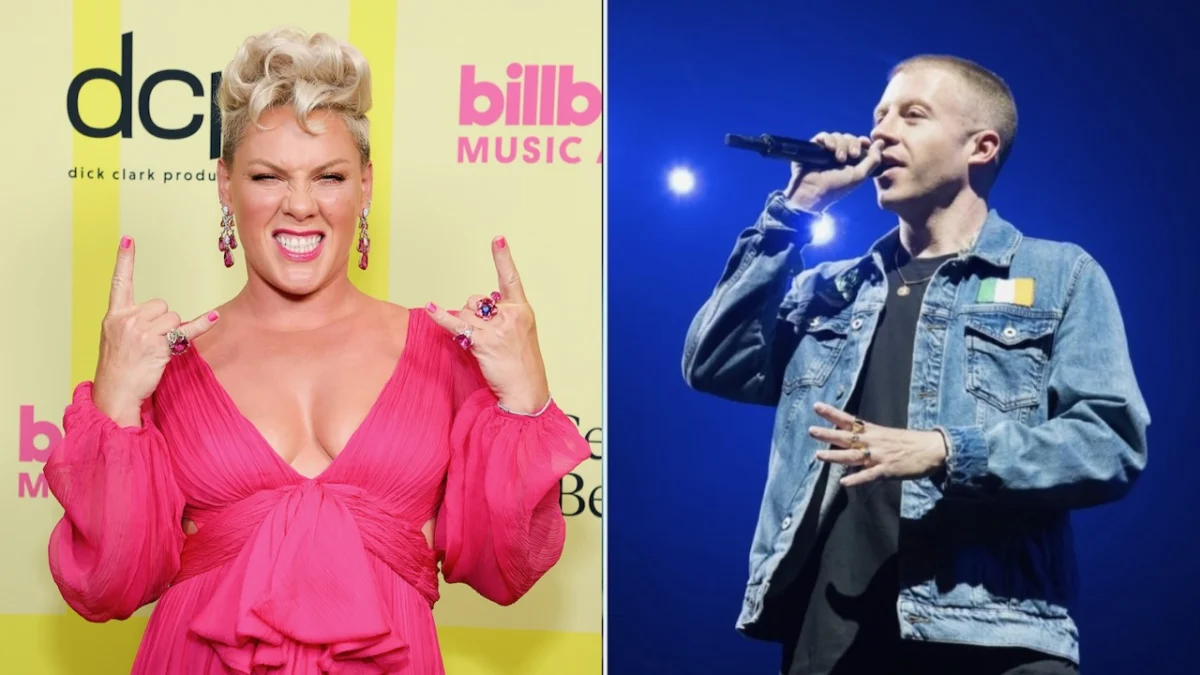
NEW YORK — Pop icon P!NK has issued a comprehensive and deeply personal statement addressing a firestorm of online criticism sparked by her decision to reshare a controversial social media post. The digital dispute centers on fellow artist Macklemore’s recent onstage remarks advocating for a "Free Palestine" during a concert appearance.
The multi-platinum singer-songwriter took to her official social media channels to clarify her position, admitting that while her initial method of engagement—reposting a statement from the advocacy group StopAntisemitism and responding with snarky memes—was flawed, her core concerns remain rooted in her Jewish heritage, her extensive humanitarian work, and lingering tensions over past controversies involving Macklemore.
The controversy highlights the precarious intersection of pop culture, global geopolitics, and digital expression, underscoring how quickly online discourse can escalate into polarized pile-ons.
Main Facts
The ongoing public feud began following Macklemore’s guest performance during Ed Sheeran’s stadium tour stop at MetLife Stadium in East Rutherford, New Jersey. Taking the microphone between songs, Macklemore addressed the massive crowd, explicitly stating his support for Palestinian liberation.
"One of the reasons why I wanted to come on this tour was because I wanted to stand up here on stages in stadiums across America and say two words that are very near and dear to my heart: ‘Free Palestine,’" Macklemore told the audience. "I want those words to be loud and clear so that people from Gaza, all the way to the occupied West Bank, know that we have not forgotten them."
Shortly after the performance, the watchdog and advocacy organization StopAntisemitism published a scathing critique of Macklemore’s remarks. The group accused the rapper of promoting false narratives regarding the conflict in Gaza—specifically alleging he falsely claimed Israel is committing genocide—and argued that he had "turned a mainstream event into a political nightmare against the Jewish state." StopAntisemitism even went so far as to call for concertgoers to receive apologies and refunds.
P!NK reshared this post to her followers, a digital action that was swiftly interpreted by critics as an endorsement of the original post’s entire sentiment, prompting a massive wave of backlash. In response to the wave of condemnation, P!NK published a lengthy, reflective statement to clear the air, drawing clear boundaries between words she authored and those she inadvertently amplified through a simple click.
Chronology of Events
To understand the current impasse, it is necessary to examine how the narrative unfolded over a matter of days, stretching from the concert stage to digital platforms:
- Last Weekend: Macklemore performs as an opener during Ed Sheeran’s concert at MetLife Stadium, delivering his pro-Palestine remarks to tens of thousands of concertgoers.
- Shortly After the Concert: Macklemore posts an Instagram clip of his speech, accompanied by the caption: "Wanting all humans to be treated equal should never be controversial."
- Mid-Week: The advocacy group StopAntisemitism publishes its critique of Macklemore’s performance, condemning his statements as hostile toward Israel and demanding accountability.
- Later in the Week: P!NK reshares the StopAntisemitism post. As critical comments begin to flood her accounts, she responds with defensive or "snarky" memes, which she later admits only served to inflame the situation.
- End of the Week: Facing intense blowback from fans and critics alike, P!NK deletes or moves past her initial reactive posts and publishes a comprehensive, multi-paragraph statement explaining her actions, her heritage, and her views on the Israeli-Palestinian conflict.
- The Weekend: The statement coincides with significant cultural milestones, including the anniversary of September 11th and the beginning of Rosh Hashanah, the Jewish New Year, providing a poignant backdrop to her reflections on peace, family, and grief.
Supporting Data and Context
While digital arguments often reduce complex geopolitical conflicts to soundbites and hashtags, the individuals at the center of this controversy carry long histories in the public eye.
P!NK, whose real band of recognition spans a 25-year career characterized by chart-topping hits and outspoken advocacy, emphasized her decade-long tenure as a UNICEF ambassador. During her career, she noted, her humanitarian efforts have brought her face-to-face with children suffering the devastating consequences of war across multiple international zones.
"I’ve spent a decade as a UNICEF ambassador for kids who didn’t choose the country or the war they were born into, and I have grieved every one of them, on both sides of that fence," P!NK stated, emphasizing that her empathy is not theoretical. "I didn’t do it from behind a screen; I went to those children and held them."
At the same time, the pop star pointed to an event from over a decade ago that fundamentally shaped her interpretation of Macklemore’s recent stage presence. In 2014, Macklemore faced heavy criticism—and subsequently apologized—after wearing a costume during a performance that critics widely identified as featuring stereotypical Jewish caricatures. P!NK referenced this past incident in her statement, noting that "every Jew I know knew exactly what it was."
She explained that while she accepted his apology at the time and moved on, his prominent political statements at a mainstream concert brought those unresolved protective instincts back to the surface. For P!NK, her reaction was less about the phrase "Free Palestine" in a vacuum, and more about her perception of a recurring pattern where Jewish sensitivities and historical traumas are sidelined or dismissed.
Official Responses and Statements
P!NK’s statement was notable for its raw admission of social media’s pitfalls, combined with an uncompromising stance on her personal identity and right to speak.
P!NK’s Full Perspective
"Last Sunday I reposted somebody else’s post about Macklemore’s set at Ed Sheeran’s show. It said things in words I didn’t write, and I wouldn’t have chosen all of them," P!NK wrote. "Then the comments came, and I did what I do when I’m hurt, which is post snarky memes and act like I’m fine. That’s on me. A repost isn’t a statement, and a meme isn’t a spine. Social media makes all of us cheap and fast, and we all know it. But I’d rather be disagreed with for what I actually said than hated for what anybody else wrote, so let me say it."
Reiterating her stance on the broader conflict, she added:
"I was born a Jew. I didn’t pick it, and I’ve never hidden it… Of course I don’t speak for Israel, or for any government. I never have. What I said in October 2023 is still exactly what I believe: Hamas is a terrorist organization. Palestinians deserve a future that honors their humanity and their aspirations. Protecting innocent life comes first, everywhere, and nobody should ever celebrate the death of a child."
Addressing the weaponization of language online, she took aim at critics who used terms like "Zionist" as a pejorative without understanding her personal positions:
"I wasn’t asked. I was told. I don’t think most of them hate Jews. I think somebody handed them a story where the Jew who won’t apologize for existing must be the villain, and they’ve been putting words in my mouth ever since."
She concluded her reflections by drawing a line between political debates and the basic human need for safety:
"You don’t have to agree with one thing Israel’s government does to not want the Jewish family two rows down from you to be scared or targeted at a concert. That’s the only thing I’m asking anybody for."
Macklemore’s Position
Macklemore has not directly addressed P!NK by name, but his initial post accompanying the video clip of his MetLife Stadium speech encapsulates his viewpoint: "Wanting all humans to be treated equal should never be controversial." His supporters view his stadium statements as an essential exercise of free speech and solidarity with civilian populations suffering under military occupation and war.
Implications of the Controversy
The clash between P!NK and the fallout from Macklemore’s remarks illustrates several broader implications for contemporary celebrity activism and digital culture:
- The Perils of Digital Endorsement: The controversy serves as a cautionary tale for public figures regarding the ambiguity of social media resharing. In an era where algorithms reward speed over nuance, a single tap on a share button can attach a celebrity’s global brand to arguments, rhetoric, or tones they did not personally craft.
- The Polarization of Cultural Spaces: Concert venues and music festivals are increasingly becoming flashpoints for geopolitical advocacy. While artists feel morally compelled to use their platforms to address humanitarian crises, audiences and fellow performers are often left fractured over which causes are highlighted and how those messages are delivered.
- The Burden of Identity and Representation: P!NK’s statement shines a light on the heavy emotional toll carried by Jewish public figures navigating a deeply polarized global landscape. Her insistence that she does not speak for any government, yet feels acutely vulnerable to rising antisemitism, reflects a widespread tension within the entertainment industry where cultural identity is frequently conflated with state policies.
As the news cycle moves forward, P!NK’s statement attempts to draw a definitive line under the digital pile-on, redirecting her focus toward family, tradition, and personal peace as she observes Rosh Hashanah. However, the underlying debate over how artists use their platforms to address international conflicts remains as contentious as ever.
 Pevita Pearce
 Lina Irawan
