

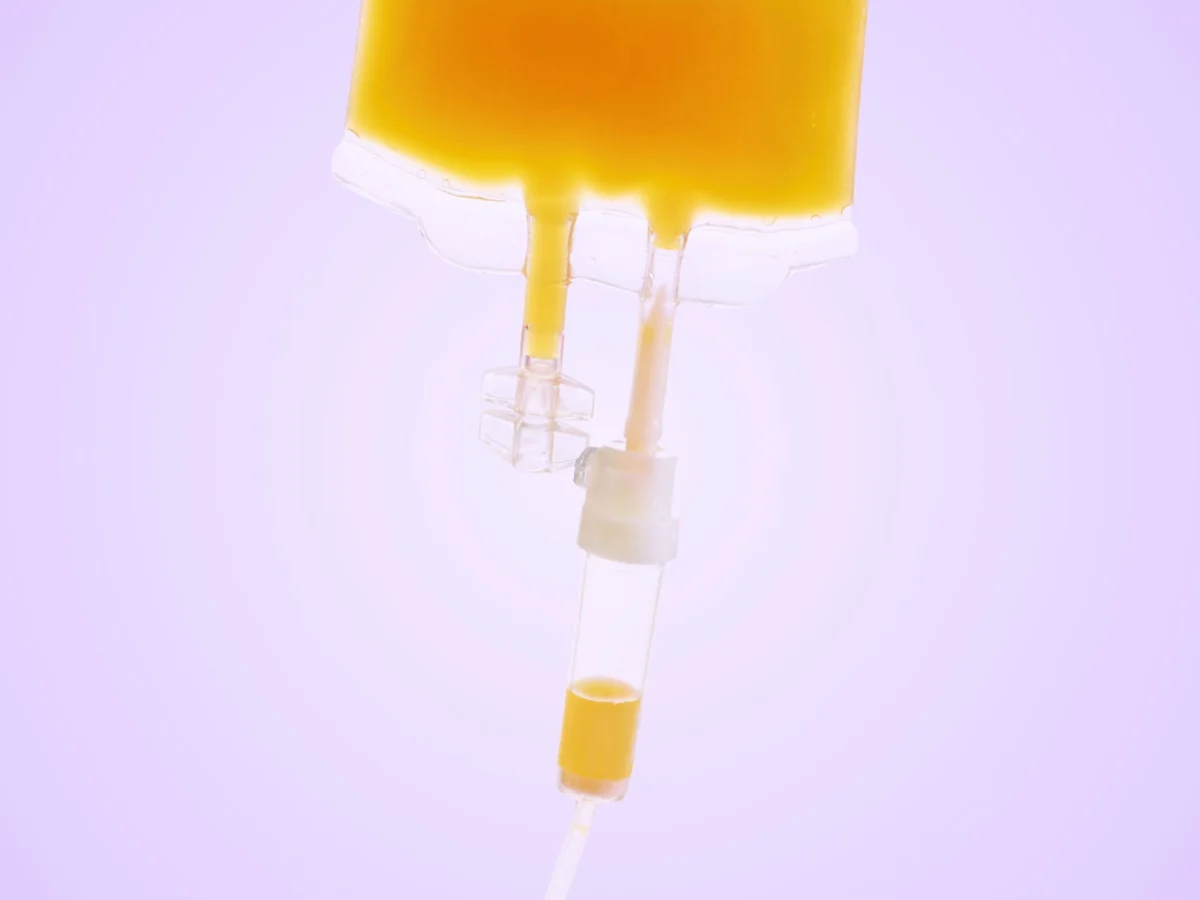
The human pursuit of longevity has driven centuries of innovation, from the mythological fountain of youth to modern molecular biology. Today, the latest anti-aging breakthrough capturing the public imagination is therapeutic plasma exchange (TPE)—a medical procedure that filters and replaces the liquid portion of human blood. A notable 2025 study published in the journal Aging Cell suggested that this technique could lower a recipient’s biological age by an impressive two and a half years.
Yet, before wellness enthusiasts begin rushing to commercial longevity clinics for blood-filtering treatments, experts urge caution. Peeling back the sensationalized headlines reveals a more nuanced reality about what plasma-based interventions can—and cannot—achieve. While the science is rooted in decades of rigorous research, therapeutic plasma exchange is far from a turnkey elixirs for youth.
Main Facts: What Is Therapeutic Plasma Exchange?
At its core, plasma is much more than the pale-yellow fluid that suspends red and white blood cells in the circulatory system. Though predominantly composed of water, plasma is a complex biological soup rich in proteins, metabolites, hormones, and inflammatory signaling molecules.
Dr. Andrea Maier, a geriatrician and board member of the Academy for Health and Lifespan Research, describes plasma as the body’s ultimate courier service.
"It’s a transport system like DHL, a vehicle to bring things from your brain to your muscles, from kidney to lungs, and so on," Dr. Maier explains. "So it’s a fluid with lots of information."
Because plasma mirrors the dynamic internal state of various organ systems, it has become a central focus for longevity researchers attempting to quantify "biological age." Unlike chronological age—the number of years a person has been alive—biological age measures the physiological wear and tear on cells and tissues.
By tracking thousands of circulating proteins in the blood, scientists can estimate whether a 40-year-old’s internal biology functions more like that of a robust 30-year-old or an aging 50-year-old.
"There’s no one biological age, but people try to estimate it," says Dr. Keenan Walker, a senior investigator at the National Institute on Aging. "And what studies have found is that people whose biological age is older than their chronological age are at greater risk for chronic conditions, diseases, and mortality."
Chronology: From Sci-Fi Parabiosis to Modern Trials
The conceptual foundation of blood-based anti-aging treatments stretches back roughly 15 years, evolving from radical animal experiments to carefully monitored human clinical trials.
The Era of Parabiosis (Early 2010s)
Researchers initially explored the connection between circulating blood and aging through a surgical technique known as parabiosis. Scientists physically linked the circulatory systems of old mice and young mice. The core hypothesis was simple: if an older organism was continuously exposed to young, youthful plasma, its aging tissues would reap regenerative benefits.
The experiments yielded striking results. Older mice that received the circulatory benefits of young mice demonstrated enhanced resilience to tissue and organ stress. These foundational discoveries eventually paved the way for medical applications in humans, where therapeutic plasma exchange has been utilized to manage specific autoimmune diseases, neurological disorders, and aggressive blood cancers.
"Everything really came out of that question: Is there something in our circulation we could get rid of or infuse into it to be able to live longer?" Dr. Maier notes. However, translating those rodent experiments into safe, effective human anti-aging therapies has proven exceedingly complex.
The 2025 Aging Cell Clinical Trial
The recent excitement stems from a clinical trial published in Aging Cell, which enrolled 42 human participants. Researchers subjected these individuals to therapeutic plasma exchange, systematically filtering out their natural plasma and replacing it with purified albumin (a standard blood protein) and saline. A subset of participants also received intravenous immunoglobulin (IVIG), an immune therapy designed to modulate immune response.
Advanced molecular lab tests were used to track biomarkers of aging throughout the intervention, setting the stage for a critical evaluation of how human biology responds to systemic fluid replacement.
Supporting Data: Examining the Results Beyond the Headlines
At first glance, the data from the Aging Cell trial appeared transformative: certain participants exhibited a reduction in biological age of approximately 2.5 years following the procedure. However, a deeper dive into the study’s timeline paints a more complicated picture.
Dr. Maier highlights a crucial caveat regarding when these age-reversing metrics were recorded.
"If you are digging a little bit deeper, this ‘2.5 years younger’ is comparing people at midterm to the baseline, not at the end of the study and the baseline," she explains. "At the end, the effect was nearly gone."
Why would the rejuvenating signals fade by the end of the trial? The answer lies in the profound stress that total plasma exchange places on human physiology. Stripping the body of its native plasma and introducing a synthetic or foreign substitute creates a profound systemic shock.
Initially, the influx of fresh replacement fluids and the dilution of inflammatory circulating factors can trigger a temporary shift in biological age markers. Soon afterward, however, the body initiates compensatory mechanisms to adapt to the massive disruption. As homeostatic systems fight to regain balance, biomarkers inevitably swing back toward their baseline levels. In short, any anti-aging benefit gained is profoundly short-lived.
Furthermore, individual response rates varied significantly based on baseline health status. Dr. Walker points out that participant demographics played a major role in how the body reacted to the intervention.
"Those who were less healthy saw a stronger intervention effect," Dr. Walker observes. "So I think it’ll be important to find out for whom this works."
Official Responses: Expert Consensus and Future Outlook
Despite the limitations observed in the recent trial, leading geriatric and aging researchers remain optimistic about the overarching field of blood-based longevity science, even if they advise extreme caution regarding current clinical practices.
Dr. Maier categorizes the current state of research with measured realism:
"I would call this a phase 1 study. We’ve basically learned that we can safely do it, and now we have to see it in much bigger studies and look at the long-term effect."
She emphasizes that while the underlying hypothesis is scientifically sound, a blunt instrument like generalized plasma exchange is not yet ready for prime time.
"It’s not a crazy idea. It’s absolutely grounded in lots of evidence, but not for everybody. It needs to be more precise," Dr. Maier states. "The future is great in our field, and this is the first tiny step, but we should absolutely not implement it now in clinical practice because it is so rough on the body. I love innovation, and I love this study, but I think the future will give something else."
Dr. Walker echoes the sentiment that personalized medicine will likely supersede crude, wholesale blood-filtering protocols. Rather than purging the entire circulatory system of its complex signaling environment, future longevity interventions will likely focus on targeting specific harmful proteins or amplifying beneficial pathways with surgical precision.
Implications: What This Means for Longevity Seekers
The fascination with therapeutic plasma exchange highlights a recurring tension in modern longevity science: the gap between theoretical biological mechanisms and practical, safe clinical applications.
For everyday consumers navigating the wellness landscape, the implications of the 2025 Aging Cell study are clear:
- Avoid Commercial Hype: Commercial "plasma clinics" offering general blood-filtering or young-plasma infusions for anti-aging purposes are operating well ahead of the scientific evidence.
- Recognize the Stress Factor: Therapeutic plasma exchange is an invasive, physically demanding medical procedure designed for specific pathologies—not a routine spa treatment for general wellness. Subjecting a healthy body to complete plasma replacement causes acute physiological stress that can outweigh temporary biomarker shifts.
- Watch the Horizon: The future of anti-aging medicine lies in targeted molecular therapies. As research shifts toward understanding which specific circulating factors drive aging, scientists will likely develop precision biologics that mimic the benefits of plasma exchange without the systemic trauma.
Ultimately, the 2025 study serves as a valuable proof-of-concept. It demonstrates that human biological age is remarkably plastic and responsive to systemic changes in the blood. But as researchers continue to refine their approach, the fountain of youth will remain a destination requiring much more than a simple fluid swap.
 Asro
Asro
 Suro Senen
