

Welcome to Taste Test, where every week our critic Jonah Flicker explores the most buzzworthy and interesting whiskeys in the world. Check back each Sunday for his latest whiskey review.
What would happen if you dared to blend some of the most elusive and collectible spirits on the planet? Imagine, for a moment, decanting a Pappy Van Winkle 15-Year, a Michter’s 20-Year, and a WhistlePig Boss Hog into a single vessel. While such an experiment sounds like the fever dream of an eccentric billionaire—and a surefire way to incite outrage among whiskey purists—the master blenders at Brown-Forman have successfully pulled off a feat of similar magnitude.
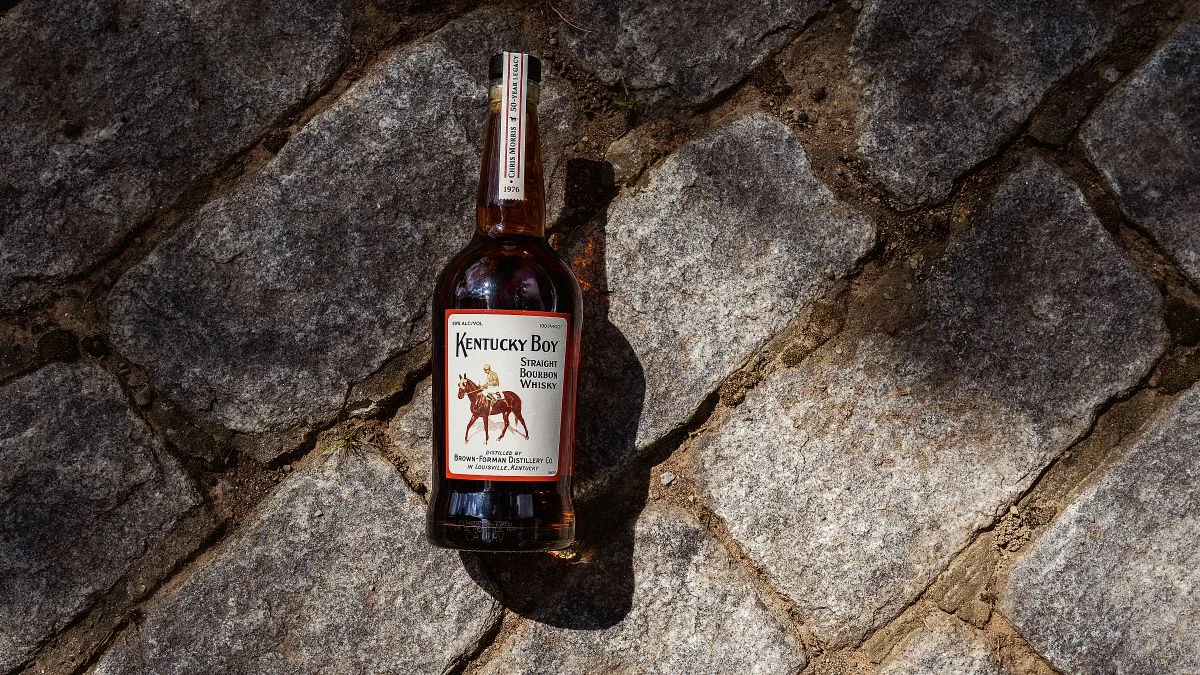
Their latest release, Kentucky Boy, is not a mere marketing stunt; it is a calculated, masterful convergence of three of the most revered labels in the company’s storied portfolio: Old Forester Birthday Bourbon, King of Kentucky, and Woodford Reserve Double Oaked. The result is a profile that is as complex as it is harmonious.
The Main Facts: An Unprecedented Assembly
Kentucky Boy is a limited-edition bourbon that defies the standard industry practice of focusing on a single brand identity. Instead, it serves as a tribute to Master Distiller Emeritus Chris Morris, marking his 50th anniversary with Brown-Forman.
The spirit sits at a robust 100 proof, a decision that feels perfectly calibrated for the profile. The composition remains a closely guarded secret, with even Morris admitting he does not know the exact ratio of the blend, noting only that it is certainly not an equal-parts marriage. What we do know is that it utilizes some of the most sought-after liquid in the Brown-Forman warehouses, each component having been set aside for its respective, prestigious label long before the idea of this blend was even conceived.
Chronology: From Archives to the Kentucky Bourbon Festival
The genesis of Kentucky Boy began with a deep dive into the company’s history. Caleb Trigo, Assistant Master Distiller at Old Forester, and Elizabeth McCall, Master Distiller at Woodford Reserve, sought a way to honor Morris’s half-century of contributions to the distillery. While scouring the archives, they unearthed the name "Kentucky Boy," a defunct brand released regionally in the years following Prohibition.
The name was revived, but the liquid inside is light-years ahead of its historical predecessor. The project remained a well-kept secret within the distillery walls until its unveiling at the Kentucky Bourbon Festival. Despite the quiet launch, the reception was immediate and overwhelming. Morris recalls, "It was a tremendous honor to see the passion behind this project. I spent hours signing bottles for fans who had been waiting in lines that stretched around the block."
Supporting Data: The Anatomy of a Masterpiece
To understand why Kentucky Boy succeeds, one must understand the three titans that comprise its DNA:
- Woodford Reserve Double Oaked: Known for its secondary maturation in heavily toasted, lightly charred new oak barrels, this component provides the backbone of the blend, contributing heavy notes of dark chocolate, leather, and oak-driven sweetness.
- King of Kentucky: This is the crown jewel of Brown-Forman’s annual releases. It is a single-barrel, barrel-proof expression that captures the depth of long-aged, high-quality stock. Its presence in the blend brings a refined intensity that prevents the whiskey from feeling "watered down."
- Old Forester Birthday Bourbon: Released annually to celebrate the birth of founder George Garvin Brown, this liquid is the heart of the brand. It is renowned for its ripe fruit and banana-forward profile, which acts as the bridge between the heavy oak of the Double Oaked and the spicy complexity of the King.
When combined, these elements interact in a way that feels intentional rather than haphazard. As I tasted the final product, it became clear that the blend does not simply mimic its parts; it creates a new flavor geometry. You encounter the signature Brown-Forman banana and orchard fruit notes, but they are immediately tethered to a luxurious palate of butterscotch, vanilla, cinnamon, and cherry cola. A hint of black pepper and nutmeg provides a finish that is lingering and sophisticated.

Official Responses and the "Marketing Gimmick" Debate
Is blending multiple prestige brands together a gimmick? In the world of high-end spirits, the term is often used as a pejorative. However, when the liquid delivers, the label becomes secondary.
"The concept of combining brand names like these into one whiskey is certainly a marketing gimmick in part," I noted during my assessment, "but you can’t argue with the results."
Master Distiller Emeritus Chris Morris emphasizes that the project was about legacy, not just liquid manipulation. By using stocks that are specifically allocated and monitored for ultra-premium releases, the team ensured that the base materials for Kentucky Boy were of the highest caliber. It is a testament to the trust the company places in its blenders that they were allowed to "raid the vault" of their most successful labels to create something entirely new.
The Implications: Scarcity and the Secondary Market
The excitement surrounding Kentucky Boy has predictably outpaced its supply. While the official MSRP is set at $100—a remarkably fair price for a whiskey containing such rare stocks—the reality of the marketplace is far more aggressive.
Secondary markets are already seeing bottles trade for triple the original price. This phenomenon speaks to the current state of bourbon culture, where "chase bottles" create a feedback loop of scarcity and demand. However, for those fortunate enough to acquire a bottle at or near its retail price, the experience is arguably worth the premium.
This release sets a fascinating precedent. If Kentucky Boy proves to be a long-term success, could we see other legacy distilleries following suit? The idea of "blended house collections" could potentially change how we categorize premium spirits. Instead of looking for the best single expression, collectors might soon be hunting for the best "house blend," where the skill of the blender is placed on the same pedestal as the age statement or the distillery’s heritage.
Final Review: A Masterful Balance
Kentucky Boy is not just a triumph of marketing; it is a triumph of sensory engineering. At 100 proof, it offers a flash of heat that invigorates the senses without scorching the palate. It is a bold, mature, and deeply satisfying pour that encapsulates everything that makes Brown-Forman a powerhouse in the American whiskey landscape.
While it is frustratingly difficult to find, it is one of the few limited releases in recent memory that justifies the hype. It is a rare moment where the sum is not only equal to its parts but arguably transcends them.
Score: 95
Summary of Tasting Notes
- Nose: Deep oak, tobacco, and dried fruit.
- Palate: Butterscotch, vanilla, cinnamon, and a signature ripe banana note that defines the Brown-Forman house style.
- Finish: A long, warm, and spicy tail with hints of cherry cola and nutmeg.
- Verdict: A sophisticated, well-aged masterpiece that honors its history while paving a new path for high-end blending. If you see a bottle, do not hesitate—the opportunity to own a piece of this liquid history is fleeting.
 Suro Senen
 Muslim
 Pevita Pearce
