

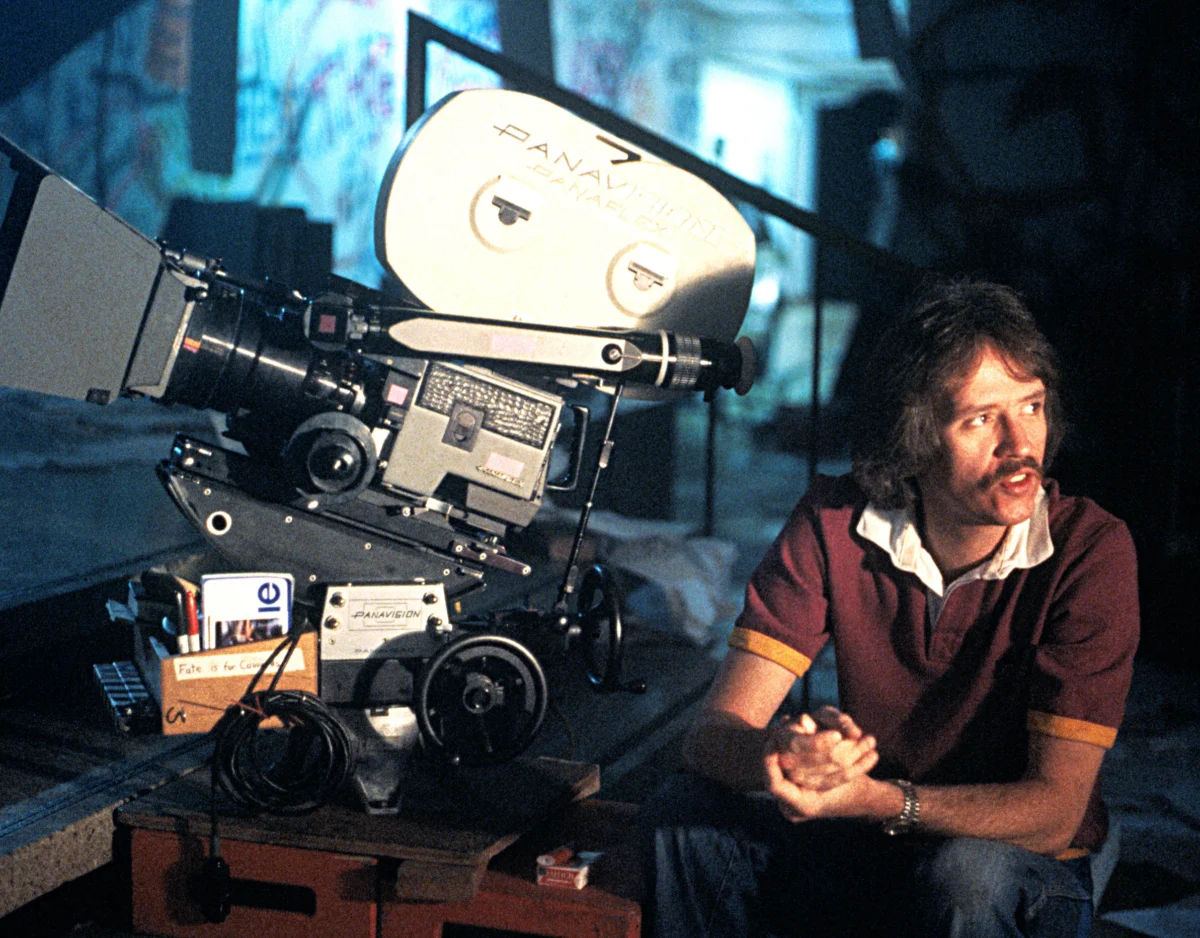
In the pantheon of cinematic antiheroes, few figures loom as large—or as silently—as Snake Plissken. With his iconic eyepatch, gravel-voiced cynicism, and complete disregard for authority, the character redefined the action archetype for a generation. This year, the sequel that brought him to the West Coast, Escape From L.A., celebrates its 30th anniversary. To mark the occasion, the Academy Museum of Motion Pictures hosted an exclusive double feature screening of both Escape From New York (1981) and Escape From L.A. (1996), featuring a rare, candid conversation between the franchise’s twin architects: star Kurt Russell and visionary director John Carpenter.
The evening served as more than just a retrospective; it was a masterclass in the collaborative bond between two of Hollywood’s most formidable creative forces. As they dissected their legendary partnership, they offered fresh insights into the nature of the "Snake" persona and the evolution of the action genre itself.
The Psychotic Outlaw: Defining Snake Plissken
For many, Snake Plissken represents the ultimate cool, a man who navigates a dystopian landscape with effortless grit. However, Kurt Russell was quick to puncture the myth of the "heart of gold" often attributed to such protagonists. During the Q&A, Russell offered a stark, uncompromising assessment of the character he famously inhabited.
"He’s a psychotic," Russell remarked to the audience. "He’s a psychotic man. He’s an escape artist. The only thing he can’t escape is himself, but he’d kill you in a heartbeat. No interest in anybody, alive, dead, or anything."
John Carpenter, who directed both features, echoed this sentiment, emphasizing that Plissken’s morality is strictly transactional. "He’s going to move forward, and he doesn’t care," Carpenter explained. "If you get in his way, he’ll kill you. He has a job to do. He’s going to move this way. So that’s who he is."

A Chronology of Chaos: From 1997 to 2013
The Escape saga spans 15 years in production time but creates a continuous, bleak vision of an American future. In the 1981 original, Escape From New York, the United States has become a police state, and the entirety of Manhattan has been converted into a maximum-security prison. When Air Force One crashes within the island’s walls, the government recruits Snake—a former Special Forces soldier turned convict—to rescue the President (played by Donald Pleasence). The stakes are heightened by a lethal incentive: a series of micro-explosives injected into his bloodstream, set to detonate if he fails to complete his mission within a narrow time window.
The sequel, Escape From L.A., arrived in 1996, set in a future where the city of Los Angeles has been severed from the mainland by a massive earthquake and turned into a dumping ground for the "morally bankrupt." While the production scale shifted, the core of the character remained anchored by the creative team of Russell, Carpenter, and producer Debra Hill.
The Studio Struggle: Selling the Antihero
The longevity of Snake Plissken is all the more impressive given the resistance the project initially faced. During the 1981 development phase, executives at AVCO Embassy Pictures were famously skeptical of a lead character who lacked traditional virtues.
"When I wanted to wear the eyepatch, they were really like, ‘That’s great, you’re going to cover up half his face,’" Russell recalled. "There was one person in the room saying, ‘I don’t understand why we’re going to pull for this guy. He has no redeeming value of any kind.’"
Russell’s solution to the executive pushback was simple, if blunt: "Because I’m playing him."

This creative tension extended to the minutiae of performance. Russell noted that he often improvised character beats to ground the absurdity of the dystopian premise. One such moment occurs when Snake first enters the desolate, wreckage-strewn ruins of New York. Instead of rushing headlong into the action, he sits down. "John was great: ‘Yeah, just sit there for a while,’" Russell remembered. "Because in that moment, there’s not much going on. He doesn’t really know what’s going on."
Physicality and the Biological Deadline
By the mid-90s, the landscape of film production had shifted significantly. AVCO Embassy had folded, and the rights had moved to Paramount. Carpenter, who famously dislikes sequels, was initially hesitant to revisit the character.
"They’d been trying to get us to do a sequel for 10 years," Carpenter admitted. "I don’t care for sequels, but you wanted to play the character again."
For Russell, the decision was driven by a sense of urgency regarding his own physical capabilities. "I said if we’re going to do this, we better do it now," Russell noted. "If you want to play these movies back to back, I got about eight months left in me."
The physical demands of Escape From L.A., particularly the complex motorcycle sequences and martial arts choreography, were markedly different for a 44-year-old Russell compared to his 28-year-old self in the original. The eyepatch, which once served as a stylistic choice, became a practical challenge. "I had different eyepatches," he revealed. "For close-up stuff, there was just a blackout. For longer distances, I had it perforated so I could see through it a little bit."

A Partnership Forged in Fire
The collaboration between Russell and Carpenter is one of the most productive in genre history, spanning projects like the Elvis television movie (1979), The Thing (1982), and Big Trouble in Little China (1986). Their professional dynamic is defined by mutual respect and a shared sense of humor.
Carpenter shared an anecdote about their time filming The Thing in the frigid, high-stress environment of British Columbia. During a visit from a female executive from Universal, the cast—led by a mischievous Russell—decided to pull a prank. After getting actor Keith David "passed out drunk," they dragged him to Carpenter’s hotel door and knocked repeatedly. "My guest runs to the bathroom, and I open the door," Carpenter laughed. "He says to me, ‘Look what you’ve done to your cast.’"
Implications: The Legacy of a Creative Union
The retrospective at the Academy Museum served as a poignant reminder of the "auteur" era of filmmaking. Carpenter spoke glowingly of Russell’s technical discipline, noting that his background in the Disney system gave him a level of professionalism rarely seen in modern stars.
"Beside me here is, I’m telling you, the most underrated actor in Hollywood," Carpenter stated. "He makes my life as a director easy. He comes in knowing everybody’s line, knows his own, knows what he’s going to do."
As the event concluded, the conversation turned to the future. At 75, Russell reflected on his career trajectory with a humility that belied his status as a screen icon. "I’m 75 years old and I’m still on the come, man," he said. "John was one of the most important people in my career, therefore in my life. He was a terrific friend. Every once in a while, I’d like to look through the camera to see how John was looking at the world. John looks at the world differently than any other director that I ever worked with."

As audiences continue to revisit the Escape films, they aren’t just watching high-concept science fiction; they are witnessing the result of a rare, decades-long synergy. Whether it is the gritty realism of 1981 or the campy, high-octane spectacle of 1996, the collaboration between Carpenter and Russell remains a cornerstone of American cult cinema—a testament to what happens when an unflinching director meets an actor who is willing to embrace the darkness of a character with total, uncompromising commitment.
 Nana Wu
 Evan Lee Salim
 Suro Senen
