

Main Facts
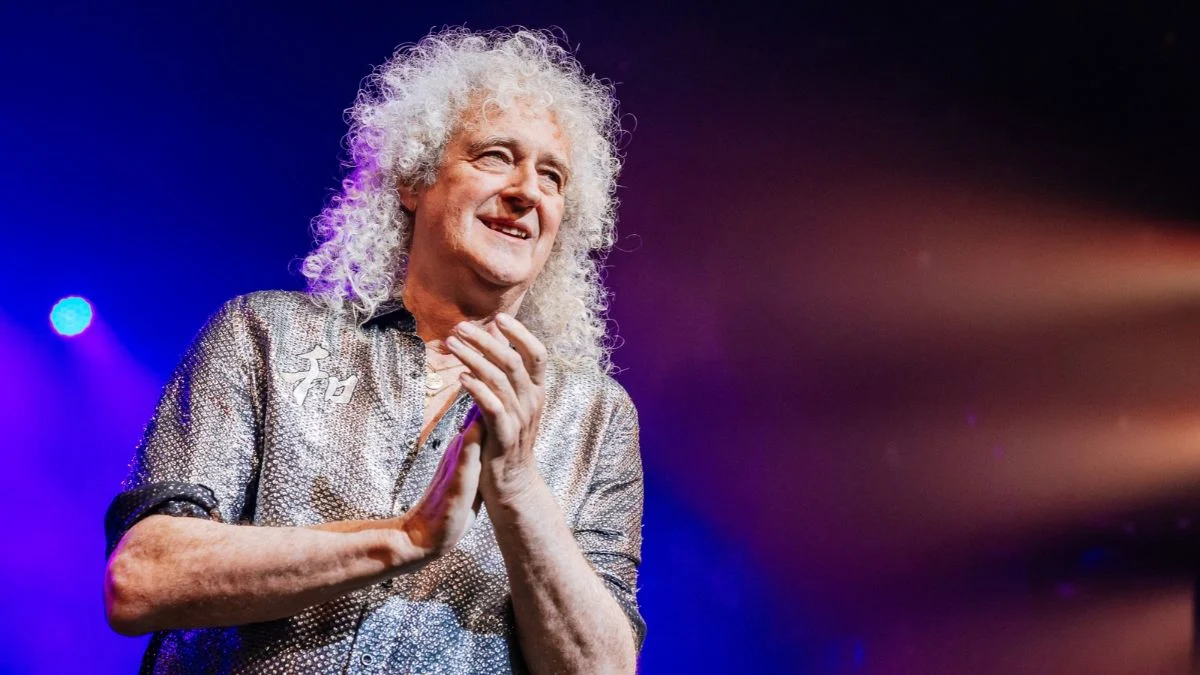
Legendary Queen guitarist Brian May has officially closed the chapter on traditional touring, confirming in a sweeping new interview that the band will no longer embark on extensive live concert runs. Speaking with The Times, the 79-year-old rock icon revealed that a profound personal realization 18 months ago cemented his decision to step away from the grueling realities of life on the road. After fifty years of relentless global touring, May has decided that the rigid demands of contemporary arena and stadium tours are no longer worth the sacrifice of his personal freedom, family life, and scientific pursuits.
The decision arrives as a definitive end to speculation regarding the future of Queen’s live performances. While May previously left the door slightly ajar for select international appearances—having ruled out future US dates earlier in the year—his latest statements leave little ambiguity. Queen + Adam Lambert, the powerhouse iteration that captivated audiences for over a decade, effectively wrapped up its touring era with the conclusion of the massive "Rhapsody Tour" in Tokyo in February 2024.
Despite closing the book on physical touring, May and fellow co-founder Roger Taylor are far from finished with creativity. May revealed that the band is actively exploring high-concept, immersive visual productions inspired by venues like Las Vegas’ state-of-the-art Sphere. However, any potential futuristic venture faces a significant roadblock: May’s deep reservations regarding the ethical and artistic use of artificial intelligence.
Chronology: The Journey to the Final Decision
To understand the weight of May’s announcement, one must trace the winding trajectory of Queen’s live operations following the historic passing of iconic frontman Freddie Mercury in 1991, and subsequently, the evolution of their partnership with vocalist Adam Lambert.
1. The Post-Mercury Era and the Birth of Queen + Adam Lambert
Following Freddie Mercury’s tragic death in 1991 and bassist John Deacon’s subsequent retirement from the music industry, remaining members Brian May and Roger Taylor maintained the Queen legacy through select collaborations. This included powerful stints with Paul Rodgers under the moniker Queen + Paul Rodgers from 2004 to 2009.
A monumental shift occurred in 2011 when May and Taylor performed alongside American Idol alum Adam Lambert at the MTV Europe Music Awards. The chemistry was instantaneous, prompting a full-scale touring partnership that revitalized Queen’s catalog for a new generation of fans. Over the next decade, Queen + Adam Lambert toured extensively across the globe, filling arenas and stadiums with elaborate stage designs and pitch-perfect renditions of classic rock anthems.
2. The Turning Point: Loss on the Road (18 Months Ago)
The catalyst for May’s permanent retirement from touring occurred during a US leg of their travels roughly a year and a half ago. According to May, a close family friend passed away back home while the band was thousands of miles away. Seeking to pay his respects and support grieving loved ones, May approached his tour manager with a seemingly reasonable request: to briefly fly home for a few days and then rejoin the tour in progress.
The response from his management was a sobering wake-up call. "She looked me in the eyes and said, ‘You know you can’t do that,’" May recalled. The rigid logistics, financial stakes, and immovable machinery of modern stadium routing rendered even a brief, compassionate absence impossible. This stark realization—that the machinery of a major international rock tour completely strips away an individual’s autonomy—planted the seed for his permanent departure from the road.
3. The "Rhapsody Tour" Finale (February 2024)
The culmination of Queen + Adam Lambert’s touring era arrived quietly in the winter of 2024. The "Rhapsody Tour," which had weathered pandemic-related postponements and logistical hurdles, officially concluded with a triumphant, emotional final performance in Tokyo, Japan, on February 14, 2024. At the time, fans and critics alike wondered if it would be the last hurrah, but May’s recent admissions confirm that the Tokyo show served as an unannounced, definitive curtain call for the band’s touring history.
4. Shifting Stances in 2026
Earlier in 2026, May briefly addressed the possibility of future live shows, noting that the physical and logistical strain of touring the United States had simply become too dangerous and demanding, though he left a vague possibility for other territories. However, his comprehensive interview with The Times superseded those conditional statements, establishing that his aversion to touring is absolute and encompasses all global territories.
Supporting Data: A Half-Century in Numbers and Context
To contextualize Brian May’s decision, it is essential to look at the sheer scale of Queen’s operational footprint, the demographics of the band members, and the shifting economic and technological landscapes of the live music industry.
The Scale of Queen’s Touring Footprint
- 50+ Years of History: Formed in London in 1970, Queen has spent over five decades in the public eye, with May and Taylor serving as the enduring musical heartbeat of the institution.
- The Rhapsody Era: Queen + Adam Lambert performed over 200 shows across multiple continents during the life cycle of the "Rhapsody Tour," playing to millions of ecstatic fans and grossing hundreds of millions of dollars.
- The Age Factor: At 79 years old, Brian May—alongside 75-year-old Roger Taylor—belongs to a vanishingly rare generation of veteran rock musicians still capable of commanding major stages. The physical toll of international travel, time-zone shifts, high-altitude flights, and two-hour high-energy performances creates an unsustainable strain on septuagenarian bodies.
The Competing Priorities of Brian May
May’s decision is not merely about physical fatigue; it is a conscious re-allocation of his remaining years toward passions outside of the rock star paradigm:
- Family: May frequently emphasizes his roles as a husband (to actress Anita Dobson), father, and grandfather. Extended tours require missing crucial milestones in the lives of his loved ones.
- Astrophysics: Beyond his musical genius, May holds a PhD in astrophysics from Imperial College London. He has actively contributed to scientific literature, collaborated with NASA on the New Horizons Pluto flyby mission, and co-authored astronomical books. He has expressed a strong desire to dedicate more time to research and academic pursuits while he is able.
- Activism: May is a vocal animal welfare advocate, heading the organization Save Me Trust, which campaigns against the culling of badgers and fox hunting in the United Kingdom.
Official Responses and Industry Reaction
The music community, critics, and fans worldwide have reacted to May’s announcement with a mixture of profound sadness, deep gratitude, and understanding.
The Band’s Internal Consensus
While Brian May has taken the firmest stance against touring, his longtime collaborator Roger Taylor has similarly acknowledged the diminishing returns of life on the road. Both musicians have consistently maintained that without Freddie Mercury, any live incarnation must be executed at the absolute highest tier of theatrical and sonic excellence. Compromising that standard for the sake of financial gain has never been an option for the duo.
Adam Lambert’s Perspective
Adam Lambert, who has earned international acclaim for stepping into the daunting role of fronting Queen since 2011, has previously spoken about the bittersweet nature of the collaboration. Lambert, a superstar in his own right with a thriving solo career, has always expressed immense humility and pride regarding his time with May and Taylor. While the end of Queen touring closes a major professional chapter for Lambert, it frees him to focus on his own expansive creative endeavors, musical theater, and solo recordings.
Fan and Critical Reception
Music journalists and rock historians have universally praised May for his candor. Rather than staging a drawn-out, exploitative "farewell tour" designed purely to extract capital from nostalgia-driven markets, May’s decision is framed as an act of personal dignity. Reviewers have noted that ending the touring era cleanly after the success of the "Rhapsody Tour" preserves the legendary live reputation of Queen intact, ensuring they leave the stage while performing at an exceptionally high caliber.
Implications: The Future of Queen in an Immersive Era
Though the physical tour bus has been parked for good, Brian May has made it clear that Queen’s creative spirit refuses to sit idle. The band is actively looking toward the future, seeking innovative ways to share their monumental catalog with audiences without subjecting themselves to the physical imprisonment of global touring.
The Immersive Experience and the "Sphere" Influence
During his interview, May revealed that a visit to the revolutionary Sphere in Las Vegas deeply inspired his imagination. He subsequently sketched out an entire conceptual production designed to celebrate Queen’s history through cutting-edge, immersive environments.
This concept aims to build upon the precedent set by virtual avatar shows like ABBA Voyage, which allows fans to experience the sensation of a live concert performed by digital representations of the band in their prime. However, May’s vision for Queen aims to transcend simple avatar replication, seeking an all-encompassing sensory journey that "conquers time and space."
The Artificial Intelligence Dilemma
Despite the creative potential of an immersive, technology-driven Queen production, the project currently faces a major ethical hurdle: Brian May’s profound skepticism regarding artificial intelligence.
While AI tools are increasingly utilized in modern entertainment to generate environments, manipulate audio stems, and render hyper-realistic visuals, May has voiced strict reservations. For an artist who values authentic musicianship, organic human chemistry, and the traditional craftsmanship of rock and roll, relying on AI to construct a legacy production crosses a philosophical boundary.
"I think an immersive experience is still on the cards and it could conquer time and space, but currently you can’t make it without AI and I have serious misgivings about that," May confessed. This tension between cutting-edge technological capability and artistic integrity means that any future Queen immersive project remains in a conceptual holding pattern while May weighs the ethical implications of modern tech.
Cementing an Untouchable Legacy
Ultimately, Brian May’s announcement marks the end of an irreplaceable era in rock history. For over five decades, Queen defined the outer limits of stadium spectacle, theatrical rock, and peerless vocal and guitar execution. By choosing to step away from the road on his own terms, May ensures that the memory of Queen live remains synonymous with excellence. As the band pivots toward potential immersive frontiers—pending the resolution of their ethical debates with artificial intelligence—the world is left to celebrate a monumental half-century of music, knowing that the kings of stadium rock have earned their permanent rest.
 rifanmuazin
 Asro
Asro
 Neng Nana
