

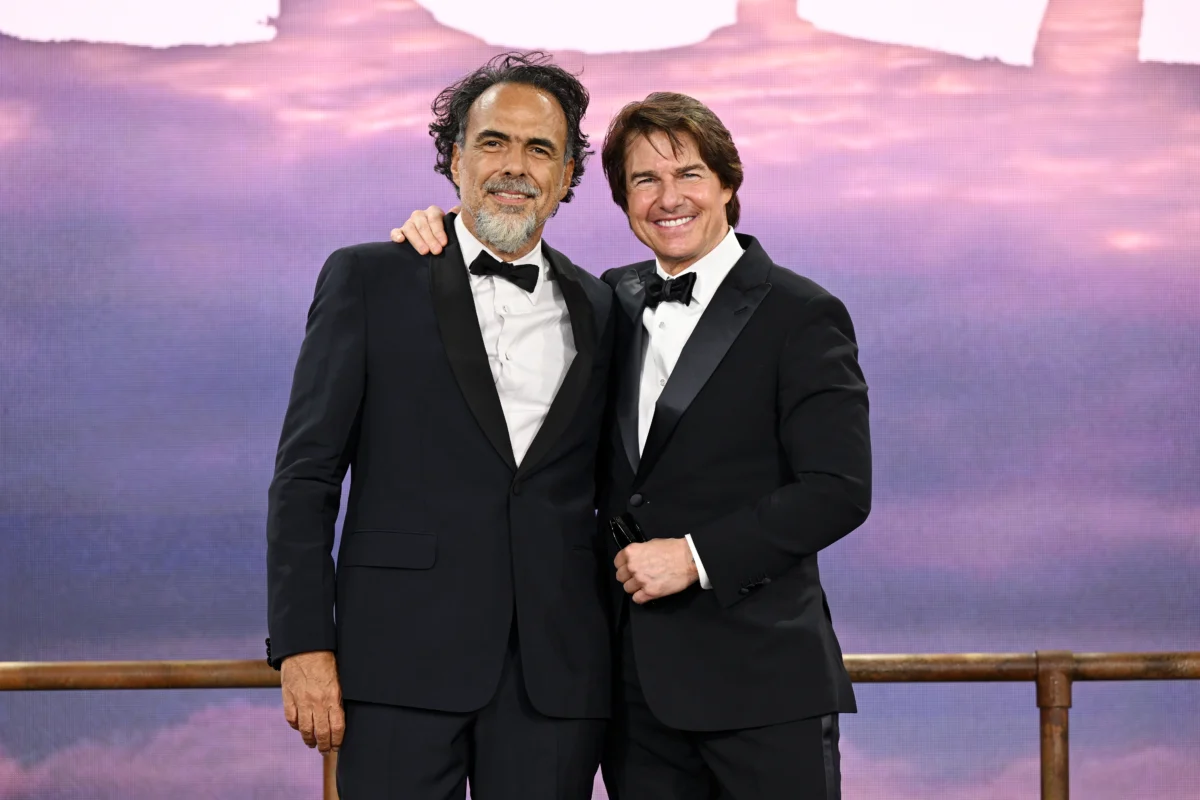
In the high-stakes world of Hollywood awards season, a disastrous opening weekend is typically the death knell for an Oscar campaign. When Warner Bros. unveiled Digger, the latest ambitious project from visionary director Alejandro G. Iñárritu starring global icon Tom Cruise, expectations were sky-high. However, the film was met with a frosty reception from critics, currently holding a fragile 52% on Rotten Tomatoes and a lukewarm 46 score on Metacritic.
The immediate fallout was palpable. Digger, a sprawling climate-change satire, saw its momentum vanish almost overnight, with industry pundits and Gold Derby experts marking a sharp decline in its prospects for major categories. Once considered a frontrunner, the film has tumbled out of contention for Best Picture, Best Director, and Best Supporting Actor (John Goodman). Yet, in the volatile landscape of the Academy Awards, a "rotten" score is not always a permanent barrier to gold. As the dust settles on its opening weekend, the question remains: Can Digger leverage its technical prowess and A-list star power to claw its way back into the race?
A Chronology of the Disconnect: From Anticipation to Analysis
The trajectory of Digger has been anything but conventional. The project was initially heralded as a "must-watch" event, pairing one of cinema’s most decorated auteurs—Iñárritu, a four-time Oscar winner—with one of the industry’s most bankable stars, Tom Cruise. The hype train reached its zenith at the London world premiere in late September, where both men were greeted with standing ovations and the typical fanfare associated with prestige cinema.
However, the tone shifted abruptly once the review embargo lifted. Critics characterized the film as a bloated, disjointed, and perhaps overly didactic take on the climate crisis. The box office numbers followed suit, failing to meet the inflated projections of the studio. For many industry observers, the narrative was set: Digger was a "flop," and its path to the 2027 Academy Awards had been effectively closed.
Yet, history suggests that the road to the Dolby Theatre is rarely a straight line. By examining the chronology of past awards contenders, it becomes clear that "critical consensus" and "Academy preference" are two distinct entities that occasionally drift in opposite directions. The industry is currently witnessing a push-pull dynamic between the initial wave of journalistic skepticism and a concerted effort by the filmmaking community to reframe the conversation around Iñárritu’s "brave" artistic risks.

Supporting Data: When Critics Disagree with the Academy
While the math currently looks bleak for Digger, the precedent for "critically panned" films performing well at the Oscars is substantial. The Academy of Motion Picture Arts and Sciences has historically shown a willingness to look past middling Rotten Tomatoes scores if a film resonates on a craft or thematic level.
A review of Best Picture nominees since 2000 reveals that lower critical scores do not preclude a film from receiving significant nominations or even victories:
- The "Extremely Loud" Exception: In 2011, Warner Bros. faced a similar uphill battle with Extremely Loud and Incredibly Close. Despite a dismal 45% on Rotten Tomatoes, the film secured a Best Picture nomination, and Max von Sydow was recognized with a Best Supporting Actor nod.
- The Satire Success: Netflix’s Don’t Look Up (2021) serves as a modern blueprint for Digger. Tackling the climate crisis with a biting, divisive satirical tone, it achieved only a 56% on Rotten Tomatoes. Despite this, it was a major player at the 94th Academy Awards, securing four nominations, including Best Picture and Best Original Screenplay.
- The "Bohemian Rhapsody" Phenomenon: Perhaps the most egregious example in recent memory is the 2018 Queen biopic Bohemian Rhapsody. With a 60% critic score, it was panned by many for its historical inaccuracies and uneven pacing. Yet, it secured five nominations and walked away with four wins, including Best Actor for Rami Malek, proving that voter affinity for a film can easily override critical vitriol.
These examples underscore a vital reality: The Academy is a body composed of thousands of industry peers—editors, sound designers, actors, and directors—whose priorities often diverge from the professional critics writing for digital outlets.
The Defense of the Auteur: Industry Solidarity
In the wake of the film’s poor performance, an extraordinary phenomenon has occurred: a public rallying of the Hollywood elite around Iñárritu. Rather than distancing themselves from the "failure," some of the most influential voices in cinema have taken to social media and public forums to defend the film’s vision.
Alfonso Cuarón, a longtime peer and friend to Iñárritu, provided a historical perspective by sharing a compilation of devastating reviews for now-revered masterpieces. He reminded his followers that 2001: A Space Odyssey, Blade Runner, and The Shining were all initially rejected by the critical establishment. The message was clear: True art is often misunderstood at the moment of its release.

Guillermo del Toro, ever the champion of idiosyncratic filmmaking, offered a blunt assessment, tweeting, "Love the arts; f–k the charts." This sentiment was echoed by Anne Hathaway, who praised the film as "brilliant," and legendary actress Jane Fonda, who issued a public call for Iñárritu to "keep being brave." This outpouring of support is not merely sentimental; it is a strategic attempt to shift the narrative. By framing the film as a victim of "unfair" criticism, the campaign strategists are attempting to create a "defend the artist" narrative, which is a classic, effective Oscar campaign tactic.
Technical Merits: Where "Digger" Still Digs Deep
While the Best Picture and Directing races appear increasingly distant, the technical categories remain a bright spot for Digger. Oscar voters often reward the sheer labor and craft involved in a production, regardless of its narrative reception.
The film is currently tracking in the Top 3 for Best Makeup and Hairstyling. The physical transformation of Tom Cruise—who is often defined by his "ever-young" action-hero image—into a balding, aging oil tycoon is exactly the kind of transformative performance that Academy voters love to reward. Furthermore, the film’s cinematography, sound design, and costume departments are being touted as elite. Even if the film fails to crack the "Big Five" categories, it could still be a major player in the technical races, potentially mirroring the success of films like Vice, which won for its makeup work despite a tepid critical reception.
Implications: The Long Road to January 21
As we look toward the January 21, 2027, announcement of the Oscar nominations, the status of Digger remains a litmus test for the current state of the Academy. If Digger manages to snag a few key nominations, it will confirm that the "Auteur Protection Program"—the tendency of industry insiders to support their own—is alive and well.
If, however, the film is completely shut out, it may signal a shift in how the Academy views "big swings." In recent years, there has been a push for greater transparency and a more diverse voting body, which might make the institution less susceptible to the kind of "industry peer pressure" that once kept controversial films in the race.

For Tom Cruise, the stakes are equally personal. He remains in the conversation for Best Actor, a category that is notoriously competitive. While he is currently "hanging on for dear life," his performance is being cited by some voters as a bold departure from his typical fare. Whether that is enough to overcome the shadow of the film’s reception remains to be seen.
Ultimately, Digger is not just a film; it is a battleground. It pits the rapid, consensus-driven judgment of the internet age against the slow, deliberate, and often insular process of Academy voting. While the critics may have buried the film in their columns, the industry—at least for now—is keeping the shovel out of the ground. The final verdict will not be written by the critics, but by the ballots cast in the coming months. For Alejandro G. Iñárritu, the lesson remains the same as it has been throughout his career: the most polarizing films often leave the most lasting legacy. Whether Digger achieves that status will be revealed in the cold, hard light of the Oscar nominations.
 Nana Muazin
 Jia Lissa
