

[Editor’s Note: This article contains major spoilers for the Season 4 finale of Ted Lasso, titled "Being Alive."]
The final moments of Ted Lasso Season 4 do not feature a soaring musical number or a grand, sweeping gesture of reconciliation. Instead, they offer something quieter, perhaps more honest: a coach, a son, and a conversation that we, the audience, are not invited to hear. As the camera pulls back from the window of Ted’s home, leaving the dialogue between Jason Sudeikis’ titular coach and his son, Henry, to fade into the ether, the show signals a definitive shift in its identity. The era of the "magical" sports dramedy has evolved into something more grounded, more conventional, and, perhaps, more sustainable.
The Weight of the Past: A Subtle Shift in Narrative
In the finale, "Being Alive," the show addresses one of the most haunting elements of Ted’s past: his father’s suicide. When Henry (Grant Feely) recounts a version of his grandfather’s death provided by his grandmother—a sanitized story about a fatal fall—Ted is initially paralyzed by the dissonance between the truth and the comforting lie.
It is a callback to the series’ emotionally resonant second season, where Ted’s panic attacks and his breakthrough therapy sessions with Dr. Sharon Fieldstone (Sarah Niles) redefined the show as a deep exploration of male trauma. In the past, Ted Lasso would have leaned into this moment, dedicating the episode’s climax to the weight of that conversation. Instead, director Matt Lipsey makes a bold, stylistic choice: the camera drifts away.
This is not an act of cowardice; it is an act of release. By refusing to linger on the trauma, the show acknowledges that it has already done the work. Ted’s journey toward healing is no longer the central engine of the narrative. By moving past the "heavy" emotional beats that defined the series’ mid-run, the show creates space for its new, lighter identity to breathe.

A Chronology of Change: From Dramedy to Sitcom
The trajectory of Ted Lasso from a niche sports-comedy to a global cultural phenomenon and, now, to a seasoned sitcom, has been anything but linear.
- Seasons 1-2: The "Golden Era" of character-driven storytelling, where the focus was primarily on Ted’s internal battle with his own optimism and the slow-burn redemption of the AFC Richmond staff.
- Season 3: A period of tonal experimentation that often veered into disjointed storytelling, characterized by bloated episode runtimes and narrative threads that felt disconnected from the show’s core emotional stakes.
- Season 4: A return to basics. By embracing the tropes of a traditional ensemble sitcom—the romantic subplots, the professional shifts, and the "family-first" mentality—the show has successfully recalibrated its pace.
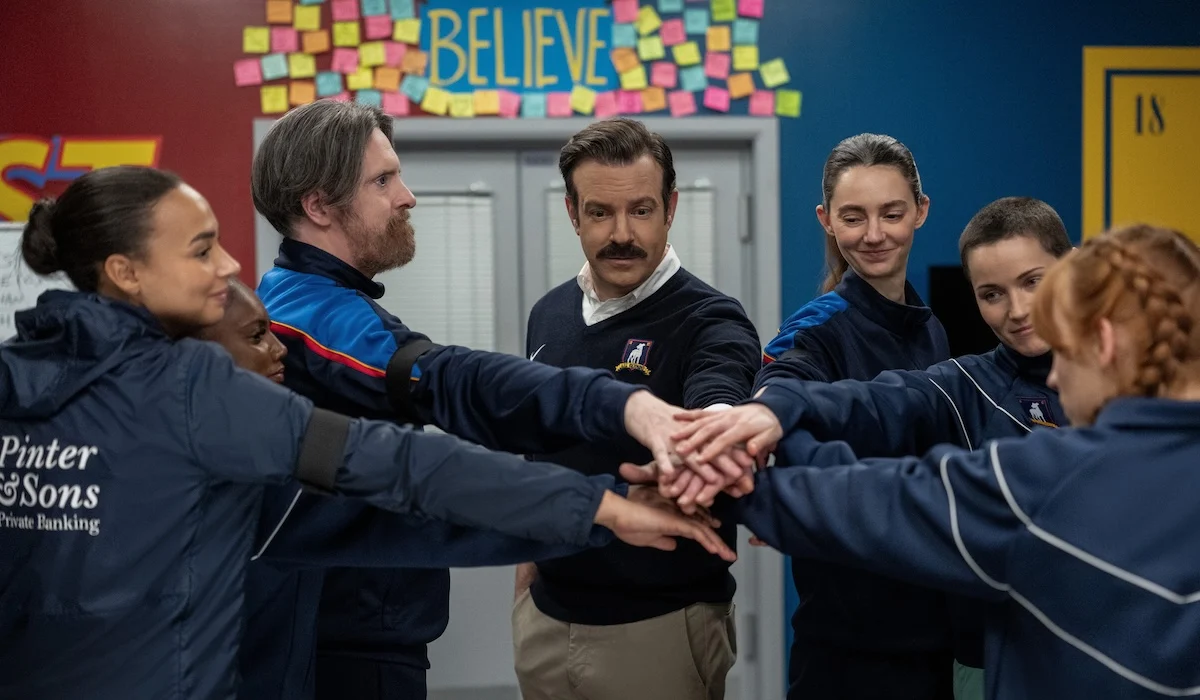
The departure of Ted from the head coaching role at the Lady Greyhounds to serve as an assistant under the new manager, Alice Chilton (Tanya Reynolds), serves as the symbolic capstone for this transition. It is a humble move, one that underscores Ted’s growth as a father and a mentor, even if it leaves some fans yearning for more screen time with Henry or deeper exploration into the family’s relocation to London.
Supporting Data: The Efficiency of the New Format
Critics of the current season might point to the "shortcuts" taken in storytelling as a sign of creative fatigue. Indeed, the off-screen death of the beloved Mae and the rapid-fire pacing of Roy Kent (Brett Goldstein) and Keeley Jones’ (Juno Temple) relationship developments represent a departure from the deliberate, sometimes laborious, pacing of earlier seasons.
However, when viewed through the lens of a traditional sitcom, these choices appear as tactical efficiency. The show is no longer interested in the "will-they-won’t-they" agony that dominated the middle seasons. By jumping straight into the reality of a relationship—complete with the surprise of a pregnancy—the writers have opted to explore the dynamics of change rather than the mechanics of courtship.
Furthermore, the introduction of Alice Chilton as the new manager has provided the series with a much-needed injection of fresh energy. Tanya Reynolds’ performance, grounded yet sharp, has established a new "story engine" that could propel the series into a potential fifth season. The show has traded the high-stakes existentialism of earlier seasons for a more reliable, episodic joy.

Official Perspectives and Behind-the-Scenes Realities
While Jason Sudeikis has remained famously tight-lipped about the long-term future of the series, the production choices in Season 4 speak volumes. By moving the focus away from Ted’s personal, trauma-centered arc, the creative team has essentially "de-centered" the title character to allow the ensemble to flourish.
The industry response to this shift has been mixed but generally appreciative of the show’s willingness to adapt. In an era where many prestige dramas overstay their welcome, Ted Lasso’s pivot to a functional, "slightly oversized" heart-led sitcom is a rare act of self-awareness. The show recognizes that it has already told the story it originally set out to tell; everything that follows is, in essence, a bonus.
The Implications: Is There a Future for the Greyhounds?
As we look toward a theoretical Season 5, the question arises: can a show that built its reputation on being "magical" survive by becoming "functional"?
The answer lies in the show’s audience. The viewers who fell in love with the show during its early, groundbreaking seasons may miss the specific, poignant vulnerability of the initial writing. However, the show’s structure has become significantly more stable. By trimming the fat—as seen in the tighter episode runtimes and the focus on the Lady Greyhounds’ rise—the show has managed to maintain its brand of "feel-good" television without falling into the trap of repetitive sentimentality.
Key Takeaways for the Future:
- Character Utility: The ensemble cast, particularly the addition of Tanya Reynolds, has proven that the "Lasso" universe is capable of surviving without Ted as the sole focal point.
- Structural Integrity: The move toward traditional sitcom tropes (pregnancy, job changes, inter-departmental romance) creates a sustainable, repeatable narrative structure.
- Audience Expectation: Fans must reconcile the show they loved with the show that exists today. It is no longer a high-concept emotional study; it is a warm, familiar hangout show.
Conclusion: No Apologies Necessary
When Ted Lasso first arrived on Apple TV, it was a breath of fresh air—a show that felt impossible in its kindness and ambition. After the stumbles of Season 3, many critics predicted a decline. Instead, Season 4 has achieved something equally impressive: it has successfully pivoted.

It has embraced its new reality as a functioning, professional sitcom. It isn’t as deep, nor as challenging, as it once was. But it is still "Ted Lasso." It still offers a sense of comfort, a reliable set of characters, and a heart that is just a little bit too big for its own good. For those who are willing to accept the show for what it is rather than what it used to be, the finale of "Being Alive" is not an end, but a promise: the game goes on, even if the coach is standing on the sidelines instead of in the center of the pitch.
As of publication, Apple TV has not confirmed a fifth season. But if this is the final whistle, the team has left the field with their dignity—and their humor—entirely intact. No apologies are necessary.
 Azzam Bilal Chamdy
 Dwi Wanna
 Laily UPN
