

By Global Tech & Culture Desk
The modern digital landscape has fundamentally broken the boundary between reality and fabrication. For celebrities, the emergence of advanced generative artificial intelligence means they no longer need to participate in life events to have them broadcasted to millions. They can be placed into breakups they never experienced, political endorsements they never made, gyms they never visited, and controversies they never sparked.
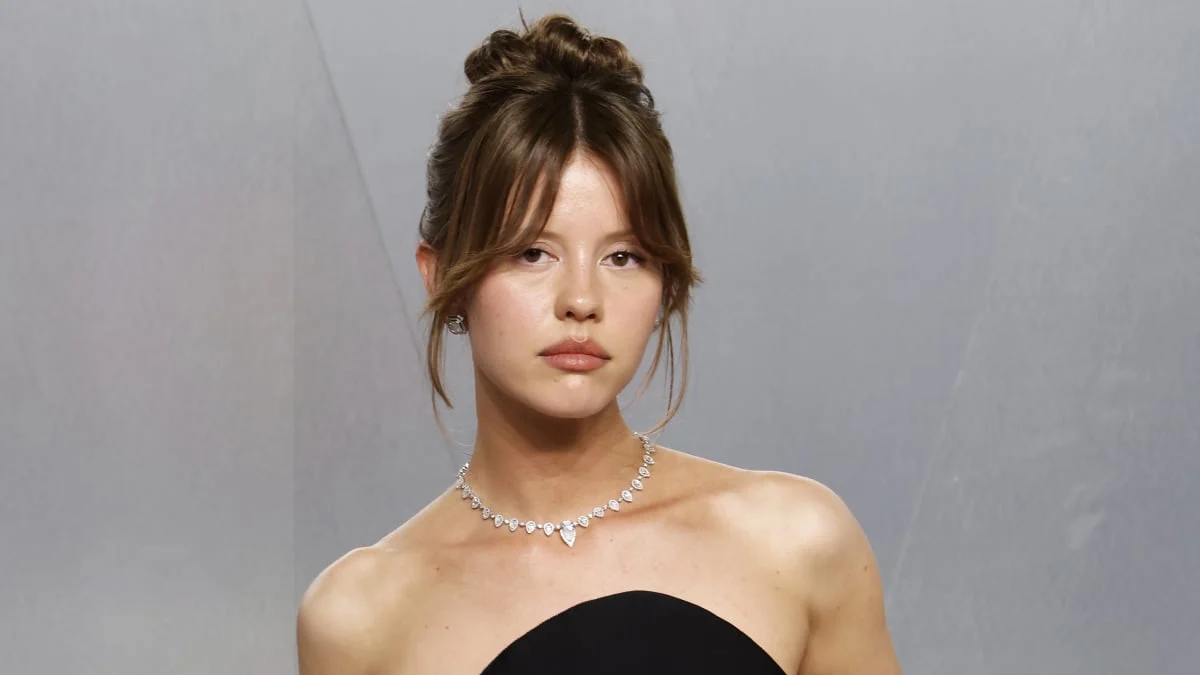
The latest casualty of this technological Wild West is actress Mia Goth, whose recent brush with AI-generated misinformation has reignited a fierce global debate. Her case highlights a terrifyingly efficient pipeline: synthetic imagery weaponized by verified social media accounts, compounded by mainstream journalistic oversight, and enabled by lax platform policies.
As prominent figures from Scarlett Johansson to Taylor Swift—and even the families of deceased icons like Robin Williams—push back against unauthorized digital facsimiles, a critical question remains: Are tech conglomerates losing their grip on reality, and what happens when the public can no longer trust their own eyes?
Main Facts: The Mia Goth Fabrication
The controversy surrounding Mia Goth—acclaimed star of horror hits Pearl and MaXXXine—began with a seemingly straightforward, highly clickable piece of pop culture news. Following widespread media reports regarding her divorce filing from actor Shia LaBeouf, a viral Instagram post surfaced on a major fan page.
The image purported to be a direct selfie taken by Goth. In it, she wore a casual t-shirt bearing the defiant message: "MY EX IS MY BIGGEST FAN." The post was layered with a calculated auditory accompaniment: Beyoncé’s empowering breakup anthem, "Single Ladies (Put a Ring on It)."
To millions of fans and even major publication newsrooms, the post appeared to be an unfiltered, cheeky response from Goth herself regarding the end of her marriage. Major outlets, including People magazine, initially reported on the image as a genuine fashion statement shared directly by the actress.
There was just one fatal flaw in the narrative: Mia Goth does not have a personal social media presence. Furthermore, the image was entirely fabricated using generative AI.
The viral post originated from @miagoth_, a verified Instagram fan account boasting over one million followers. While the page was transparently labeled as a fan account, the blue verification checkmark lent it a dangerous veneer of institutional credibility. That illusion of authenticity tricked not only casual scrollers, but professional media organizations as well.
Chronology of an AI-Driven Scandal
To understand how a synthetic image can so rapidly infiltrate mainstream media cycles, it is vital to trace the timeline of the Goth incident and the subsequent fallout:
- Weeks Prior to the Incident: Mia Goth and Shia LaBeouf file for divorce, sparking intense public curiosity and driving high search engine traffic surrounding the actress’s personal life.
- The Deployment: The verified fan account
@miagoth_publishes the AI-generated image of Goth wearing the "MY EX IS MY BIGGEST FAN" t-shirt, synced with Beyoncé’s music. - Initial Media Pick-up: Major entertainment publications, including People, treat the post as a real-world selfie, writing articles that highlight Goth’s post-divorce fashion choices. (These articles and the original post have since been scrubbed.)
- The Correction: Goth’s legal and public relations representatives intervene, publicly clarifying that the actress does not use social media and that the image is a counterfeit deepfake.
- The Pushback: Legal representatives launch complaints with Meta, questioning how a dedicated fan page pushing synthetic imagery managed to secure a verified "blue check" in the first place.
- Platform Action: Following media inquiries and mounting pressure, Meta steps in, removing the
@miagoth_account entirely for impersonating a public figure.
Supporting Data: A Systematic Epidemic of Synthetic Exploitation
While the Mia Goth incident feels like a bizarre tabloid misadventure, security and tech analysts emphasize that it is part of a massive, industrialized ecosystem of synthetic media exploitation.
A landmark March investigation by Indicator exposed the mechanics behind this trend. Researchers identified a network of just six AI-generated influencer accounts on Instagram—commanding a combined total of roughly one million followers—that systematically fabricated celebrity encounters.
Among these, accounts like @ayannasoblack posted hyper-realistic gym photos showing synthetic characters interacting with mega-celebrities such as Dwayne "The Rock" Johnson and John Cena. Crucially, the investigation revealed an economic motive: nearly all of these fraudulent accounts served as funnels, linking directly to external profiles on platforms like Fanvue, where creators sell access to synthetic adult content.
The exploitation extends beyond imagery into audio and intellectual property. As reported by Mashable, AI personas have increasingly been utilized to clone comedians’ jokes, routines, and physical mannerisms to build alternative audiences. Comedian Sarah Purdum noted a predatory trend in which women’s comedic material and likenesses are systematically stolen and repurposed to prop up "sexy AI models."
The Escalation of High-Profile Deepfakes
Celebrities face escalating threats that stretch far beyond unauthorized t-shirts or fabricated gym sessions:
- Taylor Swift (January 2024 & Late 2024): Non-consensual, sexually explicit AI-generated images of Swift flooded X (formerly Twitter) and other platforms, prompting the Screen Actors Guild-American Federation of Television and Radio Artists (SAG-AFTRA) to condemn the content as "upsetting, harmful, and deeply concerning." Later that year, Swift was forced to confront another fabrication—AI-generated images falsely depicting her endorsing Donald Trump—when announcing her actual endorsement of Kamala Harris. She noted that the incident crystallized her deepest fears regarding AI and the velocity of political misinformation.
- Scarlett Johansson (2025): The actress spoke out against an unauthorized AI-generated video that depicted her and other Jewish celebrities protesting Ye’s antisemitism. Though Johansson condemned antisemitism, she fiercely objected to being conscripted into a digital narrative without her consent, stating, "We must call out the misuse of AI, no matter its messaging, or we risk losing a hold on reality."
- The Deceased (October 2025): The problem is no longer limited to the living. Filmmaker Zelda Williams publicly pleaded with internet users to stop generating and sending her AI-generated deepfakes and voice clones of her late father, Robin Williams, emphasizing that these algorithmic resurrections are antithetical to his memory and wishes.
Official Responses and Institutional Impotence
The core frustration voiced by legal teams, public figures, and digital rights advocates centers on the sluggish and permissive frameworks maintained by social media gatekeepers.
When pressed on how the @miagoth_ account managed to pass verification screening while churning out forged likenesses, Meta’s enforcement policies came under heavy scrutiny. Christine Tripicchio, Goth’s representative, did not mince words when addressing the platform’s systemic failures.
"The fact that this fan account meets Instagram’s criteria to qualify for a ‘blue check’ is disconcerting on a fundamental level," Tripicchio stated in an interview with The Verge. "Beyond that, it is incomprehensible that Instagram evidently prioritizes the dissemination of forged and manipulated images over the protection and integrity of a public figure’s likeness."
In response to inquiries, Meta ultimately defended its actions by stating that the account was pulled down for impersonating a public figure. However, this reactive measure highlights a broader policy loophole: an image being AI-generated does not automatically mean Meta will remove it.
According to Meta’s published guidelines, manipulated media is generally permitted to remain online unless it directly violates other standalone platform rules, such as anti-bullying, harassment, or election interference policies. Instead of banning deepfakes outright, the platform relies on appending subtle "AI info" labels to content when its automated detection tools flag technical markers or when users voluntarily disclose their use of generative tools.
Even these labeling systems have proven erratic. In 2024, Meta was forced to transition from "Made with AI" labels to "AI info" following widespread backlash from photographers whose traditional, human-shot images received false-positive AI flags due to minor digital retouching. Meta subsequently buried AI-edited labels inside post menus while keeping visible tags on wholly generated content—a system completely dependent on detection algorithms that Meta itself admits are fallible. Invisible digital watermarks and markers can be scrubbed, meaning the absence of an AI label is no longer a guarantee of authenticity.
Broader Implications: The Death of Shared Truth
The implications of the Mia Goth incident stretch far beyond the confines of Hollywood PR management. We are entering an era of epistemic collapse—a point where the baseline assumption that "seeing is believing" has been permanently fractured.
When major news outlets fall victim to AI-generated selfies on verified fan accounts, it proves that traditional journalistic gatekeeping is struggling to adapt to synthetic threats. If a multi-million-follower account can be weaponized to alter the public narrative of a high-profile divorce using a fake t-shirt, malicious actors can just as easily manipulate corporate stock prices, smear political candidates, or ruin private citizens with zero algorithmic resistance.
The tech industry’s current posture—treating deepfakes and synthetic identity theft as minor moderation headaches rather than existential threats to public discourse—is dangerously inadequate. As long as social media algorithms reward engagement above all else, the financial incentive to produce convincing, unauthorized digital fabrications will continue to outpace the platforms’ willingness to police them.
Until robust, proactive legislative frameworks and unyielding platform-level bans on unauthorized likeness generation are put in place, celebrities like Mia Goth will remain trapped in a digital shadow-world—forced to constantly spend time, money, and emotional energy proving that they are, in fact, real.
 Azzam Bilal Chamdy
 Muslim
 Reynand Wu
