

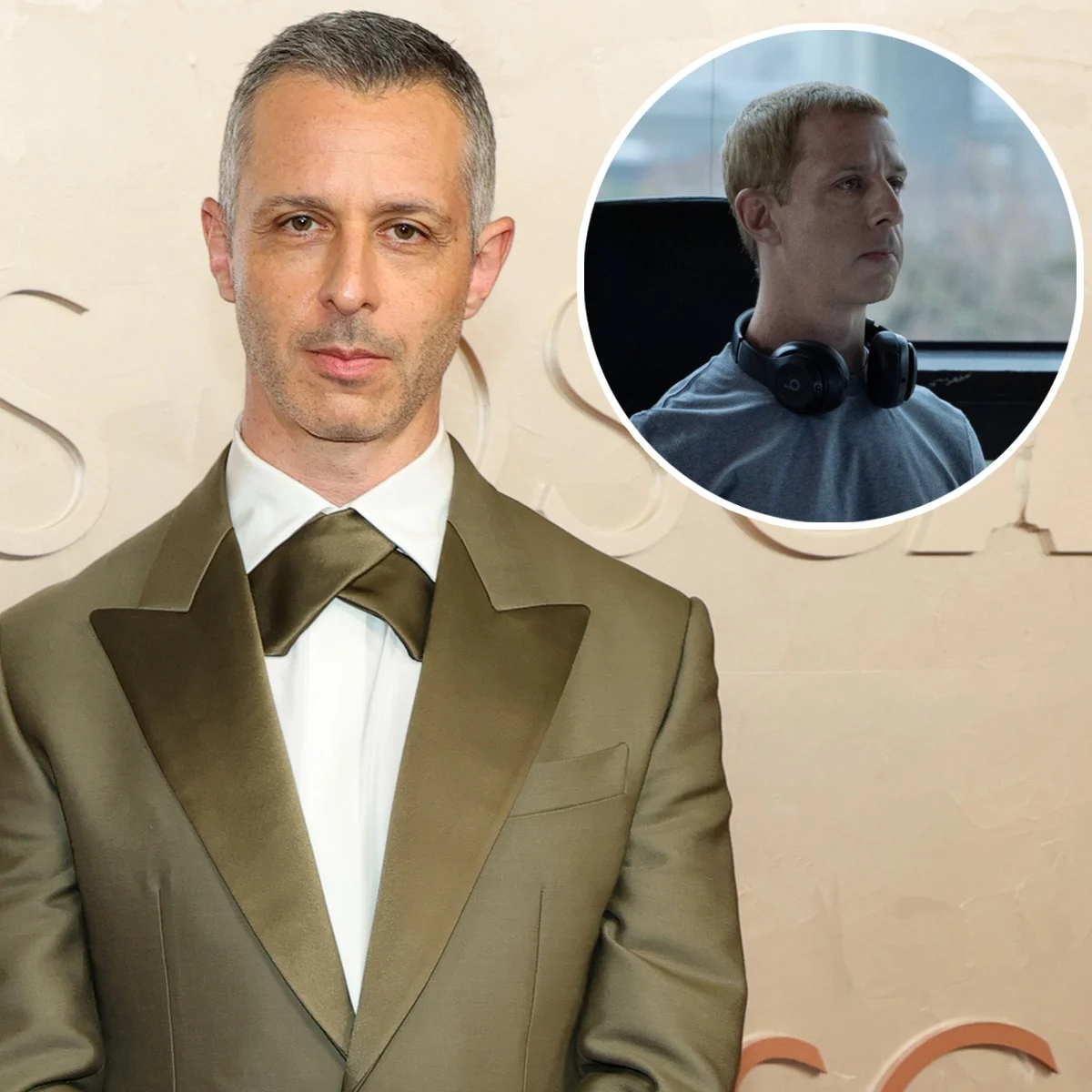
In the landscape of contemporary Hollywood, few actors command as much discourse—or as much controversy—as Jeremy Strong. Best known for his transformative, often all-consuming portrayal of Kendall Roy in HBO’s Succession, Strong has become the face of modern "method acting." Now, as he prepares to step into the role of tech titan Mark Zuckerberg in the highly anticipated Social Network sequel, Social Reckoning, the veteran actor is once again forced to defend a creative process that has captivated audiences while occasionally ruffling the feathers of his most esteemed colleagues.
The Philosophical Core: "First, Do No Harm"
In a candid appearance on the New Yorker Radio Hour on October 2, 2026, Strong addressed the persistent chatter surrounding his on-set demeanor. For years, critics and fellow performers have debated whether his immersive approach—often characterized by a refusal to "break character" between takes—is a profound dedication to his craft or an unnecessary disruption to the collaborative nature of filmmaking.
"It is never my intention to interfere with anyone else’s experience or anyone else’s way of working," Strong stated during the podcast. "First, do no harm, right? But commit to what you’re doing, and utterly."
Strong’s defense is rooted in the belief that his intense focus is not a performance for his peers, but a necessary condition for his own creative output. He rejects the notion that his method creates a hostile environment, suggesting instead that the "molecules in the room" shift because he is fully present in the reality of the scene. "If some people feel that I’m taking it too seriously, or it changes the molecules in the room in a way that makes something uncomfortable, I guess that’s something that I don’t feel that I need to apologize for," he asserted.
A Chronology of Conflict: From Roy to Zuckerberg
The friction between Strong and his peers is not a new phenomenon. It arguably reached its public zenith during his tenure on Succession. While the show was a critical and commercial juggernaut, the behind-the-scenes stories of Strong’s process became the stuff of industry legend.
The Brian Cox Contention
Perhaps the most vocal critic of Strong’s process has been Brian Cox, the titan of the stage and screen who played the patriarch Logan Roy. In a February 2023 interview with Town & Country, Cox did not mince words. "Oh, it’s f–king annoying. Don’t get me going on it," Cox admitted, noting that while he respects Strong’s talent, he believes the actor’s inability to "switch off" is a misapplication of professional skill.
Cox’s critique is pedagogical. He argues that acting is a set of tools to be used and put away, rather than an identity to be inhabited 24/7. "He’s a very good actor, and the rest of the ensemble is all OK with this. But knowing a character and what the character does is only part of the skill set," Cox noted. His concern extended beyond the set, with the elder actor famously telling The New Yorker in 2021 that he worried about the psychological toll Strong’s process takes on his personal well-being.
The Response to Criticism
Despite these high-profile clashes, Strong has maintained a posture of grace and professional respect. In a 2023 GQ profile, he addressed the tension with Cox, framing it as a familial disagreement rather than a professional feud. "Everyone’s entitled to have their feelings," Strong said. "I also think Brian Cox, for example, he’s earned the right to say whatever the f–k he wants."
Supporting Data: The Craft of Transformation
Strong’s approach to acting is technically termed "immersive" or "psycho-physical," a lineage that can be traced back to Stanislavski and the Group Theatre. Unlike actors who treat a role as a series of technical cues, Strong seeks to cultivate a "lived experience."
In the upcoming Social Reckoning, directed by Aaron Sorkin, Strong faces arguably his most daunting task yet: portraying the world’s most recognizable—and enigmatic—tech billionaire. The film, which functions as a spiritual successor to the 2010 hit The Social Network, delves into the internal life of Mark Zuckerberg during a period of intense public and legal scrutiny. According to industry insiders, Strong’s preparation for the role has been characteristically exhaustive, involving months of research into the nuances of Zuckerberg’s public and private life.
The debate over this process highlights a fundamental schism in acting theory:
- The Technical School: Actors view their performance as an instrument, focusing on mimicry, timing, and emotional recall.
- The Immersive School: Actors seek to erase the line between the individual and the persona, believing that the "truth" of the character emerges only when the actor genuinely believes they are the character.
Official Responses and Industry Implications
The industry’s reaction to Strong’s approach has been polarized. Supporters argue that the results—evidenced by Strong’s Emmy and Golden Globe wins—speak for themselves. To them, the "annoyance" felt by colleagues is a small price to pay for the high-octane performances that Strong delivers. Conversely, critics argue that film is a collaborative medium and that an actor’s duty is to be present and responsive to their partners, not just to their own inner monologue.
Strong, however, remains unmoved by the skepticism. He views his work as an act of service to the material. "I’m just there to commit utterly to serving the material," he maintained. For Strong, the discomfort felt by others is often a symptom of their own professional boundaries, not an indictment of his.
The Future of the Method
As audiences prepare for the October 9, 2026, release of The Social Reckoning, the conversation around Strong’s process is likely to intensify. If his performance as Zuckerberg achieves the same level of cultural penetration as Kendall Roy, the debate over the merits of method acting will likely remain a centerpiece of film criticism for years to come.
The film, which also stars Mikey Madison as a whistleblower engineer and Jeremy Allen White as a Wall Street Journal reporter, is already positioned as one of the year’s most significant cultural touchstones. Whether Strong’s "method" provides the necessary authenticity to depict a man who has changed the fabric of human communication remains to be seen.
A Season of High-Stakes Cinema
The arrival of The Social Reckoning is part of a broader, high-octane fall season for cinema. As the industry recovers from past cycles of disruption, the 2026 slate features an eclectic mix of intellectual property and original visions. From the psychological intensity of Verity, starring Anne Hathaway and Dakota Johnson, to the long-awaited Dune: Part Three and the massive scale of Avengers: Doomsday, the theater-going experience is being challenged to provide depth and spectacle in equal measure.
As we look toward the final quarter of 2026, the industry seems to be betting big on performances that demand a high degree of commitment from their leads. Whether it is Tom Cruise in the black comedy Digger or Jessica Chastain in the upcoming horror entry Other Mommy, the trend of actors pushing themselves to the brink of their emotional and physical limits appears to be the defining characteristic of the era.
Implications for the Actor’s Craft
Jeremy Strong’s journey from a working actor to one of the most polarizing figures in Hollywood history serves as a case study for the evolution of the profession. We are currently witnessing a shift where the audience is as interested in the process of acting as they are in the result.
In the age of social media, where the "behind-the-scenes" narrative is as accessible as the film itself, the "method" has become a brand. For Strong, the dedication to his characters is a moral imperative. He is not merely reciting lines; he is inhabiting a soul. While this may cause friction with those who prefer a more compartmentalized professional life, it is this very friction that generates the heat necessary to create art that lingers long after the credits roll.
Ultimately, as Brian Cox himself conceded, Strong is "f–king gifted." Whether his methods are "annoying" or "essential" is perhaps a secondary question to the one that truly matters: does he make us believe? If the anticipation surrounding The Social Reckoning is any indication, the answer is a resounding yes.
The stage is set, the cameras are ready, and Jeremy Strong is, as always, fully committed. Regardless of the controversy, one thing remains clear: in a world of social networks and digital artifice, there is something undeniably human—and perhaps necessarily uncomfortable—about an actor who refuses to play anything less than the truth.
Quick Reference: Upcoming 2026 Cinematic Highlights
As the industry moves toward the winter awards season, audiences can look forward to a diverse array of releases:
- October 2: Verity (Psychological Thriller) – Starring Anne Hathaway and Dakota Johnson.
- October 9: The Social Reckoning – Starring Jeremy Strong and Jeremy Allen White.
- November 20: The Hunger Games: Sunrise on the Reaping – A return to the world of Panem.
- December 18: Avengers: Doomsday – The latest installment in the MCU saga.
- December 18: Dune: Part Three – The conclusion of the epic trilogy.
For those eager to keep track of these and other industry developments, the E! News App remains the primary resource for real-time updates, red-carpet coverage, and exclusive interviews with the stars shaping the future of Hollywood.
 Layla Zulfa
 Ammar Sabilarrohman
 Iffa Jayyana
