

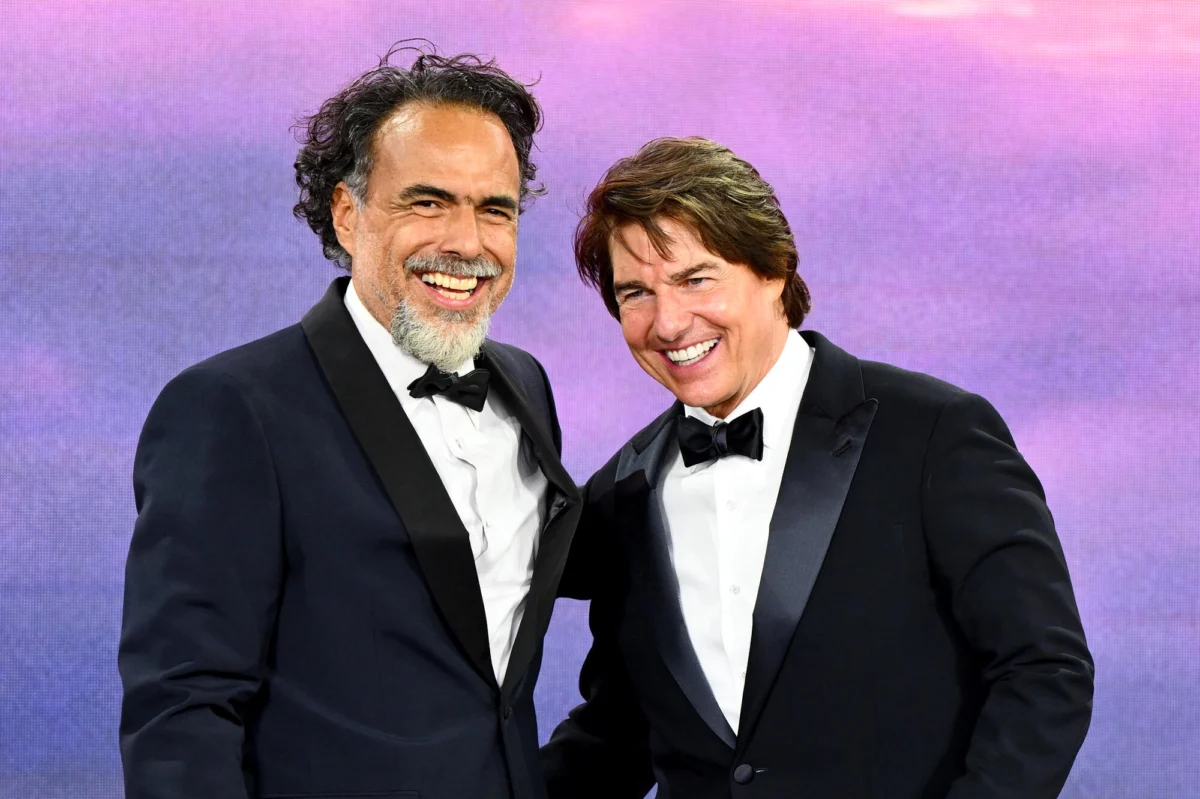
In the annals of Hollywood lore, certain stories define the sheer dedication of its biggest stars. While many A-listers are known for their rigorous schedules, few embody the relentless work ethic of Tom Cruise. In a revelation that has captivated the industry, it has been disclosed that the genesis of the collaboration between the Top Gun icon and the visionary director Alejandro G. Iñárritu was sparked by a spontaneous, high-stakes midnight motorcycle trek.
This partnership, which culminates in the upcoming release of Digger, represents one of the most intriguing creative marriages in recent memory. As the industry grapples with the encroaching influence of artificial intelligence and the shifting landscape of theatrical distribution, this collaboration serves as a testament to the enduring power of human-driven, "handmade" cinema.
The Midnight Encounter: A Chronology of Collaboration
The story begins in 2019, during the grueling production schedule of Joseph Kosinski’s Top Gun: Maverick. While Cruise was deep in the heart of high-octane aerial cinematography in San Diego, he received word that Alejandro G. Iñárritu—the Oscar-winning auteur behind The Revenant and Birdman—was seeking a meeting to discuss a burgeoning project titled Digger.
Driven by an immediate desire to hear the filmmaker’s vision, Cruise did not opt for the convenience of a commercial flight or a luxury car service. Instead, he chose the solitude of his motorcycle, embarking on a midnight ride from San Diego to Los Angeles.
Iñárritu recounted the surreal moment during a post-screening discussion at the David Geffen Theater at the Academy Museum this past Tuesday. "It was night and I remember hearing the vroom vroom vroom," Iñárritu recalled, still visibly amused by the memory. "I opened the door and it was Mr. Tom Cruise on the motorcycle. I go, ‘Holy s–t!’"
The mutual respect was palpable. Cruise, reflecting on the moment, echoed the sentiment, laughing as he reenacted his own shock: "And I was like, ‘It’s Alejandro, holy s–t!’"
The meeting lasted until the early hours of the morning. After reviewing Iñárritu’s visual concepts and narrative structure for Digger, Cruise was sold. "I said yes, you had me at hello," the actor remarked, offering a playful nod to his iconic line from 1996’s Jerry Maguire. Following the marathon session, Cruise made the trek back to San Diego, grabbing only a few hours of sleep before reporting for duty on the Top Gun set. "We did all right the next day," he noted, a testament to his legendary stamina.

A "Comedy of Catastrophic Proportions": Unpacking Digger
Warner Bros. has positioned Digger as a "comedy of catastrophic proportions," a tonal pivot for both the star and the director. The film serves as a biting satire on contemporary societal ills, including environmental decay, the unchecked power of global corporations, and the trajectory of humanity.
At the center of this storm is Digger Rockwell, an oil tycoon whose life—and moral compass—serves as the film’s focal point. While critical reception has been polarized, with some reviewers labeling the film a "shallow satire" and others lauding Cruise’s performance as one of his most daring, there is no denying the film’s ambition.
Crucially, the film promises a narrative pivot that the studio has kept under tight wraps. "I’ve never seen a character like this ever," Cruise declared during the Q&A, which featured cast members including Riz Ahmed, John Goodman, Jesse Plemons, Michael Stuhlbarg, and Sandra Hüller. "I’ve never seen it onscreen, let alone from [Alejandro’s] imagination."
For his portrayal of the tycoon, Cruise eschewed the traditional route of hiring a dialect coach. Instead, he sought to internalize the character’s voice through the narrative’s emotional requirements. "It’s gotta find its way with the satire and drama," he explained. "I’m looking for something emotionally where I can ground a character in an emotional reality."
Artistic Integrity in the Age of Artificial Intelligence
The conversation at the Academy Museum quickly shifted from the logistics of production to the broader, existential questions facing modern cinema. As AI-generated imagery becomes increasingly prevalent in studio output, Cruise used the platform to champion the concept of "handmade" art.
"This film is handmade," Cruise asserted, emphasizing the intentionality behind every frame. "It’s that kind of investment. I always wanted to be an actor, and I wanted to have this opportunity. It’s a real privilege to be able to make this film."
Cruise’s defense of the medium was both personal and professional. He acknowledged the rapid pace of technological change but remained steadfast in his belief that audiences possess an innate desire for authenticity. "I know the time that we’re in, and I just want to say I know that, as artists, we’re here. And people want to see real things. We have to work to do it."

He continued, addressing the struggle for artistic recognition: "It was never handed to any of us. The kind of artistry that we have [is all about] the joy. It’s not like I don’t have challenges, but I really choose to be joyful about creating."
The Implications for Future Filmmaking
The collaboration between a quintessential "movie star" and an uncompromising "auteur" like Iñárritu signals a potential shift in how major tentpole films are developed. By merging Cruise’s commitment to physical, high-stakes performance with Iñárritu’s penchant for complex, layered storytelling, Digger attempts to bridge the gap between blockbuster spectacle and high-brow social commentary.
For the industry, the implications are twofold:
- The Return of the Passion Project: The fact that this project was born from a spontaneous midnight meeting highlights that even in a data-driven studio system, the "old-fashioned" way of pitching and passion still carries weight.
- The Human Element as a USP: By framing Digger as a "handmade" film, the marketing team is implicitly positioning the project against the backdrop of AI-generated content. As audiences grow more sophisticated, the narrative of "human labor vs. synthetic efficiency" may become a primary driver for box office success.
Casting director Francine Maisler, who was also present at the Q&A, noted that the assembly of such a prestigious cast—including the likes of Sandra Hüller and Riz Ahmed—was a direct result of the creative gravity created by the partnership between Cruise and Iñárritu.
Final Thoughts and Outlook
As Digger prepares for its nationwide release on October 2, the film stands as a litmus test for the current cinematic climate. Does a star-driven, director-led satire about the end of the world still resonate with the modern theater-goer?
Tom Cruise’s closing remarks at the Academy Museum suggest he is not only hopeful but also deeply invested in the collective experience of cinema: "I want you to know that I’m out here for you all. People want real things and they want real experiences. … What we put our attention on, we give life. Just keep creating and let’s enjoy doing it."
Whether Digger becomes the defining satire of the decade or remains a divisive experiment, the story of its origin—a star on a motorcycle in the dead of night, riding toward a new vision of art—is already cemented in Hollywood history. It is a reminder that at the heart of the most complex, massive productions, there remains a simple, driving need for human connection and the joy of creation.
 Ammar Sabilarrohman
 Siti Muinah
 Iffa Jayyana
