

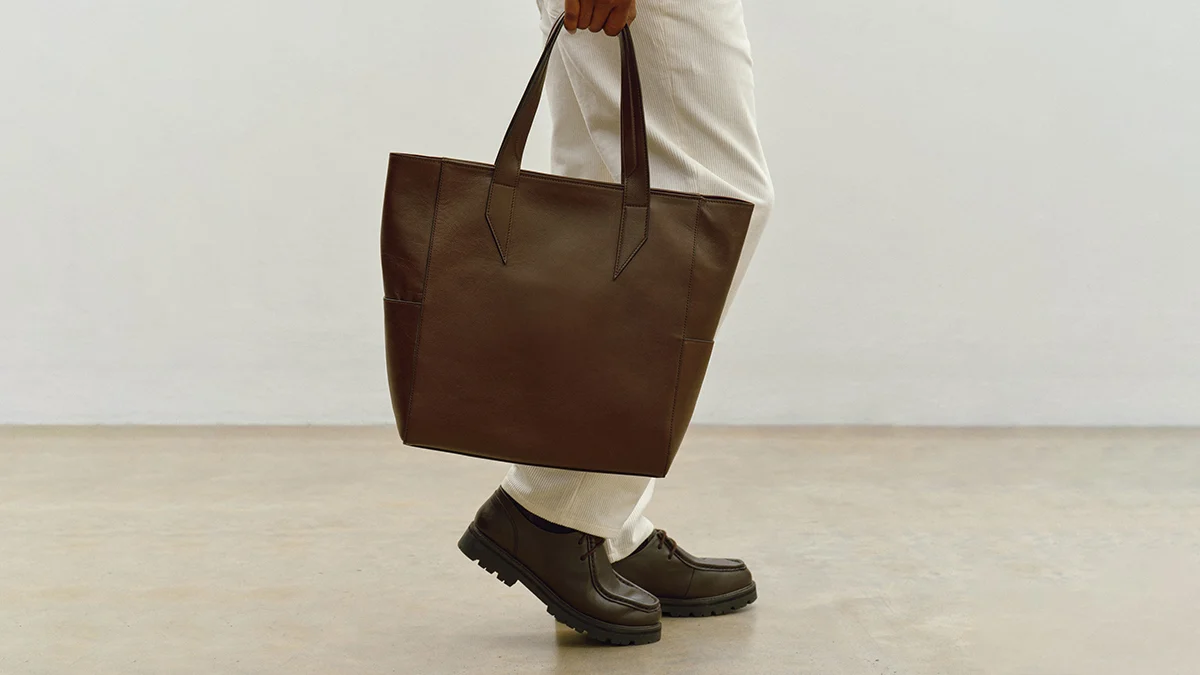
For the modern urban professional, the commute is more than a transit path; it is a logistical challenge. As a car-free New Yorker, my daily routine demands a companion that is as resilient as it is refined. I required a vessel capable of surviving the unpredictable Manhattan drizzle, one that would age with the grace of a well-worn leather jacket, and—most crucially—one that could withstand my own inherent clumsiness. I needed a bag that wouldn’t betray me by spilling its contents across the floor of a plane or the middle of a subway car.
Yet, for years, the hunt for this elusive "Goldilocks" bag felt like a futile exercise in compromise. What began as a simple search for a replacement for a beloved, defunct wax-canvas holdall transformed into a deep dive into the evolving landscape of men’s fashion, where the "manbag" has transitioned from a niche curiosity to a fundamental pillar of contemporary style.
The Evolution of the Modern Carryall
The hunt for my new daily driver began in earnest in 2021, at the dawn of the return-to-office movement. My previous companion—a wax-dipped canvas holdall from a now-defunct American brand—had served me through years of international travel and three different editorial jobs. When its handle finally snapped during my first week of hybrid work, I was not merely inconvenienced; I was crestfallen.
The subsequent search revealed a fascinating shift in the fashion industry. We are currently witnessing a genuine "manbag renaissance." This movement is driven by several converging factors: the increasingly complex lives of modern men, a healthy loosening of traditional gender norms in fashion, and the undeniable reality that the pockets of a slim-fit suit or pair of chinos are simply insufficient for the sheer volume of gear—laptops, chargers, headphones, and notebooks—required for modern life.

This is no longer a fringe trend. When high-profile style icons like LeBron James and Erling Haaland are spotted carrying silhouettes traditionally marketed to women, the paradigm has shifted. From A$AP Rocky’s curated collection of Chanel flap bags to the Bottega Veneta Maxi carried by Jacob Elordi, and the Hermes Birkins favored by the likes of Pharrell Williams, Marc Jacobs, and NFL star Joe Burrow, the message is clear: the utility and aesthetic appeal of a well-crafted tote are universal. As InStyle aptly put it earlier this year, "the big, bitchy boy bag is here to stay."
Chronology of a Frustrating Hunt
With the marketplace flooded with options, the paradox of choice became my primary obstacle. I leaned on my network, soliciting recommendations from friends whose taste I trust implicitly.
My initial forays were educational but ultimately disappointing. One friend pointed me toward the Hermès Garden Party—an icon, certainly—but I feared its single-snap closure would be insufficient for someone of my… let’s call it "energetic" lack of coordination. I tested my sister’s Louis Vuitton Neverfull, a masterclass in design, but its open-top architecture presented an unacceptable spill risk for a man who has, on more than one occasion, found himself on hands and knees in a business-class cabin, frantically gathering loose pens and notebooks while passengers behind me sighed in collective frustration.
Another recommendation, the Lotuff Leather Working Tote, boasted a beautiful zipper that promised security. However, my inspection revealed a roughout-leather interior that, while tactilely pleasing, felt like a ticking time bomb for my paper notebooks, which I feared would be perpetually coated in tiny, granular crumbs of cowhide.

The shopping experience, usually a therapeutic escape, became an exercise in technical frustration:
- Tom Ford: I was enamored with the luxurious hand-feel of the North-South tote, but the strap drop was so exaggerated that the bag nearly grazed the pavement when carried by hand.
- Canali: The calfskin tote offered exceptional quality, but the straps were frustratingly short, failing to clear the shoulder comfortably.
- Prada: Their nappa-leather model offered a clever two-strap system for both hand and shoulder carry, but I found the constant switching between them to be "fussy"—a dealbreaker for a man who values efficiency.
- Tod’s: This was the closest contender. Their shopping-bag style included a secure central zippered compartment. However, the belted closure for the two flanking open sides left me anxious that smaller items might migrate into the abyss of the subway floor.
Supporting Data: Why Functionality Trumps Form
In evaluating these high-end options, I developed a strict rubric. A bag must be more than an accessory; it must be a tool. My criteria were non-negotiable:
- Weather Resistance: In New York, the bag must protect its contents from the elements.
- Ergonomics: Wide straps are mandatory for weight distribution during long commutes.
- Security: A full-zip closure is the only acceptable solution for the "clumsy" user.
- Longevity: The material must be capable of accruing a patina, rather than simply degrading.
- Organization: Interior pockets for technology are no longer a luxury; they are a necessity.
The failure of several high-end luxury brands to address the "spill factor" highlights a disconnect between high-fashion design and the realities of urban transit. A bag that costs several thousand dollars should be designed for the human who actually uses it, not just for the editorial photograph.
Finding the "Goldilocks" Solution: Métier
After months of searching, the end of the road came in the form of the Passerby North-South ($2,950) by Métier, a British leather-goods house that recently established a footprint in New York City.

The bag is constructed from a lightly grained buffalo leather known as "Elvis." It is substantial without being heavy, and it possesses a structural integrity that immediately signals durability. The internal architecture is a revelation: dedicated, padded pockets for a laptop and AirPods, and gussets that provide a satisfying structure. Unlike the other luxury totes I inspected, the Métier features a fabric lining—a practical choice that ensures that when, not if, I spill a coffee or drop a pen inside, the bag can be cleaned with ease.
And then, there is the zipper. It is a sturdy, high-gauge piece of hardware that emits a satisfying, confident "purr" every time it is pulled shut. It provides a total, secure seal that effectively ends my career as the man spilling items in the airplane aisle.
Implications for the Future of Men’s Accessories
What finally sealed my loyalty to the brand was not just the quality of the leather or the brilliance of the design, but the "care card" included with the purchase. It promises a "yearly checkup service" to promote the bag’s longevity. For a brand that has been in existence for only nine years, this is a remarkably bold, confident statement of intent. It suggests that they are not interested in the "fast fashion" cycle of disposability. They are building an heirloom, and they are willing to take responsibility for its life cycle.
The shift toward the "big, bitchy boy bag" is not merely a trend driven by celebrities or influencers. It is a fundamental change in the relationship between men and their possessions. As our daily carry—the "EDC" (Every Day Carry) of the modern professional—becomes more vital, the demand for bags that prioritize both security and elegance will only grow.

We are entering an era where the divide between "men’s bags" and "women’s bags" is effectively irrelevant. What remains is a search for quality, utility, and craftsmanship. Whether it is a $1,700 Canali or a $5,100 Tom Ford, the market is finally beginning to cater to a demographic that needs more than just a pocket. For the man on the move, the right bag is not just an accessory—it is the foundation of a functional, organized, and stylish life.
Final Verdict: The Top Contenders
While the Métier Passerby won my personal seal of approval, the following bags remain some of the finest examples of the category, even if they didn’t quite hit every mark on my specific checklist:
- Tom Ford Natural Leather North-South Tote ($5,090): Unmatched for pure, unadulterated luxury. If you prioritize the feeling of the leather above all else, this is the gold standard.
- Prada Nappa Leather Tote ($5,100): A triumph of minimalist design. Ideal for the professional who wants a bag that signals status without shouting it, provided you don’t mind the dual-strap system.
- Tod’s Large Shopping Bag ($3,575): The best internal organization of the group. A strong contender for the office worker who needs to keep a laptop, documents, and gym gear in separate, accessible zones.
- Canali Hammered Calfskin Tote ($1,725): The value proposition. It offers incredible Italian craftsmanship and a sophisticated texture at a price point that is significantly more accessible than its peers.
In the end, the hunt for the perfect bag is a journey of self-discovery. By identifying exactly what I needed—and what I didn’t—I moved beyond the branding and into the mechanics of daily utility. The result is a bag that doesn’t just hold my life; it protects it.
 Ali Ikhwan
 Laily UPN
 Raul Delapena Setiawan
