

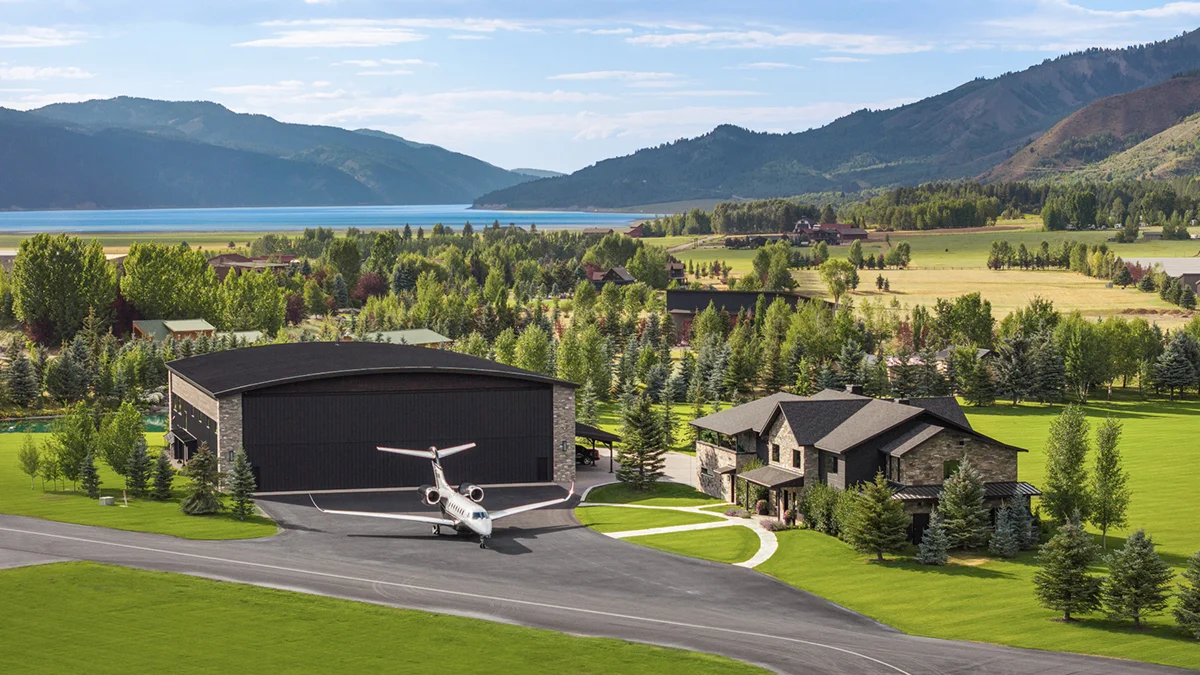
For the ultra-high-net-worth individual, time is the ultimate commodity. While the world’s elite have long relied on private aviation to bridge the distance between global capitals and remote retreats, a new paradigm is emerging in the luxury real estate sector: the fly-in community. Nowhere is this trend more visible—or more opulent—than in the rugged, expansive landscapes of Alpine, Wyoming.
Located just 45 minutes south of the prestigious enclave of Jackson Hole, the newly unveiled “Aviation Estate” is more than just a home; it is a private logistics hub wrapped in a masterclass of mountain-modern architecture. Currently listed for $48.5 million, this sprawling 14-acre compound within the Refuge at Alpine Airpark offers a rare intersection of frontier privacy and high-altitude convenience, where the sound of a Gulfstream engine is as common as the rustle of mountain pines.
The Genesis of the Aviation Estate: A Six-Year Vision
The story of this property is one of meticulous patience. The development of the Aviation Estate was not a project completed in a hurried season; it was the result of over six years of intensive design, site planning, and construction. Every stone, beam, and threshold was calculated to provide a seamless transition from the cockpit to the comfort of a hearth.

The estate is a sprawling testament to modern engineering, comprising a total of 30,000 square feet of residential and auxiliary space. The compound features a massive stone-and-timber main residence, a dedicated hangar equipped with high-end crew accommodations, a separate guest cabin for visitors, and two additional staff homes, ensuring that the operation of such a massive estate remains effortless for the owner. With a total of 17 bedrooms and 17 bathrooms, the property serves not merely as a residence, but as a private resort capable of hosting large-scale gatherings while maintaining the solitude necessary for a high-profile owner.
The Infrastructure of the Clouds
The crown jewel of the estate—and its most functional feature—is the hangar. Unlike typical residential garages, this structure is a sophisticated piece of industrial architecture. Featuring a striking stone-accented exterior that blends into the Wyoming aesthetic, the interior is finished with refined wood paneling, signaling that this is a space for machinery as much as it is a space for luxury.
A massive hydraulic door provides immediate access to the taxiway, allowing the owner to transition from a flight arriving from New York or London directly into the privacy of their residence in minutes. The community’s asphalt runway is a formidable 5,850 to 6,000 feet in length, engineered specifically to accommodate heavy-lift aircraft, including Gulfstream G5-class jets. The infrastructure is rounded out by on-site fuel delivery systems and an automated weather observing system (AWOS), providing pilots with the critical data required for safe, independent operation.

Chronology of a Masterpiece
The development of the Aviation Estate serves as a timeline of the shifting demands in the luxury housing market:
- Initial Conception: The vision began with the realization that the wealthy were increasingly seeking refuge in areas like Wyoming but were hindered by the distance from commercial hubs.
- Site Selection: The Refuge at Alpine Airpark was selected for its proximity to Jackson Hole and the natural beauty of the Palisades Reservoir and surrounding trout streams.
- Design Phase (Years 1–2): Architects focused on balancing the "mountain-modern" aesthetic with the industrial requirements of an aircraft hangar.
- Construction (Years 3–6): A multi-year build process saw the integration of bespoke timber, massive stone masonry, and advanced climate-controlled systems for the hangar and residential wings.
- Completion (Current): The estate stands ready as a fully functional, turn-key compound, hitting the market at a time when private aviation usage is at an all-time high among the global elite.
Architectural Integrity: Where Stone Meets Sky
The main residence is a masterclass in regional luxury. The interior design ethos focuses on “bringing the outdoors in,” utilizing expansive floor-to-ceiling windows that capture the dramatic, sweeping vistas of the Wyoming mountains.
The great room serves as the heart of the home, defined by a double-height ceiling, a monumental stone fireplace, and a sculptural chandelier that acts as a focal point. The materiality is intentionally tactile: wide-plank wood floors, exposed timber beams, and rugged stone walls ground the home in its high-desert environment. The kitchen, designed for both family life and high-end entertaining, features an island snack bar and professional-grade appliances, ensuring that even in the remote wilderness, culinary excellence is the standard.

Outdoor living is prioritized through a vast, covered stone terrace that stretches across the rear of the main house. This space is designed for all-season use, featuring sophisticated fire elements that allow for evening entertaining even as temperatures drop in the alpine air. Manicured lawns and a private pond soften the transition from the architecture to the untamed wilderness of the property’s 14-acre footprint.
Supporting Data: The Rise of the Fly-In Community
The Aviation Estate is not an anomaly; it is the leading edge of a growing niche market. Data from high-end real estate trackers suggest that fly-in communities are seeing a marked increase in interest from buyers who view private aviation not as a luxury, but as an essential utility.
These communities allow for "taxi-to-door" living, eliminating the friction of TSA lines, commercial terminals, and the logistical burden of driving to and from airports. For residents of the Refuge at Alpine Airpark, the runway is the front door. The proximity to Palisades Reservoir and the world-class trout fishing of western Wyoming adds a recreational layer that differentiates these properties from more traditional, urban-proximate hangars.

Market analysts point out that as property values in traditional enclaves like Jackson Hole continue to climb, buyers are increasingly looking to secondary markets that offer the same lifestyle amenities but with the added utility of private runway access.
Official Perspectives and Market Implications
The sale is being managed by Compass agent Matt Faupel, with exclusive marketing efforts led by The Jim St. André Team. The $48.5 million valuation reflects not just the square footage or the land, but the scarcity of the aviation infrastructure.
"This property represents a lifestyle that is essentially frictionless," says a market expert familiar with the listing. "For a buyer who spends their life in the air, the ability to land a G5, step into a hangar, and be in their living room within three minutes is the ultimate luxury."

However, the implications of such a listing go beyond the price tag. It signals a shift in the geography of wealth. The ultra-wealthy are no longer tethered to the proximity of major commercial airports. By investing in the infrastructure of their own transport, they are effectively redrawing the map of where it is possible to live. This "decentralization of luxury" suggests that in the coming decade, we will see more estates that prioritize private transit infrastructure alongside traditional residential amenities like swimming pools and wine cellars.
Conclusion: The New Frontier
The Aviation Estate in Alpine, Wyoming, is more than a mansion. It is a synthesis of the 21st century’s most critical demands: speed, privacy, and connection to nature. As the world becomes increasingly connected, the desire for a "home base" that facilitates, rather than hinders, that connectivity is becoming the new gold standard.
Whether it is the 17-bedroom capacity, the massive hangar opening to the runway, or the panoramic mountain views, the estate is designed for the person who has everything—including, most importantly, the freedom to come and go on their own terms. As this property finds its next owner, it will likely serve as the blueprint for future developments in the ultra-luxury sector, proving that in the modern era, the sky is no longer the limit; it is the backyard.
 Asep Darmawan
 Siti Muinah
 Lina Irawan
