

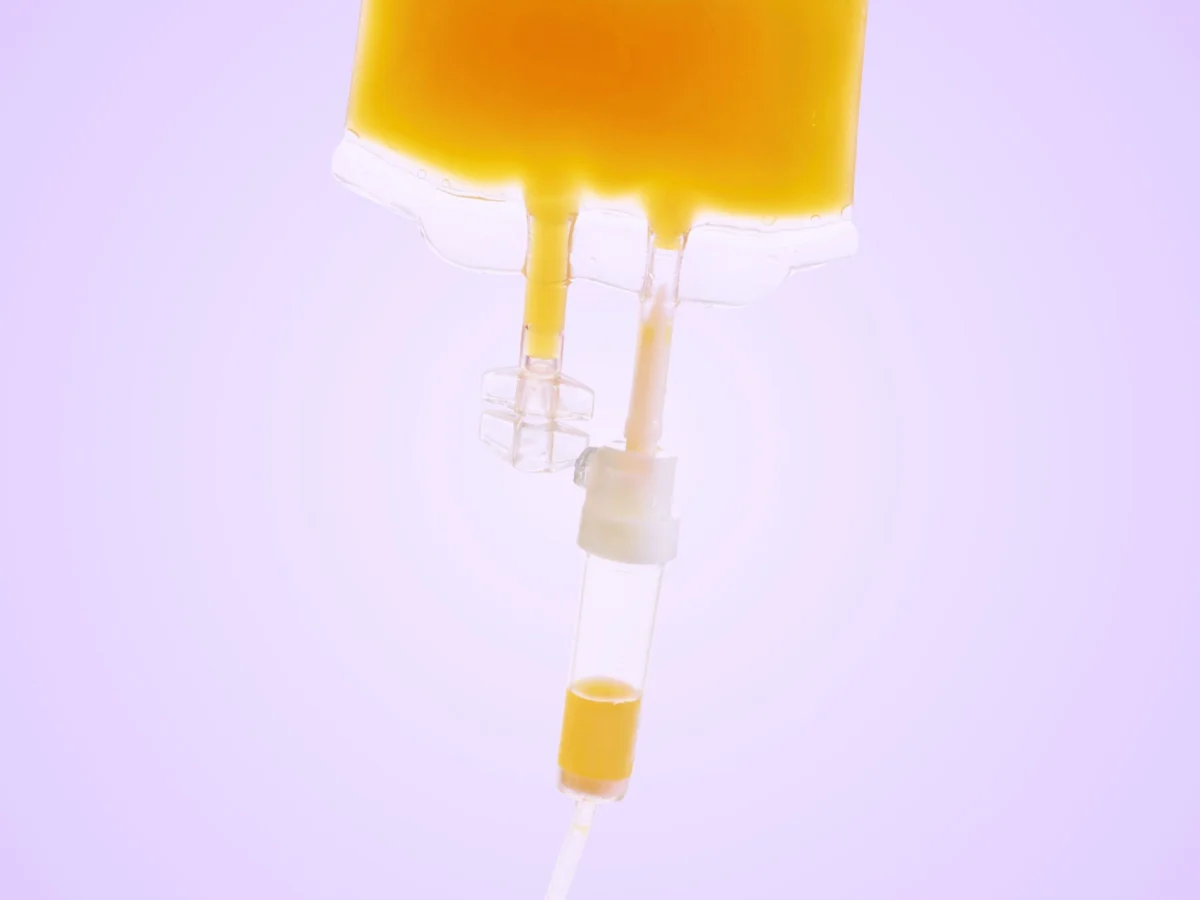
The human pursuit of longevity has inspired myths, alchemy, and billions of dollars in modern medical research. While Ponce de León famously searched for the mythical fountain of youth in the swamps of Florida, contemporary scientists are looking inward—specifically, to the fluid that courses through our veins.
Among the most talked-about anti-aging experiments capturing public and scientific imagination is therapeutic plasma exchange (TPE). This complex medical procedure filters, cleans, and replaces the liquid portion of a patient’s blood. Sparked by a 2025 study published in the journal Aging Cell, headlines erupted with claims that the technique could successfully lower a person’s biological age by two and a half years.
However, before wellness enthusiasts begin searching for commercial "plasma rejuvenation clinics," longevity experts urge caution. Beneath the exciting headline-grabbing metrics lies a nuanced scientific reality. While blood-based therapies represent a fascinating frontier in geroscience, therapeutic plasma exchange is far from a ready-to-bottle elixir of youth.
Main Facts: What Is Therapeutic Plasma Exchange?
To understand why researchers are looking at plasma, one must first understand what the substance actually is. Plasma is much more than the yellowish liquid suspension that carries red and white blood cells and platelets through the circulatory system.
While it is predominantly composed of water, plasma functions as a rich biochemical soup containing thousands of proteins, metabolites, hormones, lipids, and inflammatory signaling molecules. According to Dr. Andrea Maier, MD, PhD, a geriatrician and board member of the Academy for Health and Lifespan Research, plasma acts as the body’s ultimate internal courier service.
"It’s a transport system like DHL, a vehicle to bring things from your brain to your muscles, from kidney to lungs, and so on," Dr. Maier explains. "So it’s a fluid with lots of information."
Because plasma mirrors the dynamic chemical conversation occurring across various organ systems, it has become a central focal point for biomarker analysis and longevity research. By tracking fluctuations in circulating proteins, scientists can calculate a person’s "biological age"—a measure of how well cellular systems are functioning, which may differ significantly from chronological age.
A 40-year-old, for instance, might possess the cellular resilience and metabolic profile of a 30-year-old—or, conversely, a 50-year-old. While biological age is not a singular, fixed clinical metric, it provides invaluable prognostic insights. Dr. Keenan Walker, PhD, a senior investigator at the National Institute on Aging, notes that individuals whose biological age outpaces their chronological age face significantly higher risks of developing chronic illnesses, cognitive decline, and premature mortality.
Chronology: From Sci-Fi Parabiosis to Modern Clinical Trials
The scientific journey linking blood chemistry to aging did not begin overnight. It is rooted in decades of experimental physiology.
The Era of Parabiosis (15 Years Ago)
Roughly a decade and a half ago, academic researchers began revisiting an archaic 19th-century surgical technique known as parabiosis. This procedure physically links the circulatory systems of two distinct organisms.
In groundbreaking preclinical trials, researchers surgically joined the circulatory systems of old mice and young mice. The core hypothesis was straightforward: if youthful blood components were continuously introduced into an aged biological system, the older organism would experience restorative, regenerative benefits.
The results stunned the scientific community. Older mice exposed to young systemic environments demonstrated increased tissue resilience, enhanced muscle regeneration, and improved cognitive performance under stress. These discoveries paved the way for exploring plasma management as a therapeutic approach not just for aging, but for specific pathological conditions, including autoimmune diseases, complex neurological disorders, and certain hematological cancers.
"So everything really came out of that question: Is there something in our circulation we could get rid of or infuse into it to be able to live longer?" Dr. Maier reflects.
The 2025 Aging Cell Breakthrough
Moving from murine models to human trials, a 2025 study published in Aging Cell sought to test these principles in people. Researchers enrolled 42 human participants and subjected them to therapeutic plasma exchange, systematically filtering out their native plasma and replacing it with purified human albumin (a vital blood protein) and sterile saline. Additionally, a subset of participants received intravenous immunoglobulin (IVIG), an immune therapy designed to modulate immune response.
To evaluate the procedure’s impact, investigators utilized advanced epigenetic and molecular lab panels designed to track biological aging clocks in real time.
Supporting Data: Examining the Numbers
At first glance, the data generated by the Aging Cell trial appeared transformative. Certain participants demonstrated a reduction in biological age metrics by approximately 2.5 years following the intervention.
However, a closer, peer-reviewed examination of the data reveals a more complex narrative. Dr. Maier points out a critical caveat regarding the timeline of these results: the dramatic 2.5-year reversal was observed at the midpoint of the trial, not at its conclusion.
"If you are digging a little bit deeper, this ‘2.5 years younger’ is comparing people at midterm to the baseline, not at the end of the study and the baseline," Dr. Maier clarifies. "At the end, the effect was nearly gone."
Why would the rejuvenating effects of the plasma exchange taper off over time? The human body is a master of homeostasis. When a patient undergoes total plasma exchange, their physiology undergoes a massive shock. The sudden removal of native plasma followed by the introduction of purified substitutes triggers a temporary cellular reset, lowering certain inflammatory and aging biomarkers.
Yet, as the body attempts to adapt to this systemic upheaval, it experiences acute physiological stress. Over the subsequent weeks, compensatory mechanisms kick in, and biomarkers inevitably swing back toward their baseline levels. The rejuvenation, while biochemically measurable, is transient.
Furthermore, the data highlighted distinct variations based on baseline health status. Dr. Walker points out that the efficacy of the intervention was not uniform across all participants. "Those who were less healthy saw a stronger intervention effect," he notes. "So I think it’ll be important to find out for whom this works."
Official Responses: What the Experts Say
While the study offers a tantalizing glimpse into systemic interventions, leading geriatric and aging researchers emphasize that the public—and the burgeoning commercial longevity industry—should exercise extreme restraint.
Dr. Maier categorizes the trial transparently: "I would call this a phase 1 study. We’ve basically learned that we can safely do it, and now we have to see it in much bigger studies and look at the long-term effect."
She emphasizes that while the underlying science is grounded in credible biological evidence, translating it into a generalized anti-aging protocol is premature and potentially hazardous.
"It’s not a crazy idea. It’s absolutely grounded in lots of evidence, but not for everybody. It needs to be more precise," Dr. Maier states. "The future is great in our field, and this is the first tiny step, but we should absolutely not implement it now in clinical practice because it is so rough on the body. I love innovation, and I love this study, but I think the future will give something else."
Dr. Walker echoes these sentiments, stressing the need for personalization. The future of blood-based longevity medicine will likely not involve blunt-force filtering of all plasma, but rather targeted clearance of specific senescent proteins or harmful circulating factors, tailored to an individual’s unique molecular profile.
Implications: The Future of Geroscience and Clinical Reality
The conversation surrounding therapeutic plasma exchange underscores both the immense promise and the current limitations of modern geroscience.
- Beware of Commercial Hype: The wellness market has a history of commercializing early-stage scientific findings before safety and efficacy are firmly established. Consumers should remain skeptical of private clinics offering expensive "plasma filtering" as a general wellness or anti-aging protocol.
- The Toll on Homeostasis: TPE is a rigorous medical procedure traditionally reserved for severe, life-threatening conditions. Subjecting a healthy body to the stress of total plasma exchange just to chase a temporary reduction in a biological clock biomarker carries unnecessary clinical risks.
- The Shift Toward Precision Medicine: Future interventions will likely move away from wholesale plasma replacement. Instead, researchers anticipate the development of precise monoclonal antibodies or targeted pharmacological agents designed to neutralize specific senescence-associated secretory phenotype (SASP) factors floating in the blood, avoiding the systemic shock of complete plasma extraction.
- Validation Through Rigorous Trials: The 2025 Aging Cell study serves as an invaluable proof-of-concept. It proves that biological age markers can be modulated via systemic intervention. However, proving safety and short-term biomarker shifts is only the first hurdle. Double-blind, randomized controlled trials with large, diverse cohorts and multi-year follow-ups will be required to determine if these interventions actually extend healthspan and lifespan in humans.
Ultimately, while the fountain of youth may not be hidden inside a plasma centrifuge machine just yet, research into our circulatory system continues to decode the complex biology of aging. For now, the most reliable methods for protecting our biological age remain deeply rooted in lifestyle fundamentals—regular exercise, balanced nutrition, restorative sleep, and cardiovascular health—while scientists safely map out the next generation of medical breakthroughs behind closed laboratory doors.
 Reynand Wu
 Nana
Nana
 Neng Nana
