

While the Marvel Cinematic Universe (MCU) has cemented its status as a dominant cultural and financial superpower—grossing billions of dollars at the global box office—the entertainment giant’s transition into the interactive gaming space has been a rocky, unpredictable road. Cinematic triumph has not automatically translated into digital gold.
Nowhere was this discrepancy more evident than in the twin-pronged Marvel strategy pursued by publisher Square Enix. Following the lukewarm critical and commercial reception of Crystal Dynamics’ 2020 live-service title, Marvel’s Avengers, a heavy shadow fell over Eidos-Montréal’s single-player narrative project, Marvel’s Guardians of the Galaxy. Released on October 26, 2021, Eidos-Montréal’s cosmic adventure was met with widespread pre-release skepticism.
Yet, looking back five years later, Guardians of the Galaxy proved to be vastly superior to what anyone expected. It stands as a masterclass in character writing and team dynamics, even if its commercial trajectory left its publisher wanting and ultimately altered the fate of its development studio.
Main Facts: The Anatomy of an Unsung Hero
At its core, Marvel’s Guardians of the Galaxy is a narrative-driven, third-person action-adventure game that sidesteps the live-service pitfalls of its predecessor, Marvel’s Avengers. Instead of locking content behind grinds, battle passes, or microtransactions, Eidos-Montréal delivered a complete, single-player, linear story centered on a band of dysfunctional space outlaws.
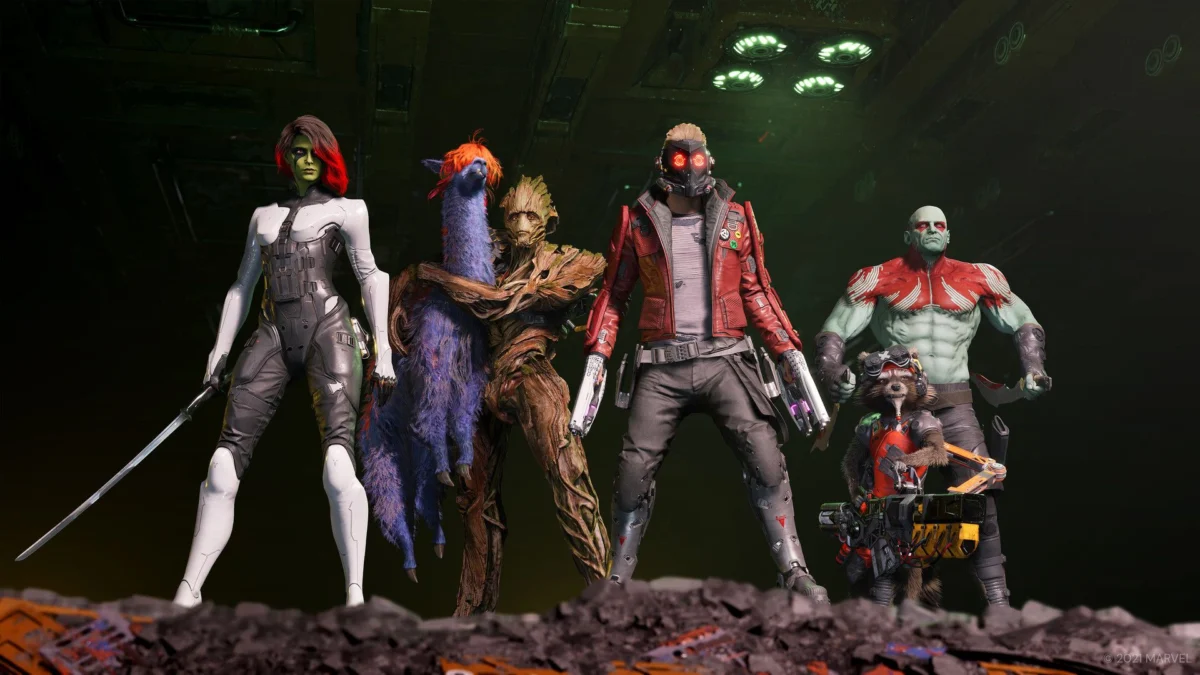
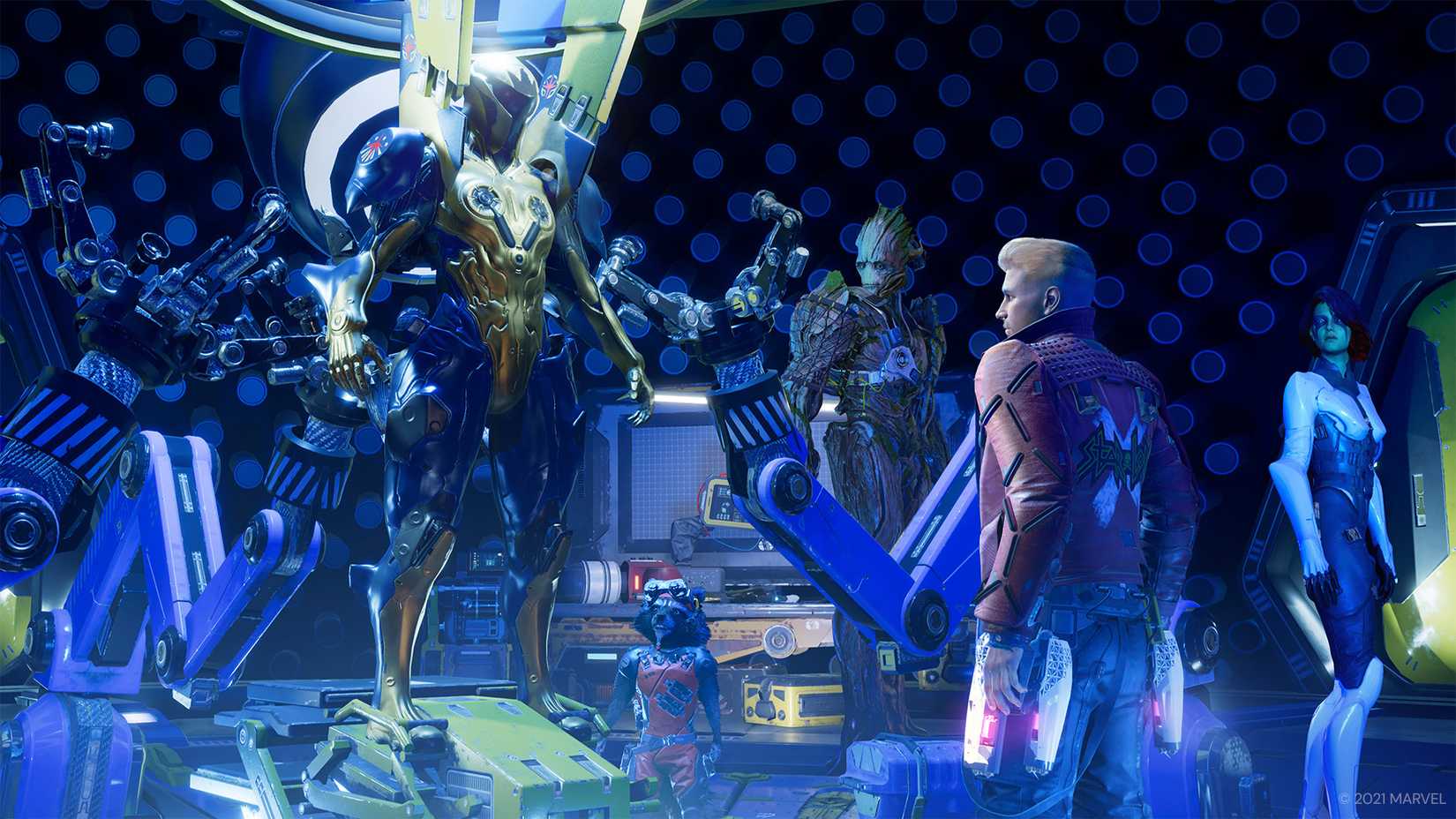
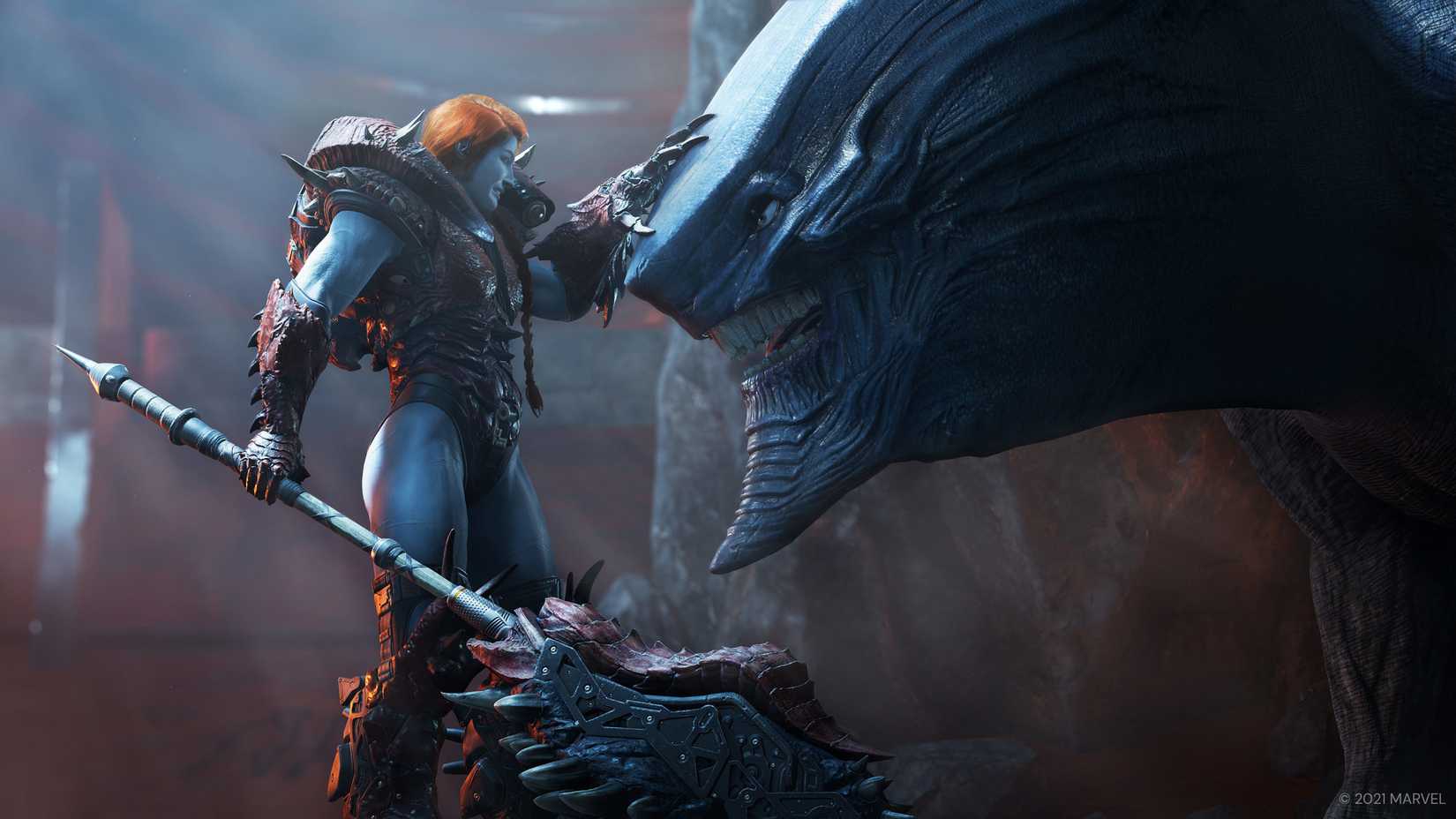
The title features the definitive roster popularized by the MCU—Peter Quill (Star-Lord), Gamora, Rocket Raccoon, Groot, and Drax the Destroyer—while intelligently pulling lesser-known deep-cut characters from Marvel Comics lore, such as Lady Hellbender and Grandmaster.

Crucially, players exclusively control Peter Quill. Rather than juggling multiple playable heroes with entirely different gameplay styles, the experience is anchored by Quill’s role as the de facto "leader" who directs his teammates during combat via tactical, Mass Effect-style commands.
This mechanical constraint allowed the development team to pour their resources into razor-sharp dialogue, branching narrative choices, emotional beats, and a phenomenal licensed and original soundtrack. Despite all of this, the game launched amidst a cloud of apathy, severely hampered by the bad will generated by Marvel’s Avengers just a year prior.
Chronology: From Skepticism to Cult Classic
To understand the trajectory of Marvel’s Guardians of the Galaxy, one must look at the timeline of its development, release, and subsequent fallout:
- May 2017: Square Enix and Marvel Entertainment announce a multi-year, multi-game partnership, kicking off with Crystal Dynamics’ Avengers project. Eidos-Montréal is quietly tapped to work on a separate Marvel property.
- September 2020: Marvel’s Avengers releases to a mixed critical reception and faltering player retention, heavily criticized for its repetitive combat loops and live-service monetization.
- June 2021: Square Enix officially reveals Marvel’s Guardians of the Galaxy during their E3-adjacent digital showcase. Public reception is notably cautious, with many fans and critics vocalizing fatigue over generic character designs and combat uncertainties.
- October 26, 2021: Marvel’s Guardians of the Galaxy launches globally for PC, PlayStation 4, PlayStation 5, Xbox One, Xbox Series X/S, and Nintendo Cloud. Critics are pleasantly surprised by its high quality, rich storytelling, and engaging mechanics, though early physical and digital sales fail to meet corporate expectations.
- Early 2022: Square Enix president Yosuke Matsuda publicly admits that launch sales "undershot our initial expectations," dealing a heavy blow to the game’s commercial standing.
- May 2022: Embracer Group announces an agreement to acquire Eidos-Montréal, Crystal Dynamics, and Square Enix Montréal, along with a massive catalog of intellectual property, for $300 million.
- November 2022: Square Enix and Eidos-Montréal announce that Guardians of the Galaxy has surpassed 8 million total players, heavily aided by subscription services like Xbox Game Pass and PlayStation Plus.
- 2023–Present: Eidos-Montréal undergoes multiple rounds of corporate restructuring and layoffs under Embracer Group, pivoting toward co-development roles on projects like Playground Games’ upcoming Fable and Obsidian Entertainment’s Grounded 2.
Supporting Data: Sales, Subscriptions, and Metrics
The financial narrative surrounding Marvel’s Guardians of the Galaxy is a fascinating study in modern video game distribution and consumer behavior.
When Square Enix executives expressed disappointment in early 2022, pointing out that launch sales missed internal forecasts, it sent shockwaves through the industry. In an era where AAA development budgets routinely cross the hundred-million-dollar mark, a slow opening week is often treated as a death sentence for a franchise.

However, the game’s long-tail performance tells a different story about player engagement:
- 8 Million Players: By late 2022, the game crossed the 8-million-player milestone.
- The Subscription Effect: A significant portion of that 8 million player count was driven by strategic placement on subscription platforms, notably Xbox Game Pass and PlayStation Plus. While these services inject much-needed life into dormant or slow-selling titles by exposing them to massive audiences, industry analysts continue to debate how effectively they translate into direct profitability for single-player narrative games.
- Critical Acclaim: On review aggregators like Metacritic, the game comfortably holds "Strong" or "Generally Favorable" scores across platforms, with critics repeatedly praising its artistic direction, voice acting, and unexpected emotional depth compared to its peers.
Official Responses: Corporate Regret vs. Creative Triumph
The disparity between how the creators viewed the project and how corporate executives evaluated its balance sheets remains stark.
Following the game’s launch window, Square Enix president Yosuke Matsuda did not mince words regarding the title’s commercial shortcomings. In a financial briefing, Matsuda stated: "Despite strong reviews, the game’s sales on launch undershot our initial expectations."
Industry insiders widely attributed this initial sales suppression to "brand damage." Consumers who felt burned by the intrusive microtransactions and grind-heavy design of Marvel’s Avengers were hesitant to trust Square Enix with another team-based Marvel property just twelve months later.
Conversely, the creative minds at Eidos-Montréal crafted an experience driven by genuine affection for the source material. Rather than leaning purely into the cinematic beats established by director James Gunn, the studio forged its own distinct visual identity and narrative rhythm. The writing team managed a delicate, high-wire balancing act: handling universe-ending cosmic stakes while grounding the plot in intimate, character-focused examinations of trauma, family, and redemption.
Implications: A Bitter Pill for Single-Player Narratives
The ultimate fate of Marvel’s Guardians of the Galaxy carries broader, sobering implications for the video game industry—particularly concerning the viability of linear, big-budget, single-player games that do not rely on live-service hooks.
1. The Perils of Brand Spillover
The failure of Marvel’s Avengers acted as collateral damage for Eidos-Montréal. Consumers and retail markets punished Guardians for sins it did not commit. This teaches a harsh lesson about publisher portfolio management: launching subpar titles under a shared thematic umbrella can poison the well for genuinely creative, high-quality projects that follow.
2. The Subscription Dilemma
While reaching 8 million players is a massive victory for audience exposure, it raises critical questions about financial return on investment. If a game’s audience is largely built through subscription services rather than full-price retail sales, publishers may interpret the lack of immediate revenue as a failure of the genre itself, steering corporate investment away from single-player narrative adventures in favor of endlessly monetizable multiplayer games.
3. Studio Instability
Perhaps the most tragic implication is the corporate turbulence faced by Eidos-Montréal. Despite delivering one of the most beloved superhero video games of the modern era, the studio was caught up in the fire sale of Square Enix’s western assets to Embracer Group, leading to structural layoffs and a loss of independence. Today, the studio that brought the cosmic Marvel universe to life in such brilliant fashion has been relegated to a support role on other companies’ projects.
Conclusion
Time has been remarkably kind to Marvel’s Guardians of the Galaxy. What was once written off as a potential casualty of corporate strategy is now frequently cited by players and critics alike as one of the finest narrative-driven adventures of its console generation.
It proved that you do not need live-service roadmaps, loot boxes, or endless multiplayer grinds to make a compelling superhero game—you simply need great writing, respect for the characters, and a killer 1980s soundtrack. While its commercial performance ultimately altered the trajectory of its developer, Guardians of the Galaxy remains a shining example of creative ambition that deserves to be remembered alongside the very best the medium has to offer.
 Neng Nana
 Azzam Bilal Chamdy
 Nana
