

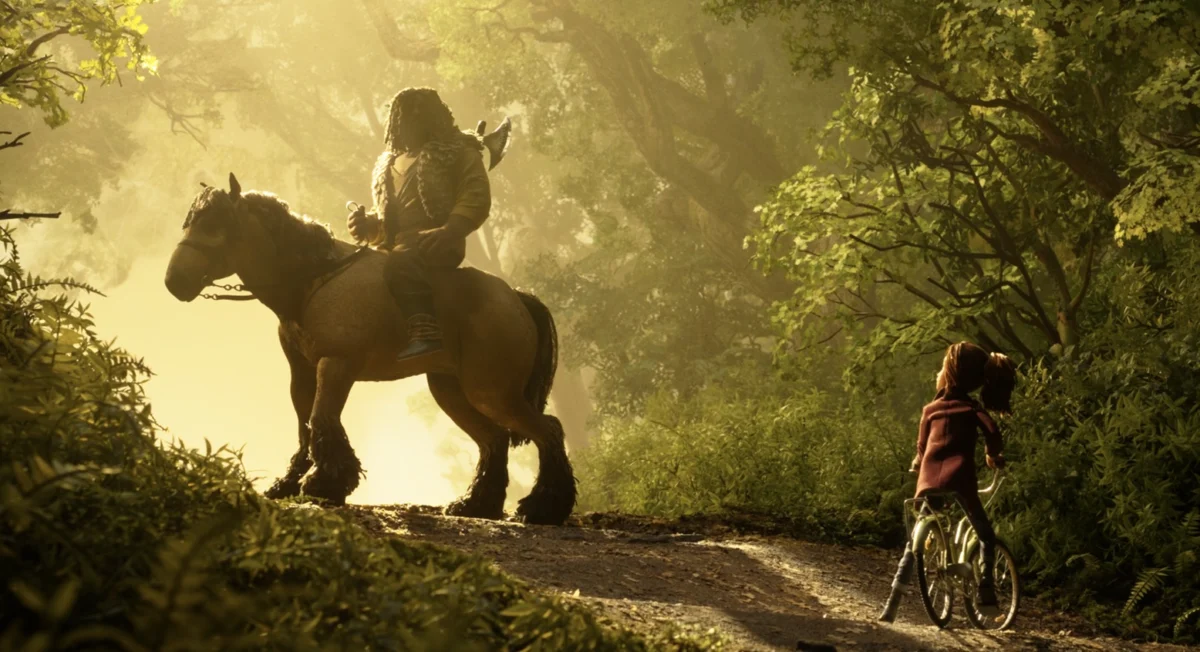
The theatrical release of Wildwood this past weekend was far more than a routine business transaction for the Portland-based animation powerhouse, Laika. As the studio’s sixth feature film—and its first new project in seven years—Wildwood represented a litmus test for the continued viability of the traditional stop-motion medium in a market increasingly dominated by high-speed, digital-first blockbusters. While the headlines may focus on the cold, hard math of opening-weekend grosses, for the artisans at Laika, the film is a definitive statement on the studio’s future, its creative identity, and its ability to re-engage a global audience that has been waiting nearly a decade for a new masterwork from director Travis Knight.
A Long-Awaited Return: The Chronology of ‘Wildwood’
The path to Wildwood reaching the big screen was not a sprint; it was an arduous, years-long marathon of meticulous craft. Following the 2019 release of Missing Link, which struggled to find a wide audience, Laika entered a prolonged period of silence regarding new feature-length content. During this seven-year hiatus, the studio shifted its focus toward refining its proprietary technology and, as industry observers noted, building anticipation for the adaptation of the beloved middle-grade novel by Colin Meloy, lead singer of the indie-folk band The Decemberists.
The industry has been buzzing about Wildwood since early 2025, with Laika executives signaling that this project would be their most ambitious undertaking to date. By the time the film finally premiered this weekend, the narrative had already shifted from "new movie release" to "the return of an auteur-driven studio." For a company defined by its commitment to the tangible, physical nature of stop-motion, the success of Wildwood was not just expected—it was existential.
The Numbers: Dissecting the Opening Weekend
The domestic opening for Wildwood clocked in at $12.2 million, landing the film in third place for the weekend, trailing behind the blockbuster Clayface and the sleeper hit You Can See Everything. Additionally, the film pulled in $2.9 million from select international territories, bringing its initial global footprint to roughly $15.1 million.
To the casual observer, these figures might appear modest, particularly when weighed against reports that the production budget hovered near $100 million. Financial analysts have already begun to frame the film as a potential "unprofitable masterpiece," a term that has historically dogged Laika’s projects. However, such a narrow view ignores the unique business model of a studio that prioritizes artistic legacy over quarterly returns.
Comparing Wildwood to the studio’s past performance provides a more nuanced picture. While Missing Link opened to a disappointing $5.9 million and struggled to find its footing, Wildwood has already eclipsed that performance in just three days. A more accurate, and perhaps optimistic, point of comparison is 2016’s Kubo and the Two Strings, which opened to $12.6 million. Kubo eventually legged out to $48 million domestically and $76 million worldwide. Furthermore, Wildwood is pacing similarly to DreamWorks’ Forgotten Island, which opened to $13 million earlier this year and has since demonstrated impressive staying power.

The Path to Longevity: Multiples and Word-of-Mouth
The true measure of a Laika film has never been the opening weekend; it has always been the "multiple"—the ability of the film to sustain ticket sales over several weeks through critical acclaim and word-of-mouth. Laika’s history is a testament to this longevity:
- Coraline: 4.5x multiplier
- ParaNorman: 4.1x multiplier
- Kubo and the Two Strings: 3.8x multiplier
If Wildwood mirrors the trajectory of Kubo, achieving a 3.8x multiple would result in a domestic finish of approximately $46.3 million. However, internal tracking and external sentiment suggest the film may perform even better. With an A CinemaScore and a staggering 99 percent approval rating on Rotten Tomatoes, the film is clearly resonating with audiences in a way that goes beyond mere entertainment.
The film saw exceptionally strong per-screen averages across 395 Premium Large Format (PLF) screens, including Dolby Cinemas. In Portland, the city where the film is set and which serves as its primary inspiration, theaters were consistently packed, signaling a deep, localized cultural connection that the studio hopes will spread to national markets.
Official Perspectives: The Strategy Behind the Screen
Dave Burke, Laika’s Chief Marketing Officer and an executive producer on Wildwood, remains bullish on the film’s prospects. In a recent interview, Burke noted that the studio is already looking to expand its footprint. "I think we needed to prove ourselves as the new kid on the block," Burke said. "The data points to the fact that there is a really compelling business case for exhibition to get on board even more robustly and support the film in the coming weeks."
Burke confirmed that the studio is in active discussions with exhibitors like Alamo Drafthouse to increase screen counts. This release is particularly notable as one of the first truly wide, original feature distributions for Fathom Entertainment. Having found massive success with the re-release of Coraline, Fathom and Laika are viewing these initial numbers as a foundation for a long-term theatrical life.
"We have a responsibility to make sure that this film gets seen by the widest possible audience," Burke added. "That’s why I’m so focused on the next couple of weeks, but also its afterlife and what its legacy looks like."

Implications: A New Era for Laika
One of the most defining characteristics of Wildwood is its refusal to cater to the "kid-friendly" tropes typical of animated films. With its PG-13 rating, its dark, atmospheric tone, and a third act that critics have compared to a Lord of the Rings-style war epic, Wildwood aims to capture a more mature, general audience.
This pivot to a slightly older demographic—tweens and young adults—has already paid off in initial exit polling. The film saw strong engagement from the under-34 demographic, and remarkably, it received a 5-star endorsement from Common Sense Media, the gold standard for parental guidance. This is critical for Laika, as it seeks to cultivate a multi-generational fanbase that will not only support Wildwood but will also be primed for the studio’s next evolution.
The stakes go far beyond the success of one puppet-animated movie. Laika has explicitly stated its intention to move into live-action filmmaking, and the reputation of the studio rests on the quality of its output. By proving that they can deliver a "passion project" that maintains its artistic integrity while simultaneously performing at the box office, Laika is setting the stage for a broader creative expansion.
Whether Wildwood achieves blockbuster status or settles into the role of a cult classic, the industry takeaway is clear: there is still a massive, hungry audience for hand-crafted, high-stakes storytelling. As the studio moves forward with future projects, the performance of Wildwood will be viewed not as a final tally, but as a proof of concept—a signal to the rest of Hollywood that the "Laika way" is not just sustainable, but essential to the diversity of the cinematic landscape. For now, the artisans in Portland continue their work, confident that while the dollars and cents matter, it is the endurance of the art that will define the studio’s legacy for the next decade.
 Azzam Bilal Chamdy
 Lina Hope
