

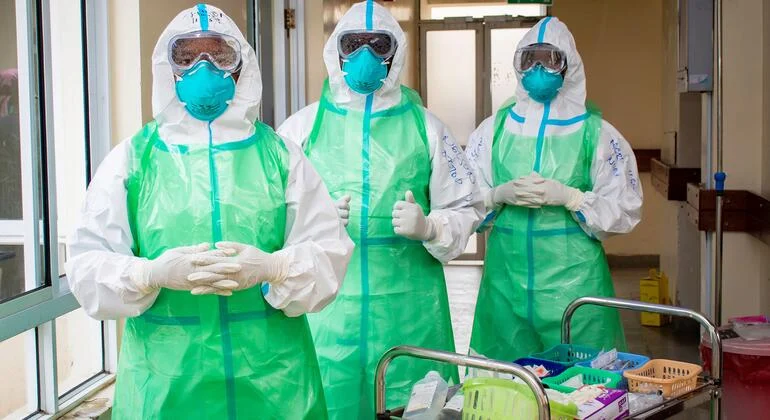
Introduction: A Dual Front in the Fight Against Ebola
As the international medical community intensifies its efforts to contain the latest Ebola outbreaks, two critical developments have emerged from East and Central Africa. In Kenya, authorities have successfully cleared the first group of individuals from quarantine, signaling a major victory in the nation’s proactive containment strategy. Simultaneously, in the Democratic Republic of the Congo (DRC), scientists have launched a historic clinical trial—aptly named "Tumaini," meaning "hope" in Swahili—aimed at identifying effective vaccines to combat the persistent Bundibugyo strain of the virus.
These twin efforts represent the front lines of global health security, blending rigorous contact tracing with cutting-edge scientific research. While the threat remains, the strategic response from regional governments and the World Health Organization (WHO) provides a blueprint for managing highly infectious diseases in an interconnected world.
Chronology: From First Detection to Current Status
The Kenyan Response
The narrative in Kenya began on October 6, when the Ministry of Health confirmed the country’s first case of Ebola. The patient, a Kenyan national who had been working in the DRC, traveled through Uganda before arriving in Nairobi on October 3. Tragically, he succumbed to the disease in a Nairobi hospital just two days later.
The response from the Kenyan government was swift. A robust, multi-agency effort was mobilized to trace every individual who had come into contact with the deceased. By October 22, the Ministry of Health, supported by the Kenya National Public Health Institute and the WHO, had successfully identified and quarantined all relevant contacts, including family members, medical personnel, airport staff, and fellow airline passengers.
On Monday, the WHO announced that 20 of these individuals had completed their 21-day observation period without exhibiting symptoms. They were discharged following a final health assessment and counseling, marking a successful end to their quarantine. Currently, 98 other contacts remain under active monitoring.
The DRC Outbreak
The DRC, which has been grappling with an outbreak since May 15, faces a significantly more complex challenge. With total caseloads approaching 10,000, the country has become the epicenter of the scientific fight against the Bundibugyo virus. The launch of the "Tumaini" trial on Friday in the eastern city of Bunia represents a significant escalation in the clinical response to the crisis.
Supporting Data: The Logistics of Containment
The Mechanics of Quarantine
The quarantine process in Kenya is a testament to the importance of standard health protocols. For the 20 individuals released this week, the process involved more than just isolation; it was a comprehensive medical journey. Each person underwent daily symptom checks, rigorous laboratory testing for those who developed signs of illness, and psychological counseling.
Of the total contacts traced in Kenya, eight individuals tested positive for Ebola. These patients were immediately transferred to the dedicated Ebola treatment center in Nairobi to receive specialized supportive care. To date, Kenya has recorded nine confirmed cases and two deaths. Crucially, all cases are linked to the initial index patient, indicating that the virus has not yet established sustained transmission within the general community.
The "Tumaini" Trial Architecture
The vaccine trial in the DRC is built upon the "ring vaccination" strategy—a methodology that proved successful during the West African Ebola epidemic a decade ago. This approach targets the social and familial "rings" surrounding a confirmed case, vaccinating those at the highest risk of exposure to create a protective buffer.
The trial platform is designed to be flexible, allowing for multiple vaccine candidates to be evaluated under a single, rigorous research framework. Currently, the trial is testing the Ervebo vaccine, which has demonstrated efficacy against the Zaire strain of Ebola. Scientists are now racing to determine if this success can be replicated against the Bundibugyo variant.
Official Responses and Public Health Messaging
Ensuring Community Safety
Dr. Patrick Amoth, Kenya’s Director General for Health, has issued a strong appeal for social cohesion. "We ask communities to welcome them home warmly," Dr. Amoth stated. "Having completed 21 days without symptoms, they pose no risk of infection to anyone."
His sentiment was echoed by Dr. Neema Rusibamayila Kimambo, the WHO representative to Kenya. She emphasized that the individuals who underwent quarantine performed a civic duty that saved lives. "People who complete quarantine have helped protect their families, their communities, and the whole country," she noted.
A Scientific Ray of Hope
In Geneva, Dr. Meg Doherty, Director of the WHO’s Department of Science for Health, spoke to the emotional and scientific gravity of the moment. Reflecting on her time working in the DRC nearly 40 years ago, she described the launch of the Tumaini trial as both a "moving experience" and a vital step forward.
"Tumaini actually means ‘hope’ in Swahili, and it is giving us some hope," Dr. Doherty said. She highlighted that local communities are actively seeking enrollment in the trials, demonstrating a profound awareness of the need for an efficacious vaccine.
Implications: The Path Toward Future Preparedness
Scientific Evaluation of New Candidates
The battle against the Bundibugyo virus is moving beyond traditional containment into the realm of advanced pharmacology. Last week, the WHO convened technical advisory groups to evaluate two promising vaccine candidates:
- ChAdOx1: Developed by the University of Oxford in collaboration with the Serum Institute of India.
- mRNA-1469: Developed by the American biotechnology firm Moderna.
The findings from these evaluations are expected to be published this week. These candidates, if successful, could provide the first specific medical tools to combat the Bundibugyo strain, for which no licensed vaccine or specific treatment currently exists.
Strengthening Global Health Systems
The current situation serves as a stark reminder of the intersection between humanitarian crises and public health. As Dr. Doherty noted, the DRC is a "beautiful country challenged by outbreaks on top of humanitarian crises." The success of the response relies on the integration of these vaccine trials into the existing, ongoing response to the outbreak.
The WHO continues to support Kenya and the DRC across a spectrum of critical areas:
- Disease Surveillance: Identifying new cases in real-time.
- Infection Prevention: Training staff in clinical settings to prevent cross-contamination.
- Risk Communication: Ensuring that accurate information reaches remote populations.
- Health Screening: Enhancing protocols at points of entry, such as airports and border crossings, to catch potential cases before they spread.
Long-Term Outlook
While it may take several months for the first data results from the Tumaini trial to emerge, the framework itself is a triumph of international cooperation. By building on the lessons learned from previous Ebola outbreaks, the scientific community is creating a more resilient system for future preparedness.
The immediate goal remains the same: the early detection of cases and the provision of high-quality supportive care. While modern medicine has not yet conquered the Bundibugyo virus, the current data suggests that the combined efforts of rapid tracing, community cooperation, and accelerated vaccine research are significantly narrowing the path for the virus to move through the population.
As Kenya begins the process of reintegrating its quarantined citizens and the DRC begins the long road of clinical evaluation, the message from the global health community is one of cautious optimism. The virus remains a formidable opponent, but the systems designed to stop it are proving to be more efficient, more collaborative, and more scientifically grounded than ever before. Through the lens of "Tumaini," the world watches with the hope that these efforts will soon yield the tools necessary to end the current crisis and safeguard against the next.
 Muslim
 Ammar Sabilarrohman
 Asro
