

Introduction: A Humanitarian Crisis Under Siege
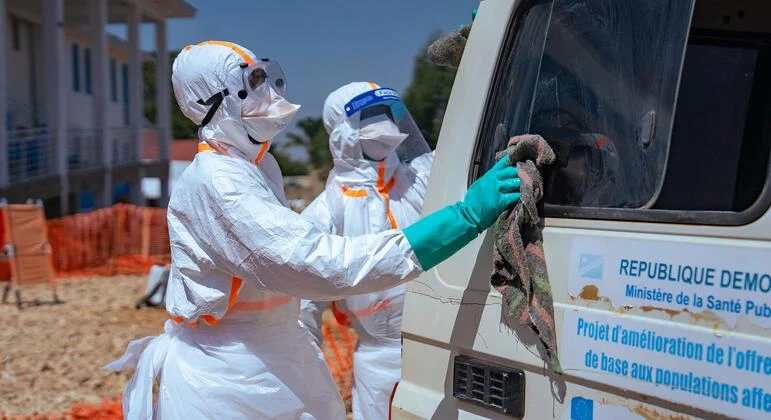
The ongoing struggle to contain the deadliest Ebola outbreak in the history of the Democratic Republic of the Congo (DRC) has suffered a devastating setback. In a chilling display of violence that underscores the perils faced by frontline medical responders, a nurse was brutally killed by protesters in the rural town of Bafwasende, located in the Tshopo province. The healthcare worker was in the midst of responding to an urgent Ebola alert when the incident occurred this past Saturday.
This act of violence has sent shockwaves through the international health community, prompting high-level condemnation from United Nations officials and the World Health Organization (WHO). As the death toll from the virus continues to mount, the safety of those tasked with ending the epidemic has become a focal point of concern, threatening to derail critical containment operations in some of the most volatile regions of the country.
The Incident in Bafwasende: A Chronology of Violence
The tragedy unfolded on Saturday in Bafwasende, an area already struggling with the logistical nightmares of reaching remote populations. According to local reports, a medical response team had been deployed to the area following a reported alert of a suspected Ebola case.
As the team attempted to conduct their duties, they were confronted by a group of protesters. What began as civil unrest rapidly devolved into a lethal attack. Beyond the tragic loss of the nurse—whose identity has been withheld pending notification of family—a second health worker sustained severe injuries. The wounded individual remains hospitalized, receiving intensive care.
This incident is not an isolated event but rather part of a troubling trend of community resistance and hostility directed at medical responders in the DRC. Misinformation, fear, and distrust of international interventions have historically hampered the response, but this escalation into fatal violence marks a significant and dangerous departure from previous challenges.
Official Responses: International Outcry
The response from the international community was swift and uncompromising. Julien Harneis, the UN Senior Ebola Response Coordinator, issued an urgent statement expressing his deepest condolences to the grieving family and colleagues of the fallen nurse.
"I strongly condemn this attack and call for a thorough investigation," Harneis stated. "I urge communities to protect health workers and allow them to carry out their work safely." His sentiment was echoed by the WHO Director-General, Dr. Tedros Adhanom Ghebreyesus, who took to social media to emphasize the sanctity of medical neutrality.
"Everyone working to protect communities from this deadly disease must be able to work in dignity and safety," Dr. Tedros wrote on X. "Healthcare must always be protected." The consensus among global health leaders is clear: the killing of a healthcare worker is not merely a crime against an individual, but an assault on the collective effort to preserve human life during a public health emergency.
Supporting Data: The Magnitude of the Outbreak
The current Ebola epidemic, caused by the Bundibugyo virus, represents a historic challenge for the DRC. Unlike previous, more localized outbreaks, this strain has proven particularly elusive, and, most alarmingly, there is currently no approved vaccine to combat it.
Current Statistics
Since the outbreak was officially declared on May 15, the numbers have risen to a harrowing level:
- Total Cases: Over 9,760 confirmed and probable infections.
- Total Deaths: Approximately 4,727 lives lost.
- Geographic Reach: The virus has expanded across eight provinces, including Bas-Uélé, Haut-Uélé, Ituri, North Kivu, South Kivu, Sud Ubangi, Tshopo, and Nord-Ubangi.
The sheer scale of this outbreak has stretched the healthcare infrastructure of the DRC to its absolute breaking point. The expansion into eight distinct provinces indicates a high level of mobility in the transmission, complicating contact tracing and quarantine efforts.
Regional Implications and the Nigerian Success Story
While the DRC battles to stabilize the situation, the virus has shown its potential for international spread. Uganda successfully managed a smaller, localized outbreak, which was officially declared defeated in August. However, cases have been reported in France, Kenya, and Nigeria, highlighting the need for global vigilance.
Nigeria’s "Remarkable Achievement"
Last week, Nigeria confirmed its first case of the current strain: a woman who had recently traveled from Uganda. The incident served as a high-stakes test of the nation’s emergency response systems. In a coordinated effort, the Nigerian medical team managed the patient through the most acute phase of the illness, stabilizing her condition.
In a move to ensure continued specialized care, the patient and her husband—who is being monitored as a primary contact—were medically evacuated to Switzerland on Monday morning. Both are Swiss citizens. Dr. Mohamed Janabi, the WHO Regional Director for Africa, lauded the effort as a "remarkable achievement" and a "testament to what Africa can accomplish when we work together."
Despite this success, Dr. Janabi warned that complacency is not an option. "Vigilance remains critical," he noted. Nigeria is currently monitoring 52 contacts, while the Swiss medical authorities have assumed responsibility for the long-term clinical care of the patient.
Analyzing the Roots of Conflict: Why Medical Workers are Targeted
The violence in Bafwasende raises an uncomfortable question: why are those trying to save lives being targeted by the very communities they serve? Analysts point to a complex interplay of factors:
- Deep-Seated Distrust: Years of conflict in the eastern DRC have left many communities skeptical of outsiders, including government officials and international NGOs.
- The "Invisible" Virus: Because Ebola is often misunderstood, myths circulate that health workers are either bringing the disease into the community or are acting as agents of outside powers.
- Economic Disruption: Containment measures, such as movement restrictions and the closure of markets, severely impact the livelihoods of local populations, leading to localized anger that is often redirected toward the visible face of the response: the health workers.
- Lack of Communication: When response teams fail to engage effectively with local community leaders, the resulting vacuum of information is often filled by conspiracy theories.
The Path Forward: Security, Trust, and Science
The path to ending this outbreak is two-fold. First, there is an urgent need for enhanced security for medical personnel. This does not necessarily mean the militarization of health zones, but rather a robust engagement strategy that involves local leaders in the planning and execution of health responses. When communities feel ownership over the response, they are more likely to defend their health workers rather than attack them.
Second, the scientific community must accelerate efforts to address the lack of an approved vaccine for the Bundibugyo strain. As the death toll approaches the 5,000 mark, the reliance on traditional supportive care—while effective when caught early—is clearly insufficient to stem the tide of a virus of this virulence.
A Call for Global Solidarity
The UN and the WHO are calling on the international community to sustain their financial and technical support. The crisis in the DRC is not merely a regional health issue; it is a global test of solidarity. The evacuation of the patient from Nigeria to Switzerland illustrates the interconnectedness of our modern world. An outbreak in a rural town in Tshopo can, within days, reach the borders of Europe or other parts of Africa.
As the investigations into the Bafwasende tragedy begin, the global community is reminded that the battle against Ebola is fought on two fronts: one against the biological pathogen, and the other against the social fear and instability that allow it to thrive.
Conclusion: Honoring the Fallen
The death of the nurse in Bafwasende is a profound tragedy that should stir the conscience of the world. It is a reminder that in the face of an invisible, lethal enemy, the most valuable assets we possess are the brave individuals who walk into the heart of the epidemic to care for the sick.
As we look toward the coming weeks, the priority must be twofold: ensuring the safety of all health responders on the ground and doubling down on community outreach to rebuild the broken trust between medical professionals and the people of the DRC. Without these pillars—security and trust—the battle against this historic outbreak will remain an uphill climb, one where the cost is measured in the most precious currency of all: human life.
The international community must not let this sacrifice be in vain. By supporting the victims, demanding accountability for the violence, and redoubling the efforts to bring the virus under control, the world can honor the nurse who lost her life in service to humanity. Vigilance remains our only shield, and solidarity remains our only path to victory.
 Asro
 Siti Muinah
