

In a world defined by interconnected crises, international organizations are navigating a complex landscape of human rights advocacy, judicial accountability, and humanitarian communication. From the halls of the International Labour Organization (ILO) to the cinema houses of Egypt, and the chambers of the International Criminal Court (ICC), global institutions are facing pivotal moments that test their resolve, integrity, and effectiveness in addressing the most pressing challenges of our time.
I. A Global Scourge: The Fight Against Child Labour
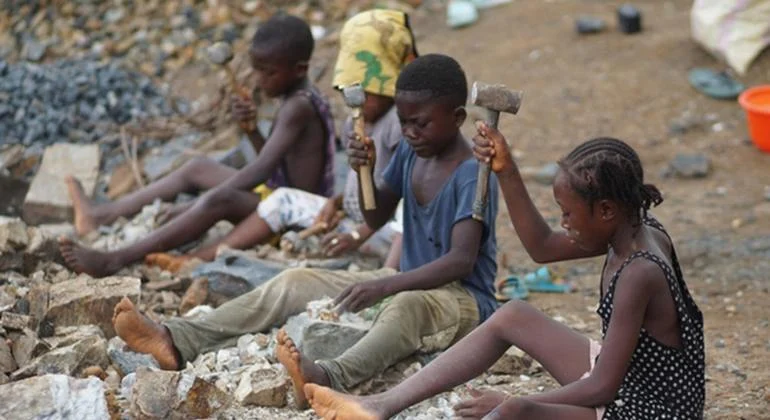
The International Labour Organization (ILO) has issued a sobering reminder of the scale of human suffering hidden in the global economy. Today, approximately 138 million children remain trapped in child labour, a figure that includes 54 million children subjected to hazardous conditions—work that poses an immediate and long-term threat to their physical health, psychological safety, and fundamental development.
The ILO’s Call to Action
“This is unacceptable—we must accelerate action,” stated Gilbert F. Houngbo, Director-General of the ILO, in a poignant video message addressed to the global community. Mr. Houngbo emphasized that the persistence of child labour is not merely a failure of policy but a failure of collective human conscience. He called for a renewed global commitment, moving beyond rhetoric toward substantive changes: expanding access to decent work for adults, universal education, robust social protection nets, and the enforcement of stringent legal safeguards.
The Marrakech Framework
This year, the movement against this exploitation is anchored by the theme, “Red Card to Child Labour: Fair play for children, decent work for adults.” The initiative underscores the symbiotic relationship between adult economic stability and child protection; when parents earn a living wage, the economic necessity for child labour diminishes.
Central to this year’s progress is the recently adopted Marrakech Global Framework for Action against Child Labour. This framework represents a significant evolution in international strategy. For the first time, it introduces measurable, time-bound indicators and a formal accountability mechanism. By tracking implementation beyond the 2030 Sustainable Development Goal (SDG) target date, the ILO intends to ensure that the momentum to end child exploitation does not wane.
II. Judicial Crisis: ICC Prosecutor Suspended Amid Misconduct Allegations
The International Criminal Court (ICC), the world’s permanent tribunal for the most serious international crimes, is currently grappling with a leadership crisis that threatens to undermine its institutional credibility.
Chronology of the Controversy
- 2024: Multiple allegations of sexual misconduct were first reported against Karim Khan, the ICC’s Chief Prosecutor.
- Internal Review: The ICC initiated a rigorous internal investigation into the behavior of the prominent British lawyer.
- Tuesday’s Announcement: The office of the ICC President officially confirmed that the court’s executive committee has suspended Mr. Khan with “immediate effect,” pending a final resolution.
Implications for International Justice
The suspension marks a turbulent period for the Hague-based court. The governing body has taken the unprecedented step of referring the disciplinary proceedings to the court’s 125 Member States. This move ensures that the final verdict on Mr. Khan’s future—and the integrity of the Prosecutor’s office—will be decided through a democratic assembly of the court’s stakeholders.
The ICC leadership has been careful to stress that the suspension does not prejudge the outcome of the case. In a public statement, the President’s office reaffirmed that “fostering the dignity, rights, and aspirations of the court’s personnel are key priorities of the court’s leadership.” As the ICC continues to investigate and prosecute war crimes, genocide, and crimes against humanity, the outcome of this disciplinary process will be closely scrutinized by international observers, NGOs, and legal scholars worldwide.
III. WFP’s “Not My Day”: Using Cinema to Combat Hunger in Egypt
In Egypt, the United Nations World Food Programme (WFP) is innovating its advocacy strategies to reach a broader, more diverse audience. Recognizing that traditional reports and statistical data often fail to resonate with the public, the WFP has launched a unique campaign titled “Not My Day,” leveraging the reach of the Egyptian film industry.
The Strategy: Storytelling Through Cinema
The campaign operates on the principle of empathy-led communication. Across 46 cinema screens nationwide, the WFP is screening promotional content that utilizes the familiar voices of Egyptian public figures—including actor Ahmed Magdy, event founder Amr Mansi, and celebrated chefs such as Mona El Banna and Mostafa Seif.
The genius of the campaign lies in its narrative structure: the featured celebrities begin by describing their own mundane daily routines, only to reveal halfway through that they are recounting the actual, lived experiences of individuals currently supported by the WFP. By stripping away the anonymity typically associated with food insecurity statistics, the campaign makes the issue deeply personal.
Why Now? The Funding Crisis
This creative pivot comes at a critical juncture. The WFP is currently contending with severe global funding shortages that threaten the viability of food assistance programmes in Egypt and beyond. As inflation and geopolitical instability disrupt supply chains, the WFP’s ability to provide life-saving aid is stretched to its limit.
Rawad Halabi, WFP Country Director and Representative in Egypt, noted that the campaign is “engaging new audiences in a conversation about food security in a way never done before.” By positioning food security as the bedrock of dignity, stability, and national opportunity, the WFP hopes to build a grassroots movement of support that can influence policy and philanthropic commitment.
IV. Synthesis: The Interplay of Human Rights and Institutional Responsibility
When viewed collectively, these three developments—the fight against child labour, the internal crisis at the ICC, and the WFP’s awareness campaign—highlight the multifaceted nature of global governance.
Supporting Data and Context
- Child Labour Statistics: The 138 million children affected represent roughly 1 in 10 children globally. The 54 million in hazardous work face risks including toxic exposure, physical abuse, and extreme fatigue.
- The ICC’s Role: Established by the 1998 Rome Statute, the ICC serves as a court of last resort. Its stability is essential for the global rule of law; any internal scandal risks being weaponized by states that oppose the Court’s jurisdiction, making the current disciplinary proceedings a matter of global geopolitical significance.
- Food Insecurity in Egypt: The WFP’s reliance on creative partnerships reflects a broader shift toward "humanitarian marketing." In a digital age where attention is the most valuable currency, organizations are increasingly turning to influencers and mass media to ensure that funding shortages do not lead to a total collapse of support systems.
Official Responses and Future Outlook
The response from international leadership has been consistent in its call for accountability. Whether it is Mr. Houngbo’s demand for legal safeguards for children, the ICC’s commitment to the dignity of its staff, or the WFP’s push for public engagement, the underlying theme is a demand for higher standards.
The path forward is clear but arduous. The ILO must ensure that the Marrakech Framework moves from paper to practice, providing children with the education they are owed. The ICC must navigate its disciplinary proceedings with absolute transparency to preserve its status as a pillar of international justice. Finally, the WFP must convert the public awareness generated by the “Not My Day” campaign into tangible financial support to bridge the funding gap.
As these organizations continue their work, they serve as a reminder that international stability is not a static state, but a constant, evolving project that requires vigilant oversight, creative communication, and unwavering dedication to the most vulnerable members of our global society. The coming months will be decisive for all three sectors, as the world watches to see if these institutions can overcome their current hurdles to deliver on their mandates.
 Lina Hope
 Asro
Asro
 Layla Zulfa
