

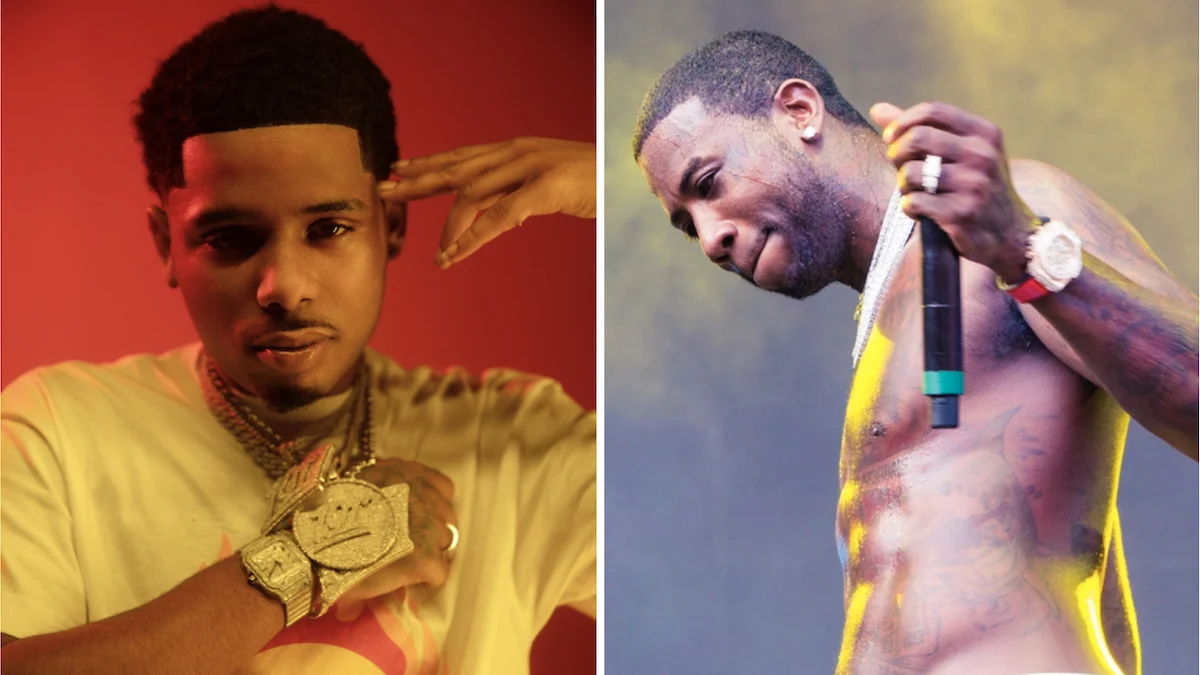
The legal saga surrounding Memphis rapper Pooh Shiesty has taken a significant turn, as court officials confirmed that his trial regarding the alleged kidnapping of industry titan Gucci Mane has been rescheduled. Originally slated to commence in July 2026, the proceedings have been pushed back to February 22, 2027. This delay, while standard in complex multi-defendant criminal cases, leaves the artist in a state of prolonged legal uncertainty, keeping him behind bars as prosecutors prepare a case that has sent shockwaves through the Southern hip-hop community.
The Core Allegations: A Studio Standoff
The charges stem from a harrowing incident that occurred in January 2026 at a recording studio in Dallas, Texas. According to court filings, Pooh Shiesty—born Lontrell Denell Williams Jr.—and a group of eight other associates allegedly orchestrated a targeted confrontation against Gucci Mane, the founder of 1017 Records, and two other unnamed industry executives.
Prosecutors allege that the group held the trio at gunpoint for several hours. The central motive, according to the state, was a forced contractual release. The defendants purportedly refused to allow Gucci Mane to leave the premises until he signed legal documents effectively terminating Shiesty’s recording contract with 1017 Records. Beyond the alleged coercion, the incident reportedly turned into a heist; investigators claim that the suspects absconded with significant amounts of cash, high-end watches, and luxury jewelry belonging to the victims.
Chronology of a Legal Downward Spiral
The timeline of Pooh Shiesty’s legal troubles is a cautionary tale of how quickly a meteoric rise in the music industry can be derailed by repeated run-ins with the law.
- October 2025: Pooh Shiesty is released from federal custody after serving a sentence related to a 2021 shooting incident. His release was contingent upon strict conditions, including house arrest, as he navigated the remainder of his supervised release.
- January 2026: The Dallas studio incident occurs. The alleged kidnapping of Gucci Mane takes place, drawing immediate attention from law enforcement agencies due to the high-profile nature of the victims.
- April 2026: Formal kidnapping and related felony charges are filed against Shiesty and eight other individuals, including his father, Rodney "Big30" Wright Jr.
- June 2026: A judge denies Shiesty’s request for bail, citing his previous criminal history and the severity of the new charges.
- July 2026 (Scheduled): The trial was initially set to begin, but scheduling conflicts and defense requests for more time to review discovery lead to a postponement.
- February 22, 2027: The new trial date is established by the court, marking a significant extension of the pre-trial discovery and motion phase.
Supporting Data and the Burden of Evidence
The prosecution’s case is heavily bolstered by digital evidence, a recurring theme in Shiesty’s legal history. During the bail hearing, FBI agents provided testimony that painted a damning picture of the events in Dallas. Central to the state’s argument are social media posts discovered by investigators, which allegedly feature the defendants posing with items identified as the stolen jewelry taken during the January incident.
This reliance on social media evidence is not new for the rapper. In his 2022 conviction—where he was sentenced for shooting a man during a drug deal gone wrong—prosecutors used Instagram photos and videos to place the defendant at the scene of the crime. The pattern has led legal analysts to argue that Shiesty’s digital footprint has become his greatest liability, providing the state with a roadmap of his activities that is difficult to dispute in court.
Furthermore, the complexity of the trial is compounded by the number of defendants. With nine individuals facing charges, the logistics of coordinating defense attorneys, the prosecution, and court availability have necessitated the delay. While some of his co-defendants, including his father, have successfully secured bail, Shiesty remains in custody, a decision influenced by his status as a repeat offender currently under the terms of a supervised release.
Official Responses and Judicial Stance
The court’s decision to deny bail was based on several aggravating factors. Judge presiding over the matter emphasized that the defendant’s violation of the terms of his previous release—specifically the requirement of house arrest—demonstrated a disregard for the judicial process.
Defense counsel has argued that the evidence is circumstantial and that the social media posts do not definitively link the rapper to the alleged kidnapping. However, the FBI testimony has proved difficult to overcome. In court, agents detailed how the digital evidence recovered from the suspects’ devices corroborated the timeline provided by the victims.
Gucci Mane’s camp has remained largely quiet regarding the specific details of the incident, opting to let the legal process unfold through official channels. However, the incident has highlighted the volatile intersection of creative business disputes and street-level criminal behavior.
Implications for the Industry and the Artist
The delay until 2027 has profound implications for Pooh Shiesty’s career. Before his initial imprisonment, he was widely considered one of the most promising voices out of the Memphis scene, with a distinct sound and a growing catalog of hits. Now, facing a multi-year trial and the prospect of a lengthy prison sentence, his music career has essentially been placed on an indefinite hiatus.
The "Digital Evidence" Precedent
This case serves as a broader reminder to the entertainment industry regarding the dangers of "internet flexing." The use of social media as a primary source of evidence in criminal trials has become a standard tool for prosecutors. For high-profile artists, the line between curated online persona and criminal intent is increasingly thin. Legal experts suggest that this case will likely set a further precedent for how social media evidence is handled in high-stakes criminal litigation.
Impact on 1017 Records
The relationship between Gucci Mane and his roster has often been characterized by mentorship and loyalty. The allegation that Shiesty sought to extort his way out of a contract—if proven true—speaks to a breakdown in the traditional artist-label relationship. The industry is watching closely to see how this trial affects the internal operations of 1017 Records and whether other artists on the label will face increased scrutiny regarding their business dealings.
The Future of the Trial
As February 2027 approaches, the legal teams for the nine defendants will likely continue to file motions to suppress evidence, particularly the social media data that forms the backbone of the government’s case. If the defense fails to invalidate this evidence, they may be forced to pursue plea negotiations, though the severity of a kidnapping charge often carries mandatory minimums that make such deals unattractive.
For now, Pooh Shiesty remains in a holding pattern. The postponement of the trial ensures that his case will continue to dominate headlines for the foreseeable future, serving as a stark reminder of the consequences when personal conflict escalates into violent, criminal activity. The music world waits to see if one of its most electrifying talents will ever return to the stage, or if his future will be defined by the courtroom rather than the recording booth.
Final Analysis
The legal proceedings against Pooh Shiesty are far from over. With nearly eight months remaining until the trial begins, the state is expected to further refine its case, likely introducing additional testimony from the victims and digital forensics experts. The defense faces an uphill battle, necessitated by the combination of prior convictions and the mountain of social media evidence.
As the trial date of February 22, 2027, looms, the case stands as a grim case study in the consequences of legal non-compliance and the permanent nature of digital documentation. Whether this trial marks the end of a career or the beginning of a long-term incarceration remains the central question, but for now, the Memphis artist remains under the strict oversight of the federal court system, far removed from the industry he once sought to dominate.
 Asro
Asro
 Lina Irawan
 rifanmuazin
