

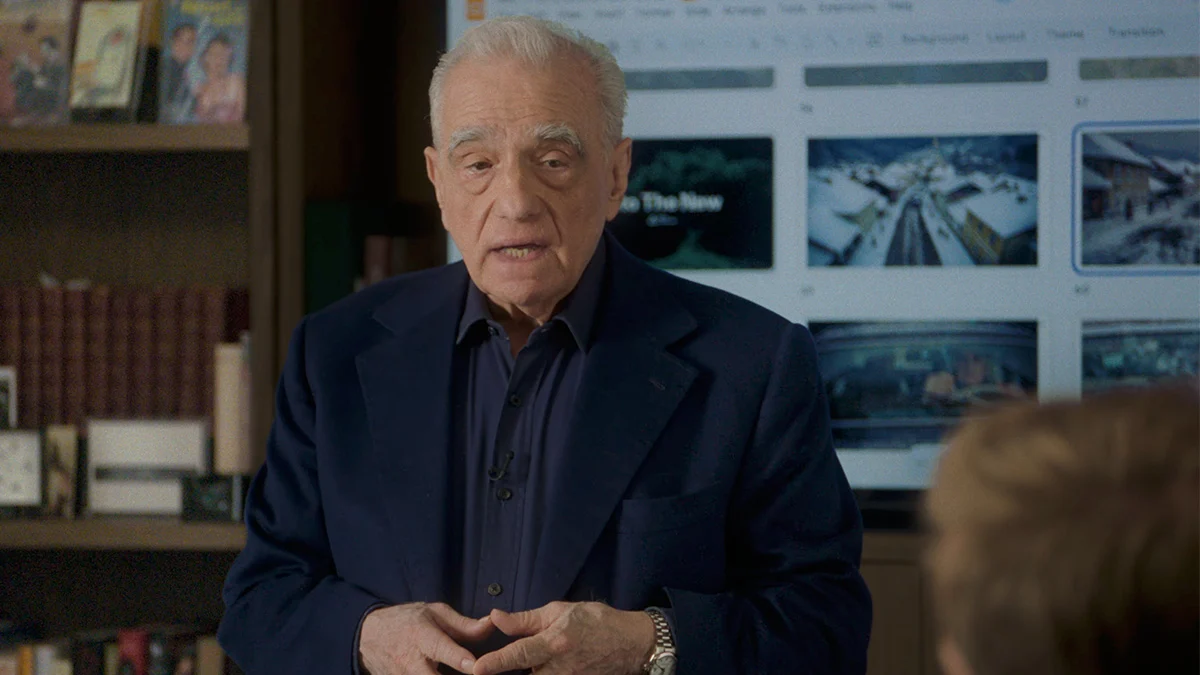
In a development that has sent shockwaves through the bedrock of Hollywood’s creative labor unions, legendary filmmaker Martin Scorsese has found himself at the center of a heated controversy. The Oscar-winning director, long revered as a champion of cinematic preservation and traditional craft, has faced a sharp rebuke from the Art Directors Guild (ADG) following his decision to become an advisor for—and public face of—Black Forest Labs, a generative AI startup specializing in visual tools.
The partnership, centered on the company’s "FLUX" storyboarding software, has ignited a fierce debate over the future of human labor in the film industry. While Scorsese views the tool as a "creatively freeing" advancement in the evolution of cinema, the ADG—representing production designers, illustrators, set designers, and graphic artists—has labeled the endorsement a "betrayal" of the very professionals who have helped shape his illustrious filmography.
The Genesis of the Conflict: A High-Profile Endorsement
The friction began in earnest last Tuesday when Scorsese appeared in a promotional advertisement for Black Forest Labs. In the spot, the director lauded the "cinematic intelligence" of the FLUX platform, framing it as an essential tool for modern pre-production. For a director whose career spans decades and whose aesthetic is often defined by meticulous, hand-crafted visual planning, the endorsement was perceived by many as an ideological pivot.
Scorsese defended the move by citing the historical fluidity of the medium. "Cinema is a young medium, only around 125 years old, so we have to be open to how it can evolve," he stated. He described his personal experience using FLUX on a recent project, noting that the ability to visualize and immediately iterate on a storyboard provided a level of efficiency that saved both time and capital without, in his estimation, compromising the final quality of the work.
However, the ADG did not interpret the move as a simple technological upgrade. To the union, the partnership represents a tacit validation of software that they allege is fundamentally parasitic.
Chronology of the Controversy
- Mid-2024: The broader conversation regarding AI in Hollywood reaches a fever pitch as labor unions, including The Animation Guild and the Concept Art Association, publish studies highlighting significant job displacement due to the rapid integration of generative AI tools.
- Early June 2026: Black Forest Labs launches a campaign featuring Martin Scorsese to promote their FLUX storyboarding software.
- June 9, 2026: The Art Directors Guild (Local 800) issues a blistering public statement via social media, explicitly condemning Scorsese for his involvement.
- June 10–12, 2026: Industry discourse intensifies as other IATSE-affiliated guilds and independent creators weigh in on the implications of a "name-brand" director championing tools that rely on data scraping.
The Core Argument: Data, Ethics, and Ownership
The primary grievance voiced by the Art Directors Guild centers on the "black box" nature of AI training data. The ADG’s statement pulls no punches, asserting that the FLUX tool is "built on ingesting large swaths of copyrighted work, likely scraped from the internet without consent, credit, compensation, or transparency."
This critique touches on the central legal and ethical battleground of the AI era. Generative AI models are trained on billions of images, many of which are the intellectual property of working artists. When these models generate "cinematic" storyboards, they are essentially synthesizing the stylistic nuances and labor of human artists who have never been compensated for their input.
For the ADG, this is not just an issue of copyright; it is an issue of displacement. By endorsing a tool that automates the creative contributions of production designers and illustrators, the Guild argues that Scorsese is helping to normalize a workflow that renders human expertise obsolete. "To think their professional contributions can be mimicked or outshone by generative AI," the Guild wrote, "is a betrayal of the collaborative nature of cinema."
Supporting Data: The Erosion of the Creative Workforce
The anxiety permeating the ADG is supported by recent industry data. A 2024 study commissioned by The Animation Guild and the Concept Art Association offered a bleak forecast for the future of entry-level and mid-level creative roles in film and television.
The study identified a distinct pattern of "role consolidation and reduction." In practical terms, this means studios are increasingly relying on a single artist—or a prompt-based AI tool—to perform the work that previously required a department of specialists. The shift is not merely about speed; it is about the erasure of the creative pipeline. When a director can generate a storyboard with a text prompt, the iterative, collaborative dialogue between a director and a storyboard artist is lost. That dialogue, the Guild argues, is where the "soul" of a film is often forged.
The Industry Response: A Divided House
The reaction to the ADG’s statement has been swift and deeply polarized.
The Pro-Innovation Perspective
Proponents of AI in film, including some tech-forward producers and independent filmmakers, argue that the ADG is resisting an inevitability. They view tools like FLUX as "democratizing" forces. "If a young filmmaker can visualize their vision for a fraction of the cost, that is a net positive for art," one studio executive noted anonymously. They argue that Scorsese’s endorsement is merely the latest example of a director embracing new technology—much like the transition from film to digital or the introduction of Computer Generated Imagery (CGI).
The Labor Perspective
Conversely, the labor perspective, championed by the ADG and supported by a growing chorus of IATSE members, maintains that efficiency is a poor substitute for artistry. The "collaborative nature of cinema," which the ADG emphasized in their statement, relies on human interaction. When a machine becomes the primary collaborator, the serendipity and artistic friction that define human creativity are replaced by the statistical averages of a dataset.
Implications: Where Does Hollywood Go From Here?
The rift between Martin Scorsese and the Art Directors Guild is symptomatic of a larger, existential crisis facing the entertainment industry.
1. The Legal Landscape
The ADG’s accusation of "stolen" work brings the conversation back to the courts. If major studios and high-profile directors continue to adopt AI tools that lack a transparent, ethically sourced training dataset, they risk becoming defendants in a wave of copyright infringement litigation. The industry is currently waiting for precedent-setting rulings that will determine whether AI output is protected by fair use or constitutes a systemic infringement of artist rights.
2. The Future of Creative Labor
The "role consolidation" mentioned in the 2024 study is already altering the professional trajectory for young artists. If the entry-level rungs of the creative ladder—such as storyboard assistant or junior concept artist—are removed in favor of AI, the industry faces a long-term problem: where will the masters of tomorrow come from? The apprenticeship model of the film industry relies on learning by doing, and if the "doing" is outsourced to a black-box algorithm, the development of human talent will inevitably stagnate.
3. The Scorsese Factor
Scorsese’s role in this is particularly stinging because of his reputation. He has spent years arguing for the sanctity of the "theatrical experience" and the importance of preserving film history. By aligning himself with a startup that many view as an existential threat to the industry’s workforce, he has complicated his legacy. The ADG’s closing line in their public statement—"Mr. Scorsese, The Business is not in flux"—serves as a stark reminder that while technology may be in a state of flux, the livelihoods of thousands of artisans remain the backbone of the medium he loves.
Conclusion
As the dust settles on this initial confrontation, one thing is clear: the integration of generative AI into Hollywood is no longer a theoretical debate—it is an active labor struggle. The partnership between Martin Scorsese and Black Forest Labs has crystallized the tensions that have been simmering behind the scenes of studio boardrooms for years.
Whether this becomes a turning point for stricter AI regulation in Hollywood or simply another chapter in the long, often contentious history of technological evolution in cinema remains to be seen. For now, the Art Directors Guild has signaled that they are prepared to fight for the sanctity of their craft, ensuring that the future of film remains a human-led endeavor, rather than one governed by the cold calculations of an algorithm.
The industry waits to see if Scorsese will respond further, or if this partnership will serve as the first major battle in a long war for the creative soul of the motion picture industry.
 Asro
Asro
 Lina Irawan
 rifanmuazin
