

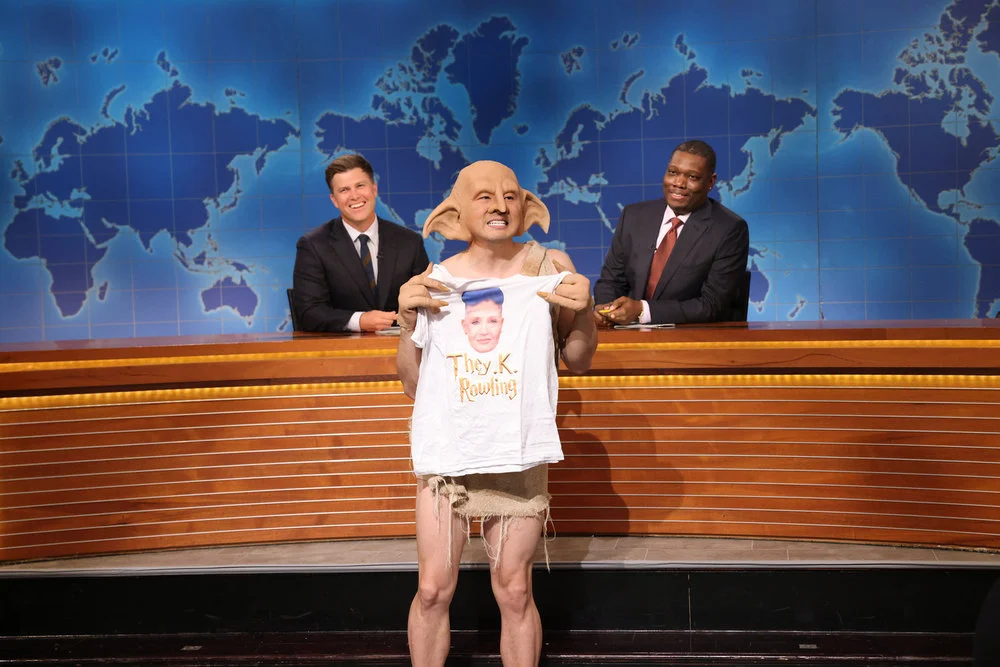
For five decades, the phrase "Live from New York" has signaled the start of a cultural phenomenon. Yet, while the writers and performers of Saturday Night Live (SNL) often command the spotlight, a silent, high-stakes revolution has been occurring behind the scenes within the hair and makeup departments. As the show navigates its landmark 51st season and looks back on its 50th-anniversary legacy, the artisanal craftsmanship that defines the show’s aesthetic is being augmented by cutting-edge technology. Led by industry veterans Louie Zakarian and Jodi Mancuso, the teams at Studio 8H are proving that even a half-century-old institution can find new ways to innovate under the most brutal production schedule in television.
Main Facts: The Intersection of High-Tech and High-Pressure
The production of Saturday Night Live is widely regarded as one of the most grueling marathons in the entertainment industry. Every week, a brand-new 90-minute variety show is built from scratch, requiring hundreds of costumes, dozens of sets, and an array of wigs and prosthetics that must be camera-ready in a matter of days.
The core challenge of the SNL hair and makeup departments is the "turnaround." While the production staff technically has Sundays and Mondays off, the reality of the schedule often dictates otherwise. The department heads, Louie Zakarian (Makeup) and Jodi Mancuso (Hair), have spent a combined five decades at the helm, evolving their departments from traditional workshops into high-tech labs.
The most significant shift in recent years has been the integration of 3D printing and digital scanning. This technology allows the team to bypass traditional, time-consuming methods of sculpting and molding. By maintaining a digital library of cast members’ facial and hand scans, Zakarian can print precise prosthetics overnight. This capability was recently showcased in the creation of Bowen Yang’s "Dobby the House Elf" look, which required full face and hand prosthetics—a feat that would have been nearly impossible under the traditional schedule of previous decades.
Chronology: The Anatomy of an SNL Week
To understand the magnitude of the work, one must look at the relentless pace of the SNL production cycle. The week is a carefully choreographed descent into creative chaos.
Sunday and Monday: The Illusion of Rest
While the cast and writers recover from the previous night’s show, Zakarian and Mancuso are often already planning for the week ahead. Though technically "off," these days are used for logistical planning and reviewing the initial concepts for the upcoming host.
Tuesday: The Host’s Arrival and Initial Fittings
The pace accelerates on Tuesday when the week’s host arrives for their initial fittings. This is a critical window for the hair and makeup teams. Under the new digital workflow, this is often when "face scans" are performed on the host. These scans are uploaded to a digital database, allowing Zakarian to begin "sculpting" prosthetics on a computer screen rather than with physical clay.

Wednesday and Thursday: The Creative Pivot
As script read-throughs take place and the lineup of sketches begins to solidify, the hair and makeup departments must remain agile. A sketch written on Wednesday afternoon might require a host to be transformed into a mythical creature or a historical figure by Friday morning. It is during these hours that the 3D printers in Rockefeller Center run continuously, churning out molds and silicone pieces while the staff catches a few hours of sleep at nearby hotels.
Friday: The Pre-tape Crunch
Friday is perhaps the most intense day for the craft teams. SNL has increasingly relied on high-production-value "pre-taped" segments—commercial parodies, music videos, or cinematic shorts. These often require the most complex visual transformations. The "Army of Bobs" sketch or segments featuring "orcs and Vikings" are typically filmed on Fridays, requiring the hair team to prep dozens of wigs and the makeup team to apply multi-part prosthetics before the sun rises.
Saturday: The Live Evolution
The work runs right up until the moment the "On Air" light glows red. Last-minute changes are the norm. If a "Weekend Update" character is added or a sketch is tweaked during the Saturday dress rehearsal (which ends just hours before the live broadcast), the hair and makeup teams must execute "miracle" transformations in the hallways of Studio 8H.
Supporting Data: The Scale of Transformation
The sheer volume of assets managed by these departments is staggering. The logistical footprint of SNL’s visual departments is more akin to a major film studio than a weekly television show.
- The Wig Archive: Jodi Mancuso manages an inventory of over 3,000 wigs. This archive is stored within the repurposed floors of Rockefeller Center. The collection is so vast that it includes character wigs from cast members who haven’t been on the show in 25 years.
- The Mold Room: Louie Zakarian maintains a "mold room" filled with thousands of physical casts. However, due to the space constraints of an office building in Midtown Manhattan, the team must purge "two or three dumpsters full" of physical molds every autumn.
- Digital Storage: To combat physical space limitations, the department has transitioned to digital archiving. A few gigabytes of data now replace hundreds of pounds of plaster and silicone, allowing the team to "re-print" a prosthetic from a previous season in a matter of hours.
- Manpower and Materials: For sketches like the "Army of Bobs," the hair department had to scale from an initial request of five bobs to 14, plus a custom-fitted bob for a dog. This requires an in-house "wig shop" because commercial vendors cannot meet the 3:00 AM deadlines inherent to the show.
Official Responses: Insights from the Department Heads
In interviews with IndieWire, Zakarian and Mancuso reflected on their long tenures and the unique culture of Studio 8H. Their longevity—31 seasons for Zakarian and nearly 26 for Mancuso—provides a rare continuity in an industry known for high turnover.
"It seems like yesterday that we all started there," Zakarian told IndieWire, noting that the excitement of the work hasn’t dimmed. He highlighted the "ChatGPTio" sketch featuring Bad Bunny as a prime example of how they collaborate with hosts to enhance a character. "We made a little silicon belly that would go on a T-shirt, and as soon as he saw that, he was sporting that thing. He was enjoying it."
Mancuso emphasized the lack of ego required to survive the SNL environment. "We understand what each other can do and try to help each other out as much as we can with the time restraints that we have," she said. "It takes a village to do what we do, and we really all get excited when the other person’s thing looks good."

Regarding the frantic pace, Mancuso joked that the writers often seem to sense when they have finally cleared out old inventory. "It’s like they know that we’ve done that. They’re like, ‘Oh, I think they just got rid of something. Quick, write that in.’"
Implications: The Future of Live Television Craft
The evolution of SNL’s hair and makeup departments carries significant implications for the broader entertainment industry. As the show enters its second half-century, it serves as a blueprint for how traditional craft can survive in a digital age.
1. The Death of the "Impossible" Sketch
In the past, certain sketches were deemed impossible due to the time required for prosthetic application or wig construction. With 3D printing and digital sculpting, those barriers are disappearing. The ability to create "film-quality" effects for a live broadcast has raised the bar for what audiences expect from televised comedy.
2. Archival Efficiency
The transition from physical to digital archives is a necessity for productions based in urban centers where real estate is at a premium. SNL’s model of "scan and discard" for physical molds may become the standard for long-running theatrical and television productions, ensuring that iconic looks can be recreated instantly without the need for massive warehouses.
3. The Human Element in a Tech-Driven World
Despite the influx of technology, the success of SNL’s visual identity remains rooted in the relationship between the artist and the performer. As Zakarian and Mancuso noted, the technology is merely a tool that allows them more time to focus on the "performance" of the makeup—how it moves with the actor and how it contributes to the humor.
4. Longevity as a Competitive Advantage
In an era of rapid industry change, the decades-long partnership between Zakarian and Mancuso is an anomaly. Their deep institutional knowledge allows them to navigate the "brutal" schedule with a level of calm that younger, less experienced teams might lack. This "village" mentality is perhaps the most critical component of the show’s enduring success.
As Saturday Night Live moves beyond its 50th anniversary, the work of the hair and makeup departments stands as a testament to the show’s resilience. By blending the artisanal skills of the past with the digital tools of the future, they ensure that no matter how "crazy" the writers’ imaginations get, the reality of Studio 8H can always keep up. In the words of Jodi Mancuso, the chaos "keeps us young"—a fitting sentiment for a show that remains a vital part of the cultural zeitgeist after fifty years.
 Jia Lissa
 Lina Irawan
 Iffa Jayyana
