

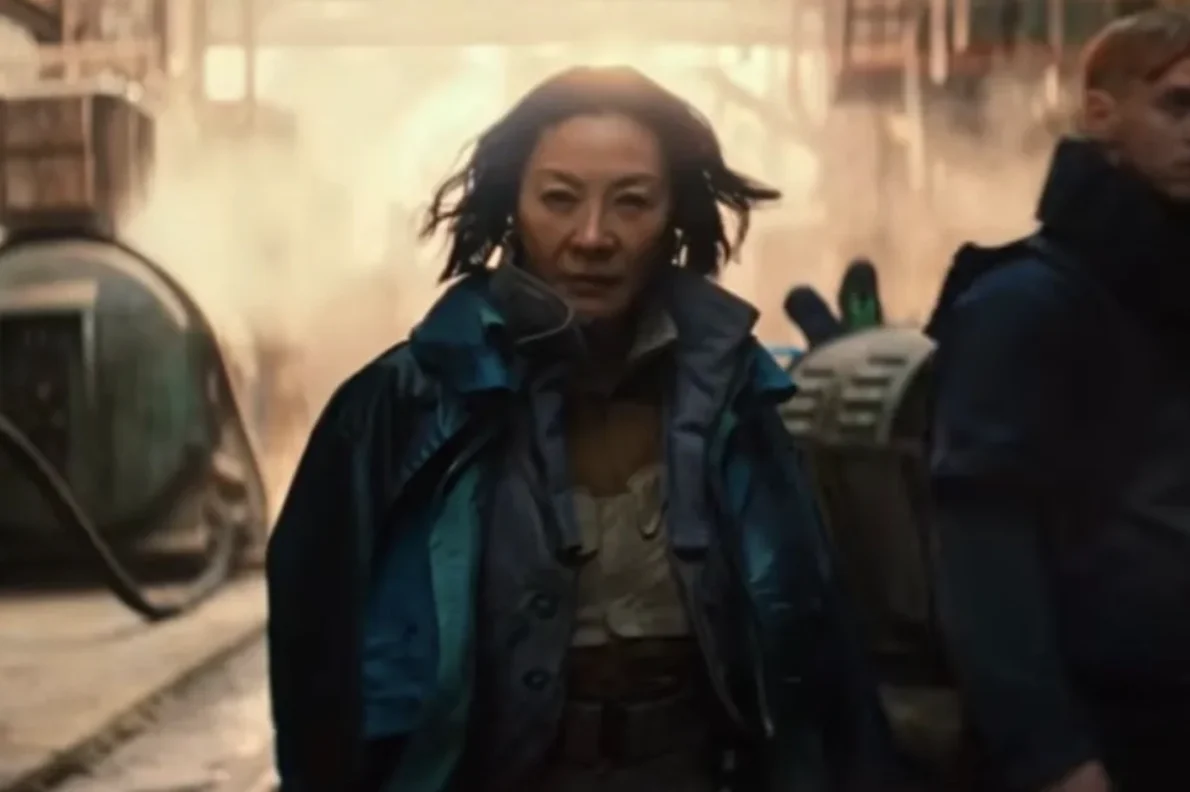
The rain-slicked streets of a dystopian Los Angeles, the haunting hum of Vangelis-inspired synthesizers, and the eternal question of what it means to be human are returning to the cultural forefront. At the 2024 San Diego Comic-Con, Amazon’s Prime Video sent shockwaves through the sci-fi community by unveiling the first official look at Blade Runner 2099. This live-action series marks the boldest expansion of the franchise since Denis Villeneuve’s 2017 cinematic masterpiece, Blade Runner 2049.
Set fifty years after the events of the previous film, Blade Runner 2099 promises to push the boundaries of the "cyberpunk" aesthetic while grappling with the evolving ethics of artificial intelligence—a theme that has only become more prescient in the decade since the franchise last graced our screens. With a cast led by Academy Award winner Michelle Yeoh and a creative team backed by original visionary Ridley Scott, the series is positioned as a cornerstone of Prime Video’s prestige television strategy.
Main Facts: The Dawn of a New Era
The announcement at San Diego Comic-Con on July 24 served as the official launchpad for the series’ marketing campaign. Blade Runner 2099 is scheduled to premiere on Prime Video on November 25, 2024. Created by Silka Luisa—the acclaimed showrunner behind Apple TV+’s Shining Girls—the series transitions the franchise from the silver screen to a serialized format, allowing for a deeper exploration of its complex world-building.
The narrative core of the show centers on Olwen, portrayed by Michelle Yeoh. Olwen is a "synthetic human," or replicant, designed for manual labor. However, unlike the rogue combat models seen in earlier installments, Olwen’s story begins at the literal end of her tether. As a replicant approaching the end of her predetermined lifespan, her journey promises a poignant reflection on mortality and legacy.
Joining Yeoh is Hunter Schafer (Euphoria, The Hunger Games: The Ballad of Songbirds & Snakes), who co-leads as a character named Cora. The ensemble is bolstered by a diverse array of talent, including Dimitri Abold and Lewis Gribben in primary roles, alongside a recurring cast featuring Daniel Rigby, Johnny Harris, Amy Lennox, Sheila Atim, Matthew Needham, Tom Burke, and Maurizio Lombardi.
Chronology: A Legacy Carved in Rain and Neon
To understand the weight of Blade Runner 2099, one must look back at the franchise’s tumultuous but legendary history. The saga began not on a screen, but on the pages of Philip K. Dick’s 1968 novel, Do Androids Dream of Electric Sheep? The book provided the philosophical foundation for Ridley Scott’s 1982 film, Blade Runner.
1982: The Architect of the Future
When the original Blade Runner hit theaters in 1982, it was far from an instant success. Starring Harrison Ford as Rick Deckard—a "blade runner" tasked with "retiring" (killing) escaped Nexus-6 replicants—the film was plagued by studio interference. Executives, fearing the film was too cerebral and bleak, mandated a clunky film-noir voiceover and a "happy ending" using recycled footage from The Shining.
The film was a financial disappointment and received lukewarm reviews. However, the 1990s saw a resurgence in its popularity. With the release of the "Director’s Cut" and later the "Final Cut," audiences finally saw Scott’s true vision: a moody, philosophical masterpiece that defined the visual language of the cyberpunk genre.

2017: The Legacy Sequel
Thirty-five years later, Denis Villeneuve accomplished the seemingly impossible with Blade Runner 2049. Moving the timeline forward three decades, the film followed K (Ryan Gosling), a replicant blade runner who uncovers a secret that could shatter the fragile social order between humans and synthetics. Despite critical acclaim and multiple Academy Awards (including a long-overdue Best Cinematography win for Roger Deakins), the film struggled at the box office, further cementing the franchise’s status as a "prestige" IP that appeals to a dedicated, intellectual fanbase rather than the general blockbuster audience.
2021: Bridging the Gaps
The franchise expanded into animation with Blade Runner: Black Lotus, an anime series set in 2032. Alongside a trilogy of live-action and animated shorts released in 2017, these entries fleshed out the "Blackout" of 2022 and the rise of the Wallace Corporation, ensuring the lore remained active in the minds of fans.
Supporting Data: Production and Creative Pedigree
The move to Amazon Prime Video represents a massive financial commitment. While official budget figures remain undisclosed, the scale of the production—which moved from Belfast to Prague following various delays—suggests a "mega-series" budget comparable to The Rings of Power or Fallout.
The Creative Team
Silka Luisa serves as showrunner, writer, and executive producer. Her experience with non-linear storytelling in Shining Girls makes her a natural fit for the often-abstract narrative style of Blade Runner. Ridley Scott returns as an executive producer via Scott Free Productions, ensuring that the visual and thematic DNA of the original remains intact. The pilot episodes are directed by Jonathan van Tulleken (Shogun), who recently demonstrated a mastery of atmospheric, high-stakes drama.
Casting Strategy
The casting of Michelle Yeoh is a significant coup for the production. Following her Oscar win for Everything Everywhere All at Once, Yeoh has become a symbol of gravitas and physical prowess. By casting her as a replicant near the end of her life, the show flips the usual "action-hero" trope of the franchise on its head, focusing instead on the internal, existential struggle of a being who knows her time is up. Hunter Schafer’s involvement also signals an intent to capture a younger demographic, bringing her distinct, ethereal screen presence to the neon-lit world.
Official Responses and Industry Context
While Amazon has kept plot specifics under tight wraps, the SDCC teaser offered a glimpse into a world that has evolved significantly since 2049. The urban decay of Los Angeles appears to have metastasized into a more global or even off-world scale, with the "2099" setting suggesting a century of technological advancement since the first film.
In previous interviews, Ridley Scott has expressed his enthusiasm for the project, noting that the television format allows the story to "breathe" in ways a two-hour film cannot. "We have the opportunity to explore the social hierarchy of this world in a way we only hinted at before," Scott remarked during the early stages of development.
Amazon MGM Studios’ head of television, Vernon Sanders, stated at the trailer reveal that Blade Runner 2099 is intended to be a "standard-bearer" for the streaming service. "The fans have waited a long time to see where this story goes next. We are honoring the legacy of Ridley and Denis while forging a new path that feels entirely modern."

Implications: The Future of Cyberpunk and the IP
The release of Blade Runner 2099 carries significant implications for both the franchise and the broader television landscape.
1. The "Prestige" Streaming Wars
Amazon is currently in a fierce battle with Netflix, Disney+, and HBO Max for "IP supremacy." By reviving Blade Runner, Amazon is targeting an adult, sophisticated audience that values cinematography and philosophical depth. This move follows their successful adaptation of Fallout, suggesting a pivot toward high-concept science fiction that bridges the gap between cult classic and mainstream hit.
2. Relevance in the Age of AI
When the original film debuted in 1982, the concept of "artificial humans" was pure fantasy. In 2024, as Large Language Models and robotics advance at an exponential rate, the questions posed by Blade Runner are no longer academic. Blade Runner 2099 has the opportunity to address modern anxieties regarding AI personhood, corporate ownership of consciousness, and the environmental collapse that has always served as the franchise’s backdrop.
3. The Survival of the "Legacy Sequel"
If Blade Runner 2099 succeeds, it will prove that a franchise can survive and thrive through "time-jump" storytelling. Unlike the Star Wars or Marvel models, which often rely on legacy characters (like Harrison Ford’s Deckard), 2099 appears to be moving toward a true anthology-style progression, where the world is the main character, rather than any single individual.
4. A Shift in Aesthetic
The teaser suggests a slight departure from the "constant rain" of the 1982 film and the "orange dust" of the 2017 film. The 2099 aesthetic seems to incorporate more "high-tech/low-life" contrasts, potentially exploring the "Off-World colonies" that have been teased since the very first scene of the original movie.
Conclusion
Blade Runner 2099 is more than just a new TV show; it is a test of whether one of cinema’s most sacred properties can adapt to the era of peak TV. With its November 25 premiere date looming, the pressure is on Silka Luisa and her team to deliver a narrative that satisfies the hardcore "Deck-a-heads" while providing a compelling entry point for newcomers.
As Michelle Yeoh’s Olwen prepares to face her final days in a world of synthetic wonders and corporate nightmares, audiences are reminded of the franchise’s most famous line: "All those moments will be lost in time, like tears in rain." With Blade Runner 2099, Amazon is betting that those moments are worth saving—and that the world Philip K. Dick imagined over half a century ago still has plenty of stories left to tell.
 Jia Lissa
 Lina Irawan
 Iffa Jayyana
