

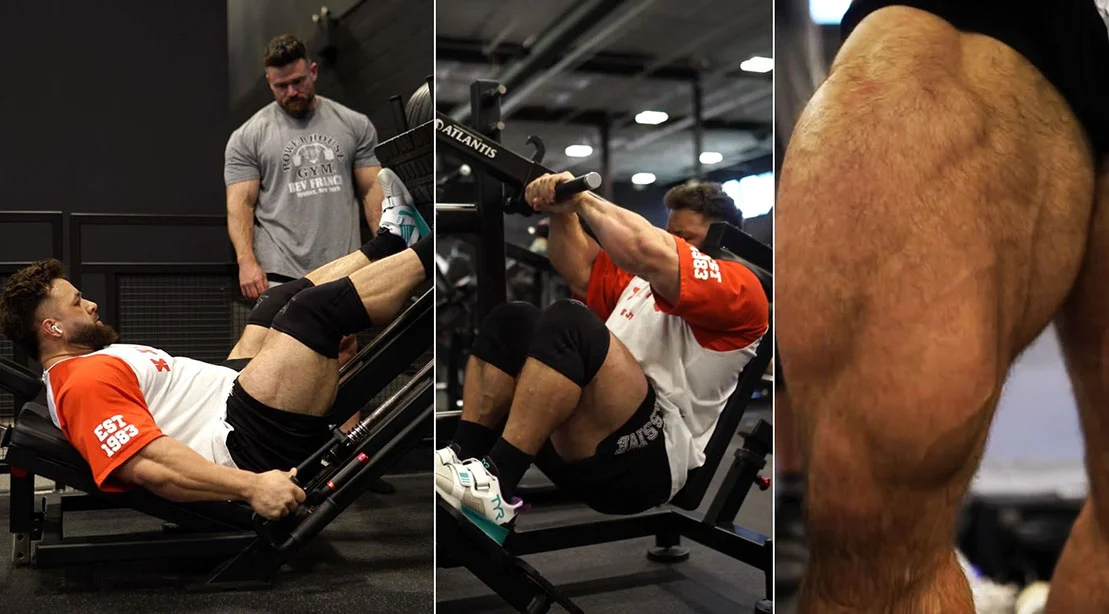
As the professional bodybuilding landscape intensifies in anticipation of the 2026 IFBB Texas Pro, elite competitors are sharpening their training methodologies to secure their qualification for the Mr. Olympia stage. Among them is French-Canadian powerhouse Regan Grimes, a two-time Olympia finalist known for his aesthetic lines and dense, structural muscle mass. With the Texas Pro looming on August 14–15, 2026, Grimes has pulled back the curtain on his current lower-body training philosophy—a deceptively simple, yet punishing, approach centered on the concept of "two working sets."
While the fitness industry often debates the merits of high-volume versus high-intensity training, Grimes is doubling down on the latter. By stripping away excess volume in favor of extreme, concentrated intensity, the IFBB Pro is looking to carve out the leg development necessary to stand out in the crowded, hyper-competitive Men’s Open division.
The Core Philosophy: Efficiency Through Intensity
The modern bodybuilding paradigm is shifting. While the "more is better" mantra dominated the golden era of the 1990s, contemporary athletes like Grimes are increasingly embracing a minimalist, high-intensity approach. The logic is simple: if a muscle fiber is stimulated to its absolute limit within a single, high-quality set, a second set acts as the final nail in the coffin for hypertrophy.
Grimes’ "two working sets" protocol is not a shortcut for the unmotivated; rather, it is an invitation to reach muscular failure with absolute precision. In his own words, the strategy is about intensity over duration. By limiting the working sets, the athlete can theoretically maintain a higher level of focus, psychological aggression, and mechanical tension throughout the duration of the movement.
Chronology: The Seven-Movement Execution
Grimes’ leg day is not a haphazard collection of exercises; it is a calculated sequence designed to pre-exhaust, overload, and finally refine the lower body musculature. Each exercise is performed for two all-out working sets, ensuring that the target muscles are pushed to the brink of physiological capacity.
Phase 1: Isolation and Engagement
The session begins with the seated adductor machine. This serves as a vital activation point, targeting the inner thigh muscles. By driving the legs together against heavy resistance, Grimes forces blood flow into the groin area, effectively “warming up” the stabilizers. This is immediately followed by the abductor machine, which targets the outer hips. By performing these isolation movements at the start, Grimes ensures that the smaller muscle groups of the hip and thigh are fully engaged before the heavy, compound loading begins. This pre-exhaustion ensures that when he moves to multi-joint movements, the target muscles are already "online" and ready to carry the load.
Phase 2: Compound Mass Building
Once the hips are primed, Grimes transitions into lying hamstring curls. This keeps the posterior chain under tension before he moves to the "bread and butter" of mass building: the leg press. The leg press is essential for developing the quads and glutes, allowing for massive weight loads that would be impossible to stabilize with a traditional barbell squat.
The progression continues with the pendulum squat. This machine is favored by elite bodybuilders for its ability to guide the user into a deeper squat depth, significantly increasing the range of motion for the quadriceps. Because the machine provides structural support, the athlete can safely push into the bottom of the movement, stretching the quads under load—a primary driver for hypertrophy.
Phase 3: Unilateral Refinement and Finishing
The final stretch of the workout is designed to address symmetry and balance. Grimes incorporates Bulgarian split squats, a notoriously difficult unilateral movement. By isolating one leg at a time, he forces his quads, glutes, and calves to work independently, ensuring that no muscular imbalances persist. The session is "bookended" with calf raises, providing a final high-intensity blast to the lower legs to ensure that the entire lower body is fatigued from hip to heel.
Supporting Data: Why "Two Sets" Work
The efficacy of low-volume, high-intensity training is backed by increasing amounts of sports science literature. Studies on mechanical tension suggest that while volume is a key driver for growth, there is a threshold of "effective reps." Once a muscle has reached its maximum level of metabolic stress and fiber recruitment, additional sets often provide diminishing returns and increase the risk of systemic fatigue.
By focusing on 8 to 12 reps per set, Grimes is targeting the "hypertrophy zone." This range allows for enough weight to challenge the Type II fast-twitch muscle fibers while maintaining enough time under tension to elicit a metabolic response. When combined with a 2-set limit, the athlete is mentally prepared to push beyond what they might consider "safe" in a 4- or 5-set workout. If you only have two sets to get the job done, every repetition becomes a non-negotiable battle against gravity.
Official Responses and Industry Impact
The bodybuilding community has reacted with a mix of awe and trepidation to Grimes’ shared protocol. On social media, fans and amateur athletes have praised the simplicity of the plan, with many commenting on the mental shift required to go from "just getting through the workout" to "owning every rep."
"This is a proper leg day," wrote one follower, a sentiment shared by many who recognize the brutality hidden behind the simple instructions. Professional trainers have also noted that for the average lifter, this volume is actually more sustainable than the bloated "volume training" programs often found in fitness magazines. By keeping the sessions shorter, the athlete is less likely to experience central nervous system (CNS) burnout, allowing for better recovery and, ultimately, more consistent gains.
Implications: The Road to the Texas Pro
As the August 14–15, 2026 date for the IFBB Texas Pro approaches, the stakes could not be higher. A victory here is more than just a trophy; it is a golden ticket to the Olympia stage. For a competitor of Regan Grimes’ caliber, the goal is not merely to qualify but to show up with a physique that challenges the top echelon of the sport.
The Mental Edge
The implication of Grimes’ current training is that he is entering the competition season with a high degree of confidence in his recovery. By training with extreme intensity but lower set volume, he is preserving his joints and mitigating the risk of injury—a critical factor for any professional athlete with only a few months to go before a major show.
Setting a New Standard
If Grimes achieves a top-tier placing in Texas, his "two-set" philosophy will likely become a blueprint for aspiring pros. It challenges the "more is better" myth and suggests that the future of bodybuilding training lies in the quality of the contraction rather than the quantity of the work.
Preparing for the "Next Day"
One of the most telling comments from those who have tried to replicate this session is the warning: "Be careful when climbing the stairs for the next couple of days." This is the hallmark of a high-intensity session that successfully reaches deep into the muscle belly. If an athlete can walk away from a leg day feeling as though they have emptied the tank, the physiological signaling for repair and growth is at its absolute peak.
Conclusion
Regan Grimes’ approach to the IFBB Texas Pro is a masterclass in focused, intentional training. By stripping his leg day down to seven movements and two all-out sets per exercise, he is betting on his ability to generate more intensity in a shorter window than his competitors. As the bodybuilding world watches, the question remains: will this high-intensity, low-volume approach be the key to unlocking his full potential on the Olympia stage?
For those looking to try this for themselves, the instructions are clear: choose a weight that allows for perfect form in the 8-12 rep range, leave your ego at the door, and prepare for a level of intensity that will test both your physical strength and your mental fortitude. The path to the Olympia is paved with such sacrifices, and for Regan Grimes, the journey to the Texas Pro is just the beginning.
 Lina Hope
 rifanmuazin
 Laily UPN
