

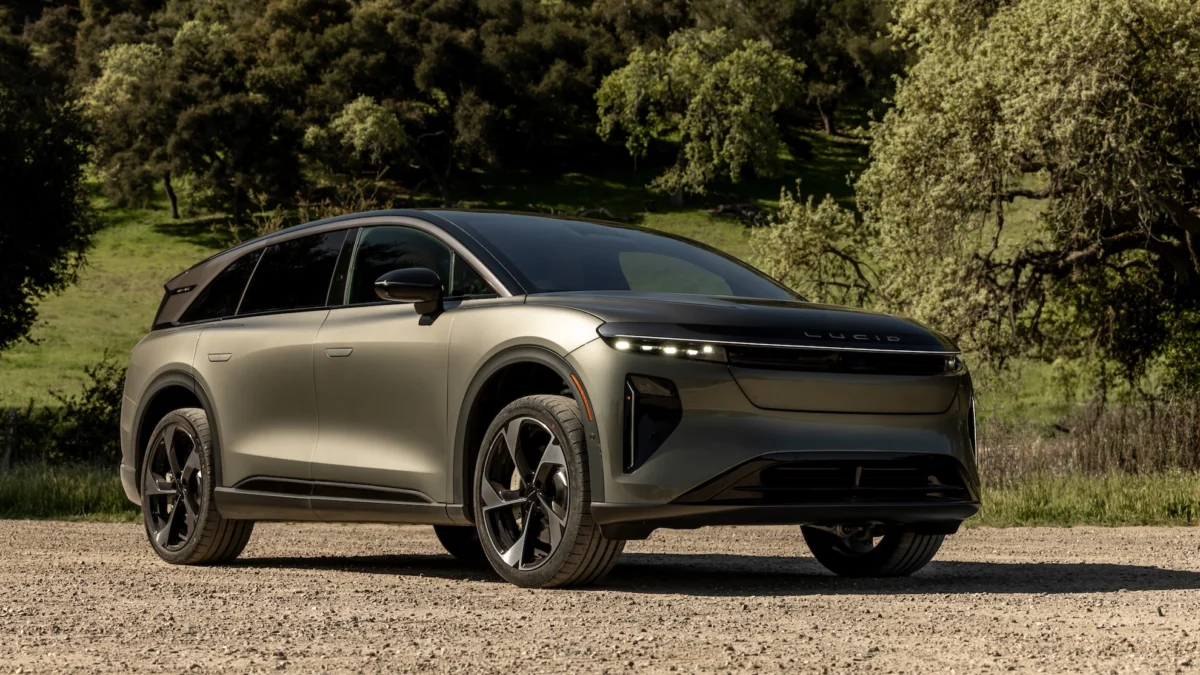
In a significant move that underscores the ongoing transformation of luxury electric vehicle (EV) manufacturer Lucid Motors, top executive Emad Dlala has resigned from his post. The departure, confirmed by the company this week, comes just months after Dlala was elevated to a high-profile role overseeing the entirety of the company’s "Engineering and Digital" division. His exit marks the first major executive casualty under the new leadership of CEO Silvio Napoli, who officially took the helm only last week.
As Lucid Motors navigates a critical juncture in its operational history—characterized by aggressive cost-cutting, a pivot toward mass-market production, and high-stakes partnerships—the loss of a ten-year veteran like Dlala signals a deeper, perhaps more turbulent, organizational realignment.
Chronology of a Company in Transition
The departure of Emad Dlala is not an isolated event but rather the latest development in a sequence of structural changes that have defined Lucid Motors over the past fifteen months.
The Rawlinson Era Ends (Early 2025)
The instability began in February 2025, when Peter Rawlinson, the face of the company and its founding CEO, made a sudden exit. Rawlinson’s departure triggered a year-long search for a successor, leaving the company in a state of leadership flux during a period when the EV market was cooling and competition was intensifying.
The Engineering Vacuum (Late 2025)
In November 2025, the company underwent a major shift in its technical leadership. Long-time chief engineer Eric Bach was parted ways with the company, leading to a legal battle involving allegations of wrongful termination and discrimination—a case that currently remains stayed pending arbitration. It was during this period of turmoil that Dlala was promoted, tasked with consolidating the company’s engineering and digital strategy.
The Napoli Appointment (April 2026)
Following a protracted search, Lucid Motors announced in April 2026 that Silvio Napoli, an executive with a seasoned background at the Schindler Group, would become the new CEO. Napoli’s background, notably distinct from the automotive-native culture established by Rawlinson, signaled that the board was prioritizing industrial efficiency and operational rigor over the purely engineering-led ethos of the company’s early days.
The Current Exit
Dlala’s departure, occurring just days after Napoli’s formal assumption of the CEO role, suggests that the new leadership is moving quickly to reshape the executive suite to align with a new corporate vision.
Supporting Data: A Landscape of Austerity
The executive shuffle takes place against a backdrop of severe fiscal tightening. In February 2026, Lucid Motors initiated a workforce reduction affecting 12% of its total staff. This move was explicitly framed as a pursuit of long-term profitability—a necessary step for a company that has burned through significant capital while struggling to achieve the economies of scale enjoyed by legacy automakers and industry leader Tesla.
The company’s reliance on Saudi Arabian funding and its recent capital injection from partners like Uber have provided a financial safety net, but they have also increased the pressure on management to deliver on commercial milestones. The "Cosmos" platform, intended to serve as the foundation for an affordable, sub-$50,000 EV, is the most important project in the company’s history. If Lucid is to transition from a niche luxury brand to a volume manufacturer, the success of the Cosmos is non-negotiable.
Official Responses and Internal Realignment
In an official statement provided to TechCrunch, Lucid Motors confirmed that Dlala had elected to leave the company to pursue other opportunities. The statement emphasized that the organization is undergoing a "transformation" intended to "accelerate innovation and strengthen execution under CEO Silvio Napoli."
To fill the void left by Dlala’s departure, Lucid has bypassed a single replacement, opting instead to flatten the reporting structure. Vivek Attaluri, the vice president of vehicle engineering, and Marc Solsona Palomar, the vice president of software, will now report directly to Napoli. This shift indicates a desire for the CEO to have closer, direct oversight of the two pillars of the company’s future: hardware engineering and software integration.
"We thank Emad for his many contributions over the years and wish him continued success in his future endeavors," the company stated. "Lucid remains focused on streamlining our organization and processes to fully leverage the strength of our team."
Emad Dlala, who served as a critical figure in the company’s powertrain development for over a decade, has declined to comment on his departure.
Implications: The Road Ahead for Lucid Motors
The departure of a ten-year veteran who held the keys to the company’s "Engineering and Digital" division raises several questions regarding the stability and culture of Lucid Motors as it approaches its most critical product launch.
1. The "Cosmos" Launch Risk
The Cosmos platform is the linchpin of Lucid’s future. Any disruption in the leadership overseeing the engineering of this vehicle carries inherent risk. While Attaluri and Palomar are seasoned experts, the sudden change in their reporting lines suggests that Napoli is looking to exert tighter, more centralized control over the development process. Investors will be watching closely to see if this transition delays the rollout of the mass-market vehicle.
2. The Robotaxi Pivot
Lucid’s strategic pivot toward autonomous transport, specifically through its collaboration with Nuro and its integration into the Uber platform, represents a major diversification of the business model. By embedding its technology into the robotaxi ecosystem—starting with the Gravity SUV—Lucid is attempting to secure a revenue stream that does not rely solely on direct-to-consumer sales. The leadership change suggests that the company wants to prioritize the integration of software and hardware to meet the stringent requirements of autonomous fleet operators.
3. Cultural Shift Under Napoli
Silvio Napoli brings a "Schindler Group" mentality to the boardroom. In the elevator and escalator industry, reliability, standardized processes, and long-cycle engineering are paramount. By contrast, the "Rawlinson era" at Lucid was characterized by a Silicon Valley-style, break-neck speed approach to innovation. The removal of long-serving executives suggests that Napoli is looking to replace the company’s "startup DNA" with a more structured, industrial-grade operational framework.
4. Retaining Talent
The legal friction following Eric Bach’s departure, combined with the recent layoffs and the loss of Dlala, could potentially impact employee morale and talent retention. Lucid has always relied on the "best and brightest" from other automakers, particularly Tesla. As the company undergoes this restructuring, it faces the challenge of maintaining its engineering culture while imposing the fiscal discipline required by its investors.
Conclusion
Lucid Motors is in the midst of a high-stakes pivot. The departure of Emad Dlala is not merely a change in personnel; it is a manifestation of the transition from a vision-led startup to a production-focused, professionalized automotive firm. Under the stewardship of Silvio Napoli, the company is betting that a leaner, more centralized engineering hierarchy will finally unlock the potential of its technology.
However, the margin for error is razor-thin. With the launch of the sub-$50,000 Cosmos platform approaching and a major robotaxi rollout on the horizon, Lucid cannot afford further instability. The next few months will be a litmus test for whether Napoli’s restructuring can foster the "accelerated innovation" the company promises, or if the loss of institutional memory will create friction that stalls the company’s momentum. For now, the automotive world waits to see if this latest change in the boardroom will pave the way for a more stable, profitable road ahead, or if it is a sign of deeper, unresolved issues within the organization.
 Asep Darmawan
 Siti Muinah
 Ali Ikhwan
