

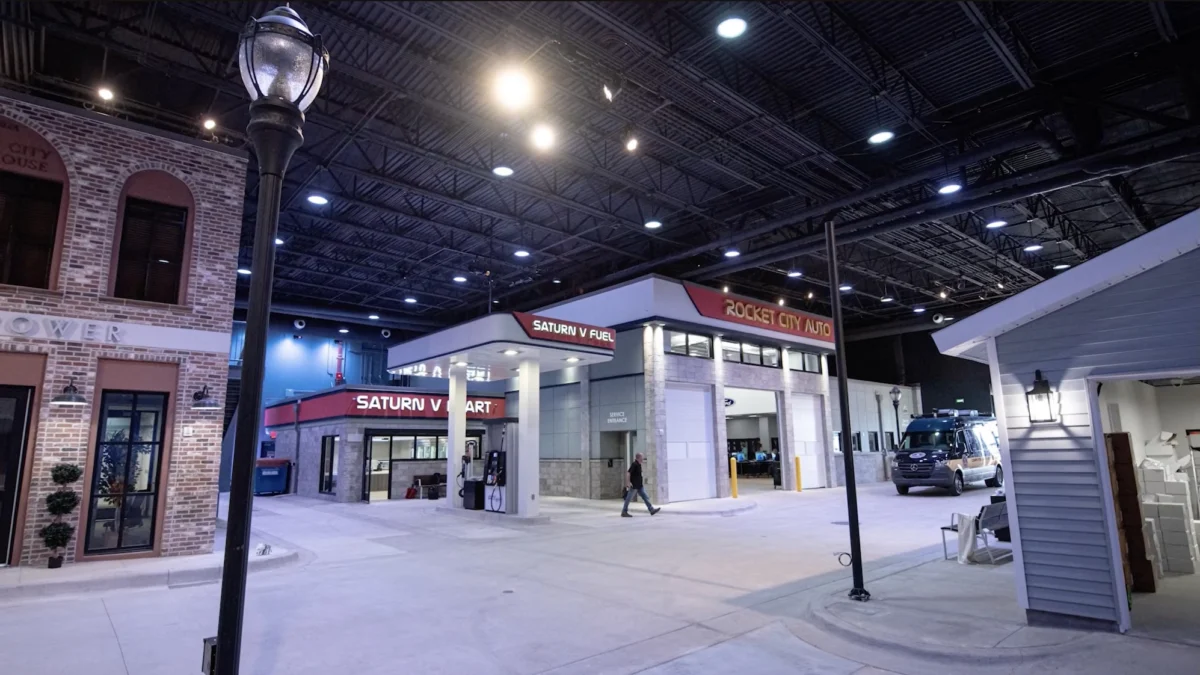
In the quiet sprawl of Huntsville, Alabama, the Federal Bureau of Investigation has constructed a town that does not appear on any map. It has a grocery store, a gas station, a fully operational hospital, and a courthouse. It has traffic lights that cycle and homes that are furnished down to the last detail. Yet, despite its mundane appearance, this 22,000-square-foot facility is one of the most high-tech combat zones in the United States.
Known as the "Kinetic Cyber Range," this purpose-built training environment is the FBI’s answer to the rapidly evolving, and increasingly dangerous, landscape of global cybercrime. As malicious actors pivot from simple digital theft to sophisticated attacks on critical infrastructure, the Bureau is shifting its training paradigm from the classroom to the physical—creating a sandbox where the consequences of a cyberattack are as tangible as a flickering light or a silenced hospital monitor.
The Urgency of the Threat: A $20.9 Billion Crisis
The necessity for such an elaborate facility is underscored by cold, hard numbers. According to the FBI’s 2025 Internet Crime Report, the United States is currently facing an unprecedented surge in cyber-adversity. The report, which aggregates data from over one million consumer and enterprise complaints, logged a staggering $20.9 billion in financial losses in 2024 alone—a 26% increase over the previous year.
Ransomware remains the primary threat to the nation’s critical infrastructure, including energy grids, water systems, and healthcare facilities. These attacks are no longer limited to data exfiltration; they are "kinetic" in nature, meaning they have the potential to cause physical damage, threaten human life, and destabilize the local economy. The Kinetic Cyber Range was designed specifically to bridge the gap between abstract code and real-world impact, ensuring that the next generation of investigators is prepared for the high-pressure environment of a modern digital siege.
Chronology: From Concept to Operational Reality
The journey to the Kinetic Cyber Range began as a response to the siloed nature of traditional cybersecurity training. For years, federal agents and local partners were trained in front of computer screens, simulating attacks in virtual machines that lacked the chaotic, interconnected reality of a modern city.
- 2023 – The Planning Phase: Recognizing that digital attacks were increasingly targeting Operational Technology (OT) and Internet of Things (IoT) devices, the FBI began drafting blueprints for a physical facility that could house a variety of network environments.
- Early 2024 – Construction: The Huntsville campus was selected as the site, allowing the Bureau to integrate the project with its existing technical training infrastructure. The goal was to build a site that mimicked a standard American town while housing high-density server racks.
- February 2025 – Operational Debut: The facility officially opened its doors, welcoming the first cohort of trainees.
- Mid-2025 to Present: Since its launch, the range has successfully trained more than 1,400 students, ranging from FBI special agents and intelligence analysts to interagency partners and local law enforcement officials.
The Architecture of the Range: A City Wired for War
The Kinetic Cyber Range is an exercise in meticulous engineering. Unlike a standard laboratory, this facility is designed to look, feel, and function like a real community.
The Physical Infrastructure
The "town" is a fully furnished replica. Students walk through a hotel lobby, navigate the aisles of a grocery mart, and enter a mock courthouse. The power company and hospital are rigged with systems that mimic the industrial control systems (ICS) found in the real world. By placing investigators in a familiar environment, the FBI forces them to confront the logistical hurdles of an investigation: securing a crime scene, managing local stakeholders, and maintaining chain-of-custody in a space that is physically cluttered and operationally complex.
The Digital Backbone
Hidden behind the walls of this replica town is a state-of-the-art data center housing more than 200 physical servers. These machines are partitioned into both Windows and Linux environments, reflecting the heterogeneous nature of modern corporate networks. The range uses a closed-loop system, meaning that while the attacks conducted inside are realistic and damaging within the simulation, they are air-gapped from the public internet. This allows for "red team" exercises where malicious code can be deployed without the risk of an accidental breach into the surrounding Alabama community.
Official Perspectives: "Cold, Cramped, and Miserable"
The human element of the training is perhaps the most crucial. Dave Beachboard, the program manager for the Kinetic Cyber Range, emphasizes that the goal is to expose trainees to the physical discomforts of a real-world incident response.
"They’re cold, they’re cramped, they’re noisy, they’re dark, they’re miserable," Beachboard noted in an official FBI release. This level of realism is intentional. When an investigator is tasked with recovering a server from a compromised data center during a ransomware event, they are often working in suboptimal conditions. By replicating the "miserable" environment of a server room, the FBI ensures that agents are not caught off guard by the physical stress of an emergency response.
Implications: Forensics, Encryption, and Controversy
Beyond incident response, the range serves as a crucible for digital forensics—the process of extracting data from devices to build criminal cases. This is where the FBI’s mission intersects with some of the most controversial aspects of modern cybersecurity.
Cracking the Defenses
The facility is used to train investigators in the latest methods for bypassing the security protections of encrypted consumer devices. As Apple, Google, and other hardware manufacturers continue to bolster privacy protections, law enforcement has increasingly turned to third-party tools that exploit undisclosed software vulnerabilities (zero-days) to unlock smartphones and tablets.
The Ethical Debate
This aspect of the training has drawn scrutiny from civil liberties groups and privacy advocates. The debate centers on the "dual-use" nature of these hacking tools. When the FBI utilizes a vulnerability to crack a device, that vulnerability remains unpatched, leaving the general public susceptible to exploitation by malicious actors. Critics argue that by fostering an environment that relies on these hidden exploits, the FBI is prioritizing short-term investigative wins over the long-term integrity of the digital ecosystem. The FBI maintains that these tools are vital for investigating terrorism, child exploitation, and large-scale ransomware attacks, framing the training as a necessary defensive maneuver in an arms race.
Looking Ahead: The Future of Kinetic Defense
The Kinetic Cyber Range is more than a training facility; it is a signal of where the FBI believes the future of law enforcement is heading. As our world becomes increasingly "smart"—with everything from traffic lights to insulin pumps connected to the internet—the distinction between a cybercrime and a physical threat is effectively vanishing.
The success of the Huntsville project suggests that the Bureau will likely expand this model. By moving away from the abstract, the FBI is acknowledging that the digital frontline is not just a screen, but the physical infrastructure that underpins our daily lives. As the agency continues to refine its techniques, the Kinetic Cyber Range will stand as the primary laboratory for the defense of the American digital landscape.
For the trainees walking through the quiet streets of this fake town, the lessons learned are very real. They are being prepared for a future where a single line of code can bring a city to its knees, and where the most effective weapon against a hacker is an investigator who understands that, in the digital age, everything is connected.
Zack Whittaker is the security editor at TechCrunch and a veteran observer of the cybersecurity landscape. For more analysis on the evolving threats to national security and consumer privacy, subscribe to his weekly newsletter, "This Week in Security."
 Asep Darmawan
 Siti Muinah
 Ali Ikhwan
