


For over three decades, the digital landscape of professional football has been synonymous with a single brand. Whether you remember it as FIFA International Soccer on the Sega Genesis or the modern, multi-billion-dollar juggernaut EA Sports FC, Electronic Arts has held an iron grip on the virtual pitch. Even following the high-profile 2023 divorce between EA and the sport’s global governing body, the franchise has remained the undisputed king of the genre.
While challengers have periodically emerged—from the once-revered Pro Evolution Soccer series that slowly faded into obscurity in the late 2000s to various failed attempts at disrupting the market—none have successfully usurped the throne. Recent offerings like eFootball, Rematch, and the niche FIFA World Cup tie-ins have largely failed to capture the imagination of the core player base. However, a new contender has entered the arena: Goals.
While the developers behind Goals are careful not to proclaim themselves the immediate successors to the throne, their branding tells a story of ambition. With the tagline "football gaming, rebuilt from scratch," the studio is effectively signaling that they believe the current genre standards are fundamentally broken.
The Genesis of a Challenger: A Brief Chronology
To understand the significance of Goals, one must first look at the timeline of the football gaming industry. For years, the market existed in a duopoly. FIFA offered the licenses, the polish, and the spectacle; Pro Evolution Soccer offered the simulation-heavy, tactical depth that purists craved.

When PES began its decline, EA Sports effectively operated without a rival. This led to a period of stagnation where incremental updates—often referred to as "roster updates"—became the norm. The 2023 split, which saw the FIFA branding move away from EA, was supposed to be a moment of vulnerability for the publisher. Instead, EA successfully rebranded its product to EA Sports FC, maintaining its massive player base and licensing agreements with the Premier League, La Liga, and more.
Goals enters the scene in 2026 as a direct response to this hegemony. By opting for a free-to-play model, the studio is attempting to bypass the most significant barrier to entry in the industry: the $70 annual premium price tag. In an era where "Games as a Service" (GaaS) models dominate, Goals is betting that accessibility, combined with a focus on core mechanics, will allow it to carve out a permanent seat at the table.
The Economic Model: Breaking the Pay-to-Win Stigma
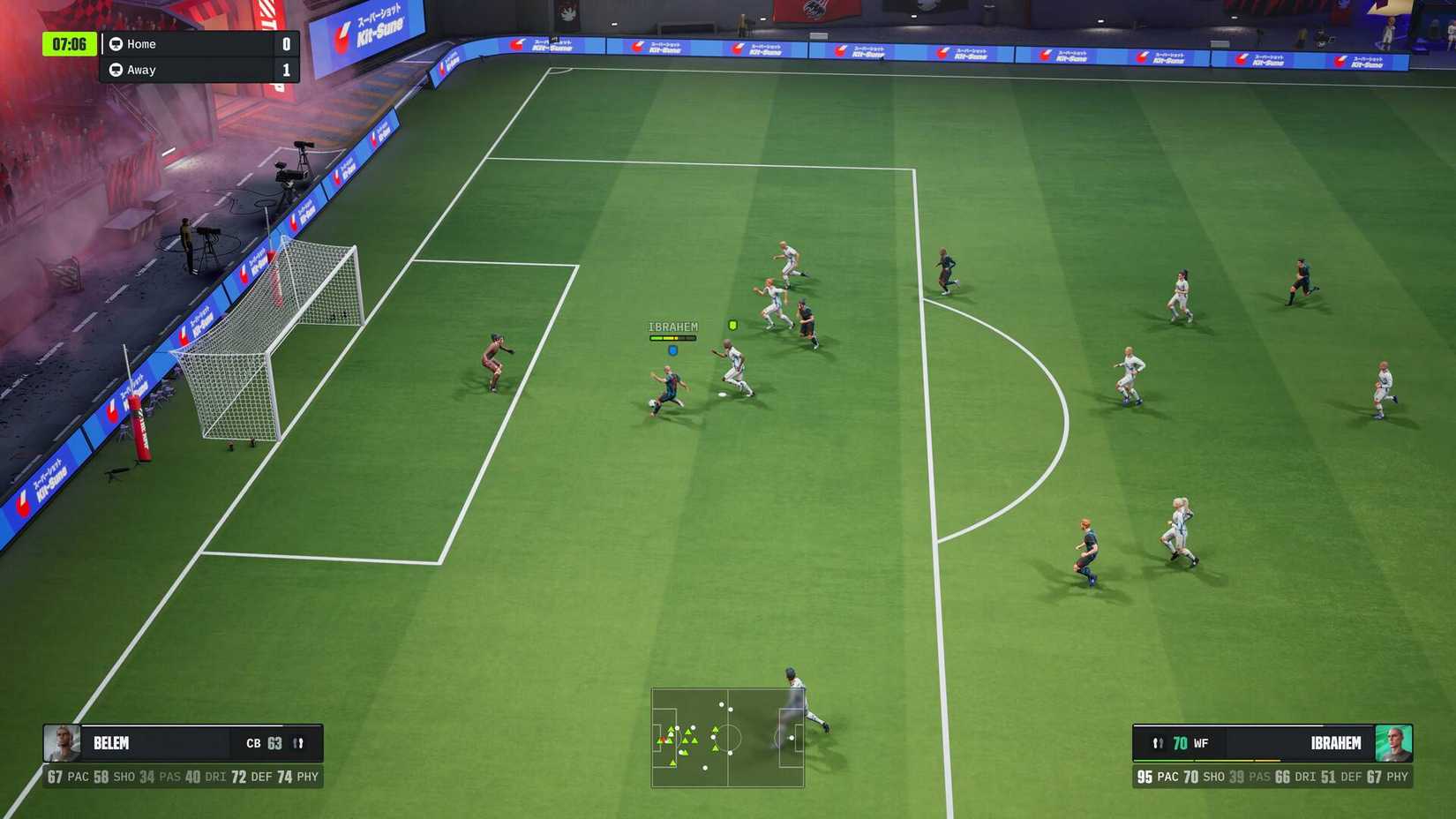
The most striking departure from the EA Sports FC formula is how Goals handles its squad-building mechanics. At first glance, the game feels familiar to anyone who has spent time in Ultimate Team. The core gameplay loop involves opening packs to bolster your squad, then testing those players in ranked and knockout modes.
However, the lack of a real-world player roster is a bold, potentially polarizing design choice. By using entirely fictional athletes, Goals avoids the "meta-gaming" trap that plagues EA Sports FC. There is no hunt for the latest Kylian Mbappé card, nor is there a volatile transfer market where players spend hours calculating profit margins.
The Mathematics of Acquisition
The developers have implemented a progression system that prioritizes long-term engagement over short-term spending. While premium currency exists for those who wish to accelerate their progress, the drop rates are explicitly designed to prevent an "arms race."
- Common/Uncommon Cards: The baseline for any new player.
- 80+ Rated Players: A rare find, with a drop rate of approximately 5%.
- 85+ Rated Players: An elite tier, coming in at a mere 0.37%.
- 95+ Rated Players: The "Legend" status, occurring at a staggering 0.0002% probability—or one in 500,000 packs.
By making the highest-rated cards mathematically improbable to pull via packs, the game forces players to rely on the "Upgrade" system. After every match, players earn experience points. These points can be funneled into individual athletes to improve their stats, provided they haven’t reached their ceiling. This system mirrors the "Career Mode" potential logic, turning a generic player into a personal project. When a player retires, you can even invest currency to cement their legacy, turning them into a permanent "Legend" for your club.
Gameplay Mechanics: Familiarity Meets Innovation
For the veteran player, the controls in Goals will feel like a second language. The inputs for finesse shots, tactical pressing with R1/RB, and complex skill moves using the right analog stick are nearly identical to the industry standard. This is not a coincidence; it is a tactical decision to reduce the friction for players looking to jump ship from EA.
However, the game introduces subtle but impactful changes designed to curb the "exploitative" playstyles often seen in competitive FC matches.
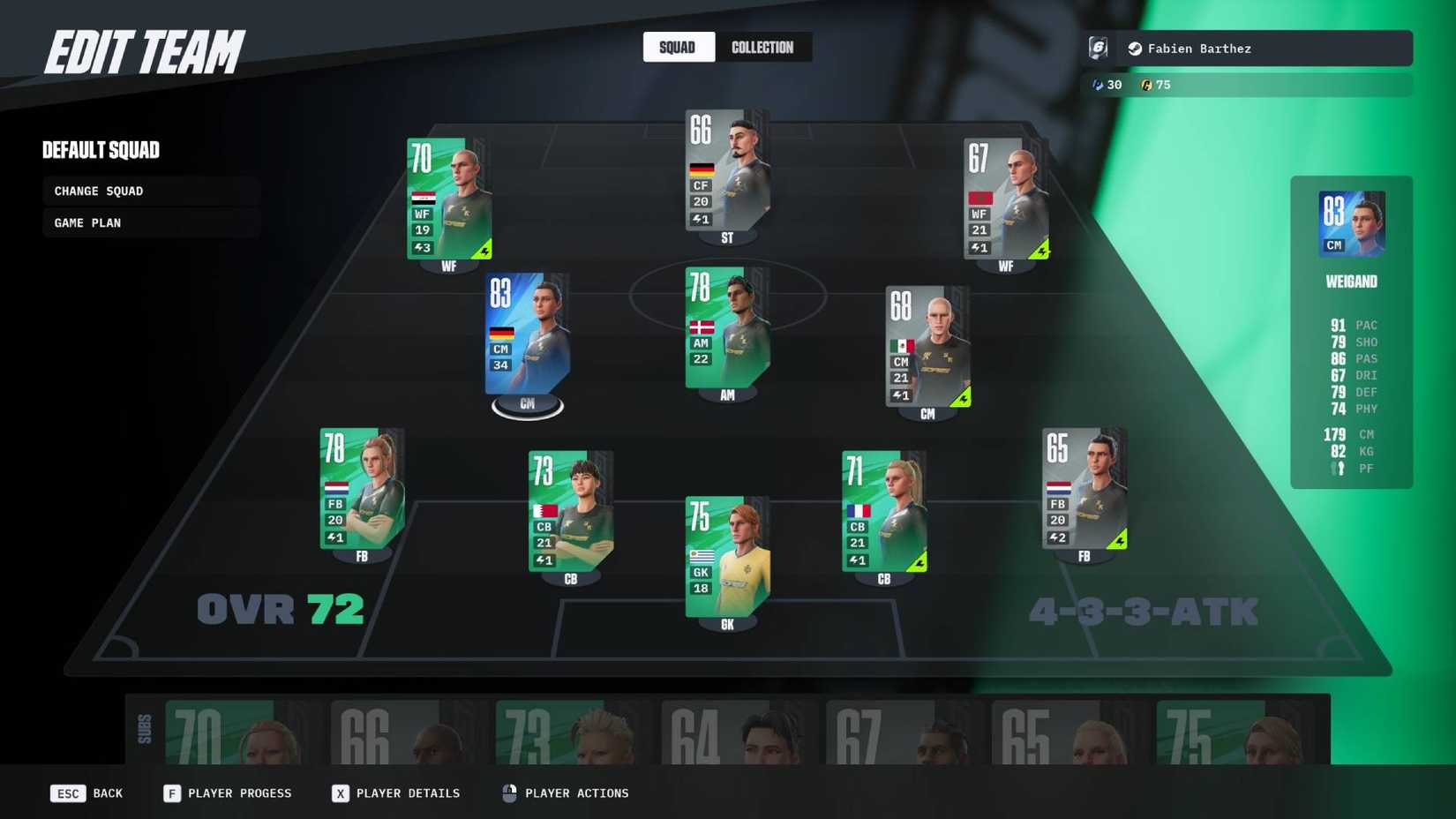
- Active Defending: Passive "AI-assisted" defending is heavily nerfed. Players are forced to commit to tackles and interceptions, rewarding proactive decision-making.
- The "Zone" Mechanic: To prevent time-wasting—a common frustration in high-level competitive play—Goals introduces a dynamic zone that expands behind the goal of the team currently in possession. Spend too long in your own third, and the game forces a reset via a free kick.
- The Half-Time Solution: Rather than relying on arbitrary added time, the game uses a cumulative 10-second rule within a center-circle zone to conclude the half, ensuring that matches end on a fair, objective note.
The Challenges Ahead: Can They Sustain the Momentum?
Despite the innovative systems, Goals is not without its teething problems. Early reports indicate that, much like FIFA 12 and 13, pace remains an overwhelmingly powerful attribute. Players who possess high speed statistics can often dominate matches regardless of their other technical attributes. Because there is no transfer market to easily acquire these "pace merchants," the reliance on luck (pack openings) to build a competitive team can be a source of frustration.
Furthermore, the lack of real-world licenses—the logos, the jerseys, the famous faces—is a massive hurdle. For millions of fans, the allure of the sport is the ability to recreate a Champions League final with their favorite team. Goals asks its users to abandon that connection for the sake of a more balanced, "pure" gameplay experience.
Implications for the Industry
The emergence of Goals represents a significant litmus test for the sports gaming industry. If a free-to-play, indie-developed, unlicensed football game can sustain a healthy, active player base, it will force a reckoning at Electronic Arts.
EA Sports has long relied on the "authenticity" argument to justify its annual pricing and aggressive monetization strategies. If Goals proves that players are willing to prioritize mechanics over licensing, we could see a shift in how sports games are valued.
For the time being, Goals remains in its infancy. The community is small but vocal, and the developers are actively iterating based on feedback. Whether this title becomes the "FIFA-killer" remains to be seen, but for the first time in nearly two decades, the king has a reason to look over its shoulder.
The pitch is being repaved, the rules are being rewritten, and for the first time in a long time, the outcome of the match is anything but certain.
 Nana Muazin
 Layla Zulfa
 Basiran
