

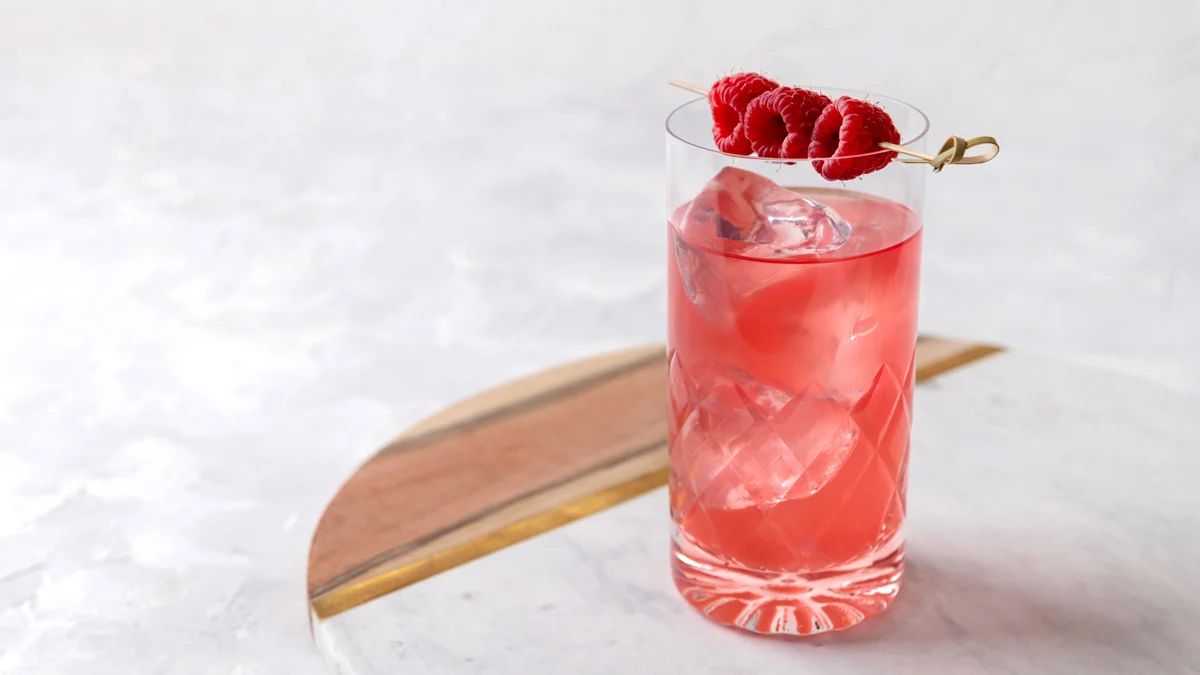
Throughout the annals of mixology, the origins of classic cocktails are often shrouded in the haze of prohibition-era rumors or the competing claims of dueling barmen. Rarely, however, can we trace a drink’s genesis to a specific moment, a specific muse, and a specific cultural phenomenon. The Floradora is the exception. It is a cocktail that serves as a living, breathing artifact of the Gilded Age—a testament to the intersection of early 20th-century celebrity culture, the romantic aspirations of the era’s barmen, and the enduring power of a well-crafted drink to capture the lightning of a fleeting moment.
The Cultural Catalyst: The Phenomenon of Florodora
To understand the drink, one must first understand the stage production that birthed it. Florodora was not merely a musical; it was a societal earthquake. Opening in London in 1899 and moving to Broadway in 1900, the show became an unprecedented smash hit. While the plot—a convoluted tale involving a fictional tropical island, a perfume empire, and the usual romantic entanglements of Edwardian musical comedy—was largely irrelevant, the show’s centerpiece was its chorus line: the "Florodora Girls."
These six women were the ultimate Victorian-era influencers. They were not just dancers; they were a singular unit of aesthetic perfection. As historians of the period have noted, they "swished onto the stage and captivated New York for no other reason than they were utterly stunning." The show ran for 552 performances—a staggering figure for the era—and it is impossible to find historical commentary from that time that does not focus on the arresting beauty of these six women.
Their fame was such that they became the primary targets of the city’s most eligible bachelors. Wealthy men would crowd the stage door, often proposing marriage to the performers with such frequency that all six original members of the sextette were replaced at various points because they had been whisked away into matrimony. They were, in the parlance of the day, a sensation that defined the nightlife of turn-of-the-century Manhattan.
A Chronology of a Classic: From Stage Door to Bar Counter
The year was 1901. The Florodora phenomenon was at its zenith, and the city’s elite were eager to associate themselves with anything connected to the production. The transition from the stage to the glass happened on a night when the stars of the show were out on the town, navigating the high-society bars of New York.
Among the group was Susie Drake, a Florodora Girl whose presence in a room reportedly shifted the gravity of everyone within it. According to the oral history of the cocktail, Drake grew tired of the standard fare offered at the time. She issued a challenge to the barman, Jimmy O’Brien: she would drink nothing but lemonade unless he could produce "something brand new," a concoction designed specifically for her.
O’Brien, sensing the pressure of the moment, went to work. He combined the bright, tart notes of fresh raspberries with the sharp acidity of lime, rounded out by the botanical complexity of gin and a long pour of spicy ginger ale. When Drake took that first sip, the verdict was immediate. She approved. O’Brien, recognizing the marketing genius of the moment, named the drink after the very show that had brought this beautiful stranger into his bar.
By 1913, the cocktail had achieved enough popularity to be codified. Jacques Straub, in his seminal Straub’s Manual of Mixed Drinks, included the recipe. It was here, however, that the first historical error occurred; Straub spelled the name "Floradora," a slight deviation from the show’s "Florodora." Despite the typo, the name stuck, and the "Floradora" cocktail became the standard nomenclature for the refreshing, gin-based highball.
Anatomy of a Libation: Supporting Data and Ingredient Profiles
The Floradora is a study in structural balance. It is essentially a modified gin fizz, but one that utilizes the specific, almost "heedless" affinity that raspberries share with rose-forward botanicals.

The Essential Components
- The Gin: The backbone of the drink. While any high-quality London Dry will suffice, the cocktail benefits significantly from gins that emphasize floral notes—Hendrick’s is a frequently cited preference—because of the way it interacts with the raspberry.
- The Raspberries: These provide the "florid" color and the essential fruit acid. They must be fresh; the muddling process is vital to releasing the essential oils and the bright, tart juice that defines the profile.
- The Acid (Lime): The lime provides the necessary structure to cut through the sweetness of the ginger component.
- The Ginger: This is the variable that determines the character of the drink. Whether one uses a bespoke ginger syrup or a high-quality ginger beer, the spice must be present to provide the "kick" that makes the drink memorable.
Expert Perspectives and Modern Implications
In the modern craft cocktail landscape, the Floradora is often cited as a "forgotten classic." Many bartenders note that it occupies a similar space to the Clover Club, another gin-and-raspberry staple, but with a more refreshing, effervescent finish.
"The beauty of the Floradora is its deceptive simplicity," says one industry expert. "It’s a drink of contrasts. You have the delicate, almost feminine presentation—bright red, refreshing, tall—but it carries the weight and ABV of a serious cocktail. It’s the perfect ‘welcome to summer’ drink, yet it has enough spice to be interesting in the dead of winter."
The implications for the modern bartender are clear: the drink succeeds when the ingredients are treated with respect. If you choose to use a high-end ginger beer like Blenheim or Cock n’ Bull, you are essentially outsourcing the spice. If you make your own ginger syrup, you are controlling the narrative, allowing for a more bespoke experience. The consensus is that the drink should not be over-complicated; the goal is to recreate the bright, alluring experience that Susie Drake enjoyed in 1901.
The Recipe: Recreating a Piece of History
To prepare the Floradora according to the traditional methodology:
Ingredients:
- 2 oz Gin
- 0.5 oz Fresh Lime Juice
- 0.5 oz Raspberry Syrup (or 4-5 fresh raspberries muddled)
- Ginger Beer (to top)
- Garnish: Lime wheel or fresh raspberries
Instructions:
- Add the gin, lime juice, and raspberries (or raspberry syrup) to a cocktail shaker.
- If using fresh raspberries, muddle them thoroughly before adding the liquids.
- Fill the shaker with ice and shake hard until the tin is frosted.
- Double-strain into a chilled highball glass filled with fresh ice.
- Top with ginger beer.
- Garnish with a lime wheel or a skewered raspberry.
Why the Floradora Still Matters
125 years after the curtain rose on the original Florodora production, the show itself is largely a footnote in theatrical history. The actresses have long since passed, and the Broadway theater where they once stood has been renovated beyond recognition. Yet, the cocktail persists.
The Floradora remains a poignant reminder that the greatest legacies are often those that are the most tactile. It is a drink designed for a specific purpose—to impress, to refresh, and to linger. Whether you are drinking it to toast a beautiful stranger or simply to enjoy the interplay of spice and fruit, the Floradora stands as a perfect example of how a moment of inspiration can be distilled into something that outlasts the era that created it. It is, quite literally, a love potion that has survived the century.
 Evan Lee Salim
 Asep Darmawan
 Laily UPN
