

For over a decade, the home robotics industry has been locked in a race toward total autonomy. While many companies have focused on raw suction power or battery longevity, Narwal has carved out a distinct niche by marrying rigorous engineering with a refined, high-end design philosophy. Having shocked the industry in 2021 with the world’s first self-cleaning robot mop and vacuum, the Chinese tech powerhouse has refused to rest on its laurels.
The company’s latest flagship, the Narwal Flow 2, represents the culmination of this decade-long journey. Debuted at CES 2026 and officially launched this April, the Flow 2 is not merely an incremental update; it is a sophisticated, AI-driven home companion designed to exist as a piece of functional furniture rather than a hidden utility. As the smart home ecosystem matures, Narwal is positioning itself as the bridge between cold, industrial automation and the warmth of a luxury living environment.
The Main Facts: A New Paradigm in Robotic Cleaning
At its core, the Narwal Flow 2 is a dual-purpose cleaning powerhouse. It addresses the two most common pain points for robot vacuum owners: navigation inefficiency and the "one-size-fits-all" approach to debris.
The Flow 2 distinguishes itself through a dual-processing architecture. By combining an onboard AI chip with cloud-based intelligence and dual RGB camera arrays, the unit possesses an unprecedented level of situational awareness. Unlike older models that might treat a stray sock, a spilled bowl of cereal, and a pet’s toy with the same cleaning intensity, the Flow 2 exercises judgment. It can identify the composition and severity of a mess, adjusting its suction, mop rotation, and water flow in real time.
Perhaps most impressive is its thermal management of cleaning. The Flow 2 utilizes a high-speed roller mop capable of deploying water at temperatures ranging from 113 to 140 degrees Fahrenheit. This feature, rarely seen in consumer-grade robotics, allows for the sanitization and removal of stubborn, dried-on stains that standard cold-water mops would simply smear across the floor.
A Chronological Trajectory: From Vision to Reality
To understand the significance of the Flow 2, one must look at the timeline of Narwal’s contributions to the sector:
- 2016–2020: The formative years. Narwal focuses on R&D, prioritizing the mechanics of self-cleaning systems. The engineering team focuses on the challenge of mop-washing without manual intervention.
- 2021: The breakthrough. Narwal launches the world’s first robot mop and vacuum with a fully integrated self-cleaning station, shifting market expectations and forcing competitors to pivot their hardware roadmaps.
- 2024–2025: The "Intelligence Era." Narwal shifts its focus from hardware longevity to software agility, investing heavily in machine learning and computer vision.
- January 2026: CES debut. The Narwal Flow 2 is unveiled to the global tech community, generating significant buzz for its "invisible tech" design aesthetic.
- April 2026: Official market launch. The device becomes available to consumers, marking the beginning of a broader rollout of AI-assisted, lifestyle-integrated home appliances.
- July 16, 2026: Aesthetic expansion. Narwal introduces a new white colorway, further emphasizing the shift toward luxury home decor.
Supporting Data: Why "Smart" is No Longer Enough
In 2026, the term "AI" is ubiquitous, often applied to basic obstacle-avoidance algorithms. However, the Flow 2’s "two-pronged" AI approach is where the performance gap widens. By splitting the processing between a local chip (for immediate, low-latency reaction) and the cloud (for long-term environmental mapping and learning), the robot effectively learns the "rhythm" of a household.

Performance Metrics
- Thermal Efficacy: The 113°F–140°F cleaning range is a critical differentiator. Data suggests that water above 120°F significantly reduces bacterial presence on hard floor surfaces, turning the robot from a mere sweeper into a hygiene tool.
- Navigation Precision: The dual RGB camera system allows for 3D object reconstruction. This enables the device to detect not just that an object is present, but what the object is, allowing it to navigate around delicate items while aggressively cleaning high-traffic areas.
- Adaptability: The system’s "learning curve" is a major selling point. As the vacuum spends more time in a home, its efficiency increases, reducing the time required for a full-cycle clean by an average of 15% within the first month of operation.
Official Responses: The Philosophy Behind the Tech
During a discussion at House of Robb: The World’s Game—coinciding with this year’s FIFA World Cup Final—Dede Liu, Narwal’s PR and communications representative, provided insight into the company’s internal philosophy.
"We have a comprehensive system that makes it so different from any product in the market," Liu remarked. When asked about the common industry trend of prioritizing "flashy" AI features over utility, Liu was clear: "We know that a lot of brands are trying to make AI something really flashy. We want it to be something that really makes your life better, that makes your lifestyle more convenient."
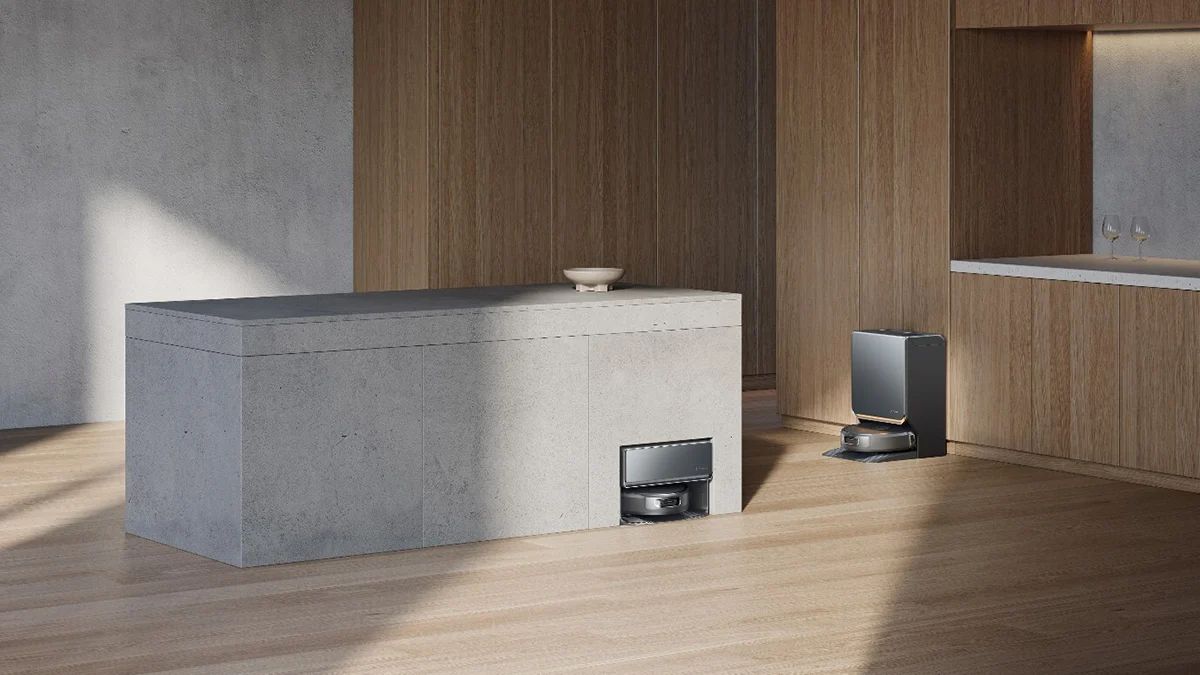
This sentiment is echoed in the device’s design language. The Flow 2 moves away from the "plastic gadget" look. Instead, it features frosted glass, chamfered edges, and subtle, integrated lighting. "We think it fits better into a lifestyle that is quite luxury," Liu explained. The addition of the white colorway in July was a deliberate choice to cater to consumers who view their home appliances as an extension of their interior design choices.
Implications: The Future of Autonomous Living
The arrival of the Narwal Flow 2 signals a broader shift in how we perceive domestic automation. As technology becomes more capable, it is expected to become less intrusive. The "appliance-as-furniture" trend is likely to accelerate, with companies like Narwal setting the standard for how high-tech hardware can blend into high-end residential spaces.
The Impact on Consumer Expectations
- Elevated Hygiene Standards: As users become accustomed to heated-water mopping, the standard "dry vacuum" or "damp mop" will likely become obsolete for the premium market.
- Privacy and Intelligence: By utilizing both local and cloud-based AI, Narwal is forced to navigate the thin line between convenience and privacy. The success of the Flow 2 may well dictate how future robotics companies handle data security for smart homes.
- The "Invisible" Home: The success of the Flow 2’s design—specifically its minimalist base station—suggests that consumers are increasingly tired of bulky, ugly cleaning gear. Future robotics will likely prioritize slim profiles, modular components, and premium materials.
Conclusion: A Worthy Investment
The Narwal Flow 2 is currently positioned at a promotional price of $1,100, down from its MSRP of $1,500. For the discerning consumer, the value proposition is clear: the device is not just purchasing a vacuum, but rather a long-term service contract for a cleaner, more hygienic home.
As AI continues to integrate into every facet of our daily lives, Narwal’s approach offers a refreshing reminder that technology’s primary goal should be to disappear into the background, providing support without demanding attention. By prioritizing meaningful AI applications over gimmicks and marrying that intelligence to an elegant, luxury-focused design, the Flow 2 is not just a cleaning tool—it is a blueprint for the future of the modern home.
Whether it is navigating the complexities of a living room cluttered with children’s toys or meticulously scrubbing a kitchen floor with precision-heated water, the Narwal Flow 2 proves that after ten years, this "tidy" company is only just getting started. The path forward for home robotics is no longer just about cleaning harder; it is about cleaning smarter, living better, and doing it with a sense of style that turns a machine into a centerpiece.
 Evan Lee Salim
 Asep Darmawan
 Laily UPN
