

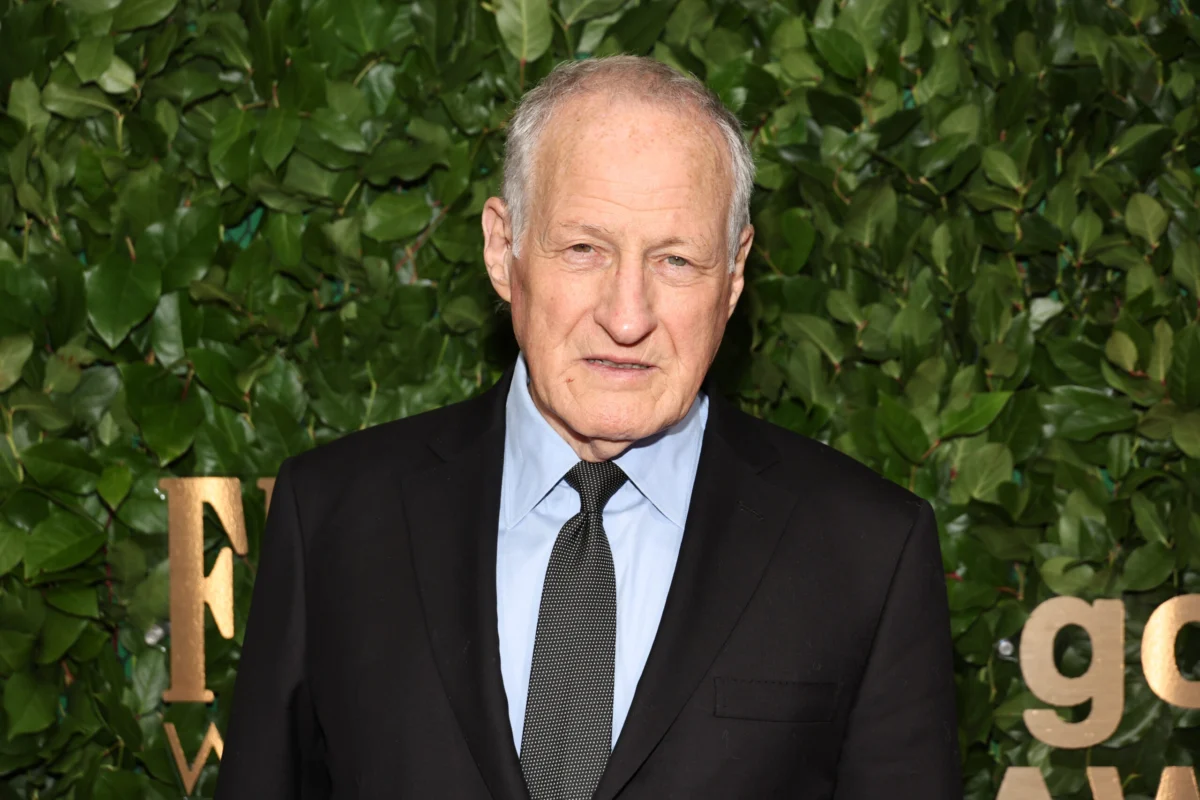
Four decades after it first hit theaters, Michael Mann’s seminal thriller Manhunter—the film that introduced audiences to the chilling intellect of Dr. Hannibal Lecter—is returning to the cultural conversation. To mark the 40th anniversary of the 1986 masterpiece, the legendary director has meticulously crafted a "Final Cut," a definitive version that not only restores lost footage but reconfigures the film’s visual language through modern color science.
The new edition premiered this past Friday at the Academy Museum of Motion Pictures, offering a rare glimpse into the perfectionist mind of a director who continues to refine his work long after the cameras have stopped rolling. This release is more than a mere restoration; it is an evolution of a cult classic that paved the way for the psychological crime thriller genre.
The Genesis of a Cult Classic
When Manhunter was released in 1986, it was an ambitious, stylized adaptation of Thomas Harris’s novel Red Dragon. While it served as the cinematic introduction to the character who would eventually become a pop-culture icon, it did so under the name "Dr. Lecktor." Mann’s decision to alter the spelling was just one of many idiosyncratic choices that would define the film’s unique, neon-soaked aesthetic.
The film follows Will Graham (William Petersen), a retired FBI profiler with the "gift" of empathy—an ability that allows him to think like the killers he tracks. Dragged back into service to hunt a serial murderer known as the "Tooth Fairy" (Francis Dolarhyde, played with unsettling intensity by Tom Noonan), Graham is forced to seek counsel from his own nemesis, the incarcerated Dr. Lecktor.
A Chronology of Artistic Evolution
The journey to this Final Cut began long before the recent Academy Museum screening. Mann’s career has been defined by his technical precision, from the grit of Heat to the digital experimentation of Collateral. Yet, Manhunter remains a special case in his filmography—a project that, according to Mann, suffered from the constraints and trends of the mid-80s.
During the post-screening Q&A, Mann explained that the new edit is a subtractive and additive process. "There were unfortunate lines of dialogue that I had an opportunity to excise," Mann remarked, referring to the dated "80s-isms" that he felt weakened the film’s timeless gravity. By removing these, Mann has sharpened the focus on the film’s core psychological tension.

Simultaneously, he has restored previously cut sequences involving Dr. Lecktor. These additions serve to further highlight the performance of Brian Cox, whose portrayal of the cannibalistic psychiatrist is markedly different from the later, more theatrical interpretation by Anthony Hopkins. Cox’s Lecktor is cold, clinical, and terrifyingly grounded, and Mann’s new edit aims to "really get the genius of Brian Cox’s performance and spectacular dialogue, which comes from Thomas Harris’s book."
Technical Mastery and Modern Aesthetics
Perhaps the most striking change in Manhunter: The Final Cut is the visual overhaul. Working in close collaboration with Stefan Sonenfeld, President of the prestigious post-production house Company 3, Mann has implemented a comprehensive 4K restoration that goes far beyond a simple cleanup.
"We wanted to render into a visual aesthetic that is contemporary to the palette of colors it would have now," Mann explained. This was not a nostalgic polish; it was a "radical and dynamic approach to color timing." Utilizing advanced "power windows"—a technique that allows for the localized shaping of light and shadow—Mann has re-balanced the film’s frames.
He emphasized that this was not merely about making the film look "new," but about using color to enhance the dramatic stakes. By adding shading where it previously didn’t exist, increasing contrast, and shifting the chroma, Mann has created a sharper, more claustrophobic experience that aligns with the psychological torment of his protagonist.
The "Red Dragon" Battle: A Producer’s Dispute
One of the most fascinating revelations from the screening involved the film’s title. Initially, Mann had every intention of calling the film Red Dragon, honoring the source material. However, he hit a wall with the legendary producer Dino De Laurentiis.
"I got into a big argument with Dino De Laurentiis because he thought if it was called Red Dragon, people would think it would be a ‘chopsocky’ movie," Mann recalled. The dispute lasted weeks, ultimately resulting in the title Manhunter. While Mann considers it a "bad title," he acknowledged that the trade-off was significant. The production of Manhunter introduced Mann to his frequent collaborator and cinematographer, Dante Spinotti. That partnership would go on to define the visual language of modern crime cinema for decades to come.

Casting the Monster: The Brian Cox Connection
The casting of Dr. Lecktor is a story of professional generosity. Before Brian Cox was attached to the role, actor Brian Dennehy was in the running. In a twist of fate, it was Dennehy who reached out to Mann to advocate for his colleague.
"Brian [Dennehy] called me one day from New York and said, ‘I’m going to prove to you what a good friend I am. You know how much I want to do Lecktor?’" Mann recounted. Upon receiving confirmation, Dennehy pivoted: "‘Well, there’s somebody better. There’s an actor named Brian Cox who’s in a play called Rat in the Skull, and you’ve got to go see this.’" The rest, as they say, is cinema history.
The Methodology of Fear
Mann’s approach to the character of Francis Dolarhyde was equally unorthodox. While the character is a fictional creation, Mann grounded his development in reality by corresponding with a real-life incarcerated killer, Dennis Wayne Wallace.
The haunting inclusion of Iron Butterfly’s In-A-Gadda-Da-Vida in the film—which serves as the "love song" for Dolarhyde’s imagined romance with a co-worker—was pulled directly from Mann’s correspondence with Wallace. It highlights the disturbing dissonance between Dolarhyde’s capacity for horrific violence and his desperate, delusional need for human connection.
Tom Noonan’s commitment to the role was so intense that he effectively "method acted" his way through the casting process. When he arrived to meet Mann, he refused to engage in casual conversation, telling the director, "I don’t want to talk. Just read." This refusal to break character created an immediate, visceral dynamic that Mann captured perfectly on screen.
Implications for the Legacy of ‘Manhunter’
The release of Manhunter: The Final Cut is more than a retrospective; it is a signal of the film’s enduring relevance. In an era where serial killer narratives have become saturated, Manhunter remains a high-water mark for the genre due to its restraint, its stylistic boldness, and its focus on the interiority of the investigator.

By refining the psychological depth of Will Graham—particularly through a reworked Atlanta Police Department sequence—and clarifying the stakes of his final mission, Mann has ensured that the film remains a potent study of the cost of empathy. The film explores the idea that to catch a monster, one must become a version of that monster, a theme that Mann has revisited throughout his career.
As the industry looks toward future projects, including the highly anticipated Heat 2, this return to Manhunter serves as a reminder of Mann’s singular ability to evolve his own work. He is not merely preserving the past; he is curating it, ensuring that the legacy of his 1986 vision is as sharp, unsettling, and brilliant as it was the day it was conceived.
Manhunter: The Final Cut is scheduled to arrive in theaters on July 24, inviting a new generation of audiences to stare into the abyss of Will Graham’s mind—and see the reflection of a true master at work.
 Ammar Sabilarrohman
 Iffa Jayyana
