

The Democratic Republic of the Congo (DRC) is facing a volatile and rapidly evolving public health crisis as a virulent outbreak of the Bundibugyo species of the Ebola virus continues to spread across the country’s eastern provinces. With health authorities reporting hundreds of infections and a mounting death toll, international aid agencies are bracing for a worst-case scenario: a surge in child casualties in a region already devastated by chronic malnutrition, conflict, and systemic instability.
The Current Situation: A Rapidly Expanding Footprint
The scale of the outbreak has exceeded initial projections, with the virus moving across a vast geographical expanse. Spanning approximately 1,000 kilometres from the northern reaches of Ituri province down to the Miti Murhesa area in South Kivu, the disease has infiltrated 29 distinct health zones.
Dr. Olivier le Polain, who heads up epidemiology and analytics at the World Health Organization (WHO), noted that the rapid transmission is a direct reflection of the high mobility of the local population and the sheer scope of the outbreak. “Every day, cases are being identified in new health zones,” Dr. le Polain stated during a recent press briefing from Beni. “This reflects a scale that is much bigger than what is currently being detected.”
As of the latest reporting, authorities have confirmed 676 cases and 136 deaths. However, officials warn that these numbers likely represent only a fraction of the true toll, as surveillance efforts struggle to keep pace with the virus’s movement into remote or conflict-affected areas.
Chronology: Three Weeks of Unrelenting Spread
The current crisis began with isolated clusters, but within three weeks of its formal confirmation, the epidemiological landscape has transformed significantly:
- Initial Confirmation: Health authorities identified the presence of the rare Bundibugyo strain, triggering emergency response protocols.
- Expansion Phase: Within days, the virus jumped across provincial boundaries, moving from northern Ituri toward South Kivu.
- The North Kivu Shift: As of this week, North Kivu—a region already burdened by decades of armed conflict—has reported new, localized outbreaks, signaling that the virus is successfully establishing itself in high-density, high-risk environments.
- The Surveillance Gap: While contact tracing success rates have improved from dismal levels to approximately 70 percent, officials admit that this remains insufficient to effectively break the chains of transmission.
Supporting Data: A Demographic Under Siege
The humanitarian implications of this outbreak are exacerbated by the pre-existing health conditions of the local population. UNICEF and the WHO have painted a harrowing picture of the demographic most at risk: children.
Malnutrition and the "Zero-Dose" Factor
The region is currently experiencing a severe humanitarian crisis driven by long-term fighting between government forces and various armed militias. This has left the civilian population—particularly children—in a state of extreme vulnerability.
- Chronic Malnutrition: In Ituri province, more than 50 percent of children under the age of five suffer from chronic malnutrition, severely weakening their immune systems and their ability to survive the onset of a hemorrhagic fever.
- Vaccination Gaps: More than one in five children in the region are categorized as "zero-dose," meaning they have never received even the most basic routine vaccinations for diphtheria, tetanus, or pertussis.
Household Transmission: The Shifting Target
While the initial stages of the outbreak primarily affected adults engaged in public or professional activities, the focus is shifting. Dr. Douglas Noble, UNICEF’s Global Lead for Public Health Emergencies, warned that as the virus penetrates deeper into residential areas, household transmission is becoming the primary driver of new cases. "We must be prepared for increasing household transmission, which means we may see more children affected in the days ahead," Dr. Noble explained.
Historical data from previous Ebola outbreaks in the DRC confirms this fear: children have consistently represented a significant share of total infections and an even higher percentage of mortality, with the youngest victims facing the highest fatality rates.
Official Responses: Mounting a Logistical Defense
In response to the escalating threat, international agencies have mobilized a massive logistical operation, though they emphasize that success hinges on community trust and adequate resources.
Emergency Supplies and Infrastructure
UNICEF has launched a six-month, multi-million-dollar response plan aimed at supporting 3.7 million people. Key actions include:
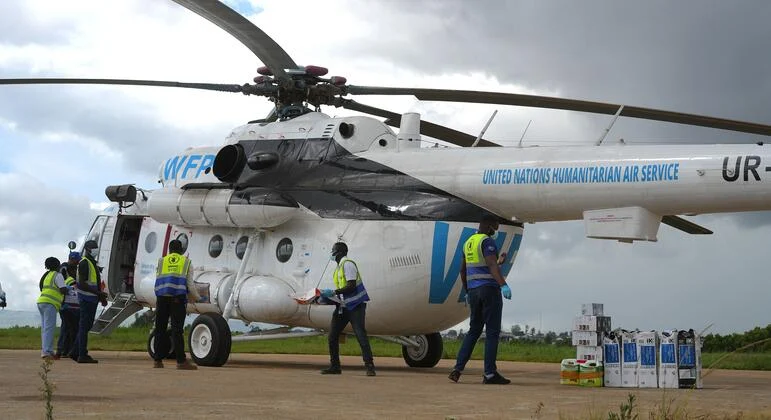
- Logistical Airlift: Eight transport flights have delivered over 100 tonnes of emergency supplies, including personal protective equipment (PPE) for frontline healthcare workers, vital medicines, and hygiene kits.
- Laboratory Capacity: Testing capacity has seen a significant boost. A laboratory in Beni recently processed 500 tests in a single day, providing essential data to map the outbreak’s progression.
- Community Mobilization: More than 1,600 community health workers and 24 specialized decontamination teams have been deployed. To date, these teams have reached over 160,000 households to provide education and infection control guidance.
The Challenge of the Bundibugyo Strain
One of the most daunting hurdles in this response is the lack of specific medical countermeasures. Unlike the more common Ebola-Zaire strain, for which effective vaccines and therapeutics exist, there are currently no approved vaccines or specific antiviral treatments for the Bundibugyo virus. This leaves containment and supportive clinical care as the only viable tools to lower mortality rates.
Implications: Schools, Society, and Future Stability
As the crisis unfolds, the international response is also focused on minimizing the social and economic disruption of the outbreak.
Should Schools Remain Open?
A critical point of debate has been the status of education. Dr. Noble of UNICEF offered a firm stance, distinguishing Ebola from the airborne transmission patterns of COVID-19. "There’s no reason for a school to close," he stated. Because the virus is transmitted primarily through body fluids, schools can remain safe environments provided that strict infection prevention and control (IPC) protocols are followed and children are educated on the risks.
The Call for Global Support
The implications for the DRC’s future are dire. The country’s healthcare infrastructure, already "stretched to breaking point," is struggling to handle a multi-front crisis. The success of the current intervention depends on three pillars:
- Humanitarian Access: Safe passage for health workers into conflict-prone zones where militia activity often blocks aid.
- Community Engagement: Overcoming local skepticism and ensuring that communities are "trusted partners" in the fight against the virus.
- Sustained Funding: Without consistent global financial support, the surveillance and decontamination efforts will inevitably falter.
"We can spare children the worst of this outbreak," Dr. Noble concluded. "Fast detection, strong paediatric care, monitoring of contacts, and communities that are informed and engaged can help bring this outbreak under control. What we now need are the resources, humanitarian access, and the trust to succeed."
As the DRC navigates this dangerous juncture, the global health community remains on high alert. With no vaccine to fall back on, the battle against the Bundibugyo strain will be a grueling test of public health infrastructure and the resilience of a population that has already endured far too much. The eyes of the world are now fixed on the eastern provinces, waiting to see if the combination of local determination and international support will be enough to stem the tide of this silent, deadly invader.
 Lina Hope
 Asro
Asro
 Layla Zulfa
