

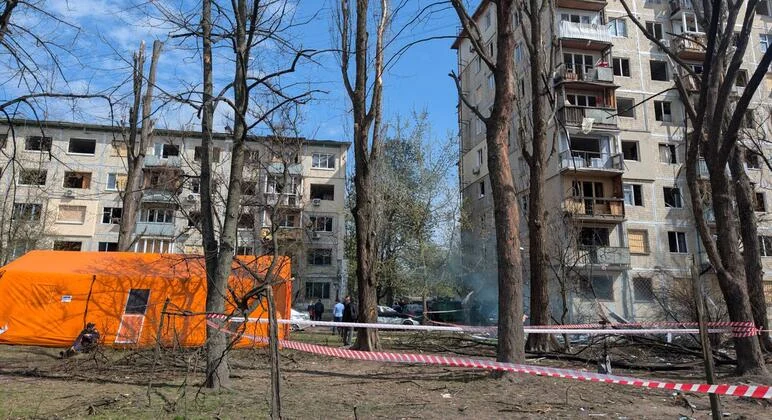
The month of May 2026 has marked a grim milestone in the ongoing conflict in Ukraine, as verified data from the United Nations Human Rights Monitoring Mission in Ukraine (HRMMU) reveals a casualty toll that has not been witnessed in four years. As the conflict intensifies, the indiscriminate nature of modern warfare has left civilians increasingly vulnerable, whether they are living in the shadow of the frontline or in urban centers hundreds of miles away from the active theater of war.
Main Facts: A Statistical Surge in Human Suffering
The HRMMU, the primary body tasked with documenting the human cost of the war, confirmed that at least 274 civilians lost their lives in May 2026, while 1,763 were left wounded. This represents a staggering 93 percent increase compared to the same period in 2025 and a 23 percent rise over the figures recorded in April 2026.
Danielle Bell, head of the mission, underscored the severity of these figures, noting that the total count of more than 2,000 casualties makes May 2026 the deadliest month for non-combatants since April 2022. The data paints a harrowing picture of a conflict that is expanding its reach, rather than receding, with civilians increasingly becoming the primary victims of long-range aerial warfare.
Chronology of Terror: A Month of Escalation
The violence throughout May followed a relentless rhythm, striking both military-adjacent zones and deeply populated civilian hubs.
- May 5: An aerial bombardment struck an industrial area in the city of Zaporizhzhia. The attack, which caught many residents in their daily routines, resulted in 12 deaths and left 42 others injured.
- May 14: In a stark reminder that no location in the country is beyond the reach of long-range weaponry, a missile strike hit an apartment building in the capital, Kyiv. The collapse of the structure claimed the lives of 24 civilians, with at least seven others sustaining life-altering injuries.
- May 19: In the Chernihiv region, the human toll of the conflict was laid bare through the story of an elderly woman who survived a missile strike only to suffer the traumatic amputation of her leg. Recounting the horror, she described the moment the blast threw her against a fence, followed by the immediate, life-shattering realization that her limb had been nearly severed.
- May 21-22: The violence extended into Russian-occupied territories, where an attack on an educational complex in Starobilsk, in the Luhansk region, left 21 civilians dead.
These incidents represent only a fraction of the verified cases, yet they illustrate a pattern of persistent, high-impact strikes on non-military targets.
Supporting Data: The Anatomy of the Casualties
The driving force behind the dramatic rise in casualties is the increased reliance on long-range precision weapons and short-range drones. According to the HRMMU, 45 percent of all civilian casualties in May were the result of long-range missile and drone attacks. These weapons are often deployed in densely populated urban centers, turning schools, apartment complexes, and public squares into targets.
The Rise of FPV and Short-Range Drones
While long-range strikes capture headlines, the frontline regions are suffering under a different, more localized terror. Short-range drones—often referred to as First-Person View (FPV) drones—have become the primary cause of death and injury near the active front.
In May, these drones accounted for at least 64 deaths and 539 injuries, the highest toll from this specific weapon system since the full-scale invasion began in February 2022. The city of Kherson serves as a chilling case study: out of 14 deaths and 221 injuries recorded in the city, the vast majority were directly attributable to drone strikes.
Gender and Demographics
While data consistently shows that men account for the majority of casualties due to their higher presence in public spaces and workforce sectors near the front, the indiscriminate nature of the weaponry means that no demographic is safe. Women, children, and the elderly are frequently caught in the crossfire of residential strikes. The HRMMU highlights that the injury of the elderly woman in Chernihiv is emblematic of how the war has stripped away the safety of the domestic sphere for the most vulnerable members of society.
Official Responses and Verification Challenges
The HRMMU’s mandate is to provide an objective, data-driven account of the human rights situation in Ukraine. However, this task is fraught with difficulty. While the mission has successfully documented the high toll in Ukrainian-controlled territory, it also tracks reports from Russian authorities.
Russian officials reported 47 civilian deaths and 298 injuries within Russian territory during the month of May. The UN mission, however, remains cautious. Because of the "limited independent sources of information" and restricted access to regions controlled by Russian forces, the UN cannot regularly verify these figures with the same rigor it applies to incidents in Ukrainian-controlled regions.
Danielle Bell noted that the mission continues to collect and analyze publicly available information from both sides, emphasizing that their goal is to provide a comprehensive, albeit difficult, map of the human cost of the war. "The civilian harm we documented was not limited to communities near the frontline," Bell stated. "In cities across Ukraine, repeated attacks with missiles and aerial bombs killed and injured civilians far from areas of active ground combat."
Implications: A Pattern of Increasing Brutality
The data for May 2026 suggests a dangerous evolution in the war. Historically, the conflict in Ukraine has seen casualty numbers rise during the spring and summer months as weather conditions improve, facilitating more intense military maneuvers. However, the figures for 2026 are not merely following this seasonal pattern—they are operating at a level of intensity far higher than in previous years.
The Normalization of Long-Range Strikes
The increased frequency of missile and drone attacks on cities deep within the interior of Ukraine suggests that the conflict has shifted toward a strategy of attrition. By targeting urban centers far from the front, the warring parties are effectively expanding the "battlefield" to include every citizen. The psychological and physical toll on the civilian population is immense, leading to a permanent state of displacement, trauma, and, as the data shows, an accelerating rate of mortality.
A Need for International Scrutiny
The findings of the HRMMU serve as an urgent call to the international community. The indiscriminate use of powerful weapons in urban environments is a direct violation of the principles of distinction and proportionality under international humanitarian law. As the casualty toll continues to climb, the ability of humanitarian organizations to provide aid and relief is being stretched to its absolute limit.
Looking Ahead
As the summer progresses, the patterns established in May offer a grim forecast. If the current trajectory of weapon deployment and urban targeting continues, the human cost of the conflict will likely continue to escalate. The mission’s report acts as a definitive record of the current state of the war—a reminder that behind every percentage increase in the data is a life, a family, and a community shattered by the ongoing struggle.
For the people of Ukraine, the numbers are not just statistics; they are the lived reality of a conflict that refuses to spare those who are not in uniform. The international community, observers, and human rights advocates now face the challenge of addressing these findings and finding a path toward the protection of those who are most at risk in a war that shows no sign of abating.
 Lina Hope
 Asro
Asro
 Layla Zulfa
