

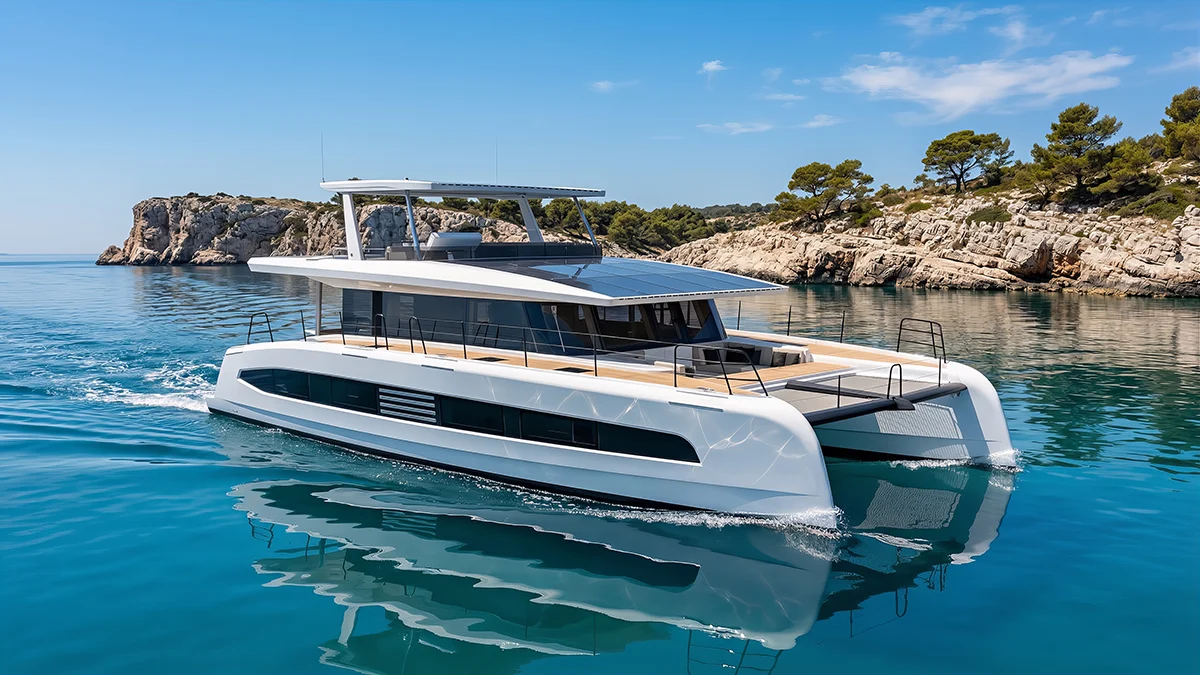
The global marine industry stands at a pivotal crossroads. As environmental consciousness moves from the periphery to the center of luxury yachting, shipyards are scrambling to find the perfect equilibrium between sustainable performance and the opulence expected by high-net-worth individuals. Next month, a new German entrant, Pioneer Yachts, will make its quiet—yet potentially industry-shifting—entry into this competitive landscape with the launch of the PY60, a solar-electric catamaran that promises to rewrite the rules of autonomy and efficiency at sea.
Founded earlier this year by engineer and entrepreneur Mike Frank, Pioneer Yachts has bypassed the common trend of retrofitting legacy motor yachts with electric motors. Instead, the yard has taken a "clean sheet" approach, treating the vessel’s energy generation and storage as the fundamental architecture rather than an afterthought. The result, the Pioneer One, is currently entering its final construction stages in Germany and is poised to make its global debut at the prestigious Cannes Yachting Festival this September.
A Strategic Shift in Maritime Engineering
For decades, the yachting world has been dominated by the combustion engine. While traditional diesel propulsion offers raw power, it brings with it the inherent baggage of noise, vibration, exhaust emissions, and the mechanical complexity of high-maintenance internal combustion systems. Pioneer Yachts seeks to move beyond this paradigm by prioritizing "energy-first" naval architecture.
The core philosophy behind the PY60 is a holistic integration of solar harvesting and battery management. By engineering the hull and superstructure specifically for an electric drivetrain, the design team—comprised of the renowned Italian firms Cossutti & Ganz for exterior lines and Micheletti + Partners for the interior—has managed to create a vessel that is not only aerodynamically and hydrodynamically optimized for efficiency but also a masterclass in modern, eco-conscious living.

Chronology of a New Venture
The trajectory of Pioneer Yachts has been remarkably swift, reflecting the agility of a startup operating within the German manufacturing ecosystem.
- Q1 2026: Mike Frank officially establishes Pioneer Yachts, assembling a team of specialized marine engineers and designers focused on sustainable propulsion.
- Q2 2026: Design and engineering phases are finalized, with a focus on a 48-volt electrical backbone capable of supporting long-term, high-load operations.
- July 2026: The inaugural unit, Pioneer One, is scheduled to hit the water for its initial sea trials, marking the transition from digital rendering to physical reality.
- September 8–13, 2026: The official public premiere of the PY60 at the Cannes Yachting Festival, where the vessel will serve as both a flagship product and a floating research laboratory.
Supporting Data and Technical Architecture
At the heart of the PY60’s performance is its advanced electrical backbone. Unlike many hybrid yachts that rely on oversized battery banks to compensate for inefficient design, the PY60 utilizes a high-efficiency, 48-volt system. This architecture is designed specifically to optimize the flow of power from the expansive solar roof array to the onboard battery banks, which in turn feed the electric propulsion motors and the vessel’s extensive hotel loads.
While the yard has remained tight-lipped regarding the exact range of the vessel, they have confirmed that it is designed to handle "typical cruising distances" entirely on electric power. This implies a significant leap forward in energy density and solar conversion efficiency. For those longer passages where the sun may not provide enough replenishment, or where higher speed is required, the vessel is equipped with integrated diesel generators, ensuring the safety and reliability that owners demand.
Performance-wise, the PY60 is not a racing machine, but a vessel built for the "slow travel" movement. It achieves a top speed of 11 knots and maintains a comfortable, vibration-free cruising speed of 7.5 knots. This performance envelope is a deliberate choice; by limiting top-end speed, the designers have been able to keep the weight of the battery banks manageable, which in turn reduces the draft and improves the overall efficiency of the hulls.

The Human Element: Design and Utility
The interior design, led by Micheletti + Partners, emphasizes the seamless connection between the interior and exterior environments. A standout feature is the oversized, multi-panel cockpit door—described by the company as the largest in its class. When retracted, this door effectively merges the aft deck with the main salon, creating a single-level, open-plan living space that spans a significant portion of the boat’s 60-foot length.
Panoramic, floor-to-ceiling windows ensure that the interior is flooded with natural light, reducing the need for artificial daytime lighting and further lowering the vessel’s energy consumption. This focus on "passive" energy management—using light and ventilation to reduce the hotel load—demonstrates that the design team considered the user experience just as much as the engineering requirements.
Crucially, the vessel is designed for owner-operation. With simplified, intuitive control interfaces and a robust, automated management system, the PY60 does not necessarily require a full-time professional crew. This opens up a new market segment: owners who want the space and luxury of a 60-foot catamaran but desire the privacy and simplicity of sailing it themselves.
Official Perspectives: The Founder’s Vision
For Mike Frank, Pioneer One is more than a commercial product; it is a "living" testbed. In a recent statement, Frank emphasized the importance of real-world feedback in the company’s roadmap.

"By using the yacht ourselves and monitoring its performance under real conditions, we can continue refining the concept," Frank noted. "We are not just building a boat; we are establishing an operational reference platform. Future iterations of our fleet will be directly shaped by the data we collect and the practical experience we gain during our maiden seasons."
This "owner-operator-as-test-pilot" approach is a rare commodity in the yachting industry, where most shipyards hand over keys and rarely see their vessels under extreme operational conditions. By keeping the flagship in-house, Pioneer Yachts signals a long-term commitment to product evolution and reliability.
Industry Implications: A Trend Toward Sustainability
The emergence of Pioneer Yachts arrives at a time when the maritime industry is under increasing pressure to decarbonize. With European regulations tightening around emissions in coastal waters and Mediterranean ports, the demand for silent, emission-free, and fuel-efficient vessels is reaching an all-time high.
The PY60 represents a departure from the "green-washing" that has sometimes characterized the electric yacht movement. By integrating solar energy into the structural design rather than simply adding a few panels to a traditional deck, Pioneer is setting a new benchmark for what a solar-electric catamaran should be.

If the PY60 succeeds in delivering on its promises of reliability and autonomy, it could catalyze a shift in the 50-to-70-foot segment. Traditional shipyards will likely be watching the Cannes Yachting Festival closely. If the market reception is as positive as the technical specs suggest, we may see a rapid pivot in the industry toward similarly engineered, purpose-built electric platforms.
As Pioneer One prepares to hit the water in July, the silence of its electric motors will surely speak volumes to a market that is ready for a quieter, cleaner way to explore the world’s oceans. The future of yachting may not be found in bigger engines or more horsepower, but in the intelligent, efficient capture of the sun’s rays—a philosophy that Pioneer Yachts is betting will define the next decade of luxury marine travel.
 Evan Lee Salim
 Asep Darmawan
 Laily UPN
