

The landscape of entertainment in 2024 and beyond is defined by a curious paradox. On one end of the spectrum, we see the massive, high-budget "craft" of prestige television—the meticulous production design of Hacks, the visceral soundscapes of The Boys, and the haunting cinematography of Cape Fear. On the other end, a new breed of creators is finding massive success by stripping away the artifice of Hollywood, opting instead for the grit and unpredictability of the real world.
At the center of this movement is Kareem Rahma and his viral sensation, Subway Takes. What began as a self-described "dumb idea" has evolved into a masterclass in guerrilla filmmaking, offering a blueprint for how to capture lightning in a bottle within the confines of a moving train car. As the industry grapples with massive consolidation—highlighted by the Department of Justice’s recent decision not to challenge the Paramount-Warner Bros. Discovery merger—independent voices like Rahma’s are proving that the most valuable currency in modern media isn’t just a budget, but authenticity.
The Anatomy of a Viral Take: Main Facts
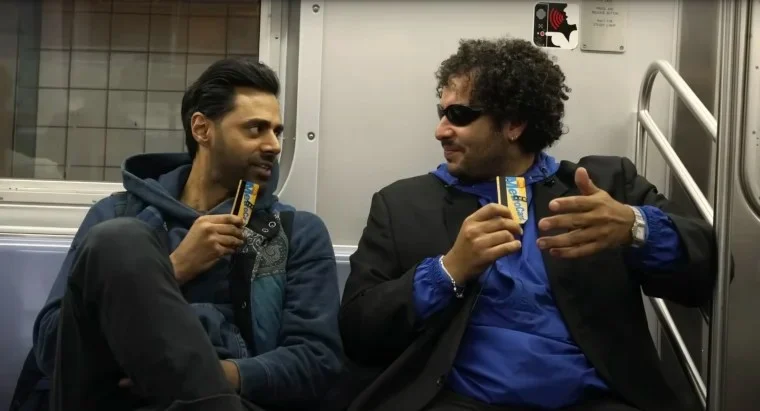
Subway Takes is deceptively simple: Kareem Rahma sits on a subway train and asks guests—ranging from random commuters to A-list celebrities—for their "takes." These takes cover a dizzying array of subjects: the social etiquette of potlucks, the existential threat of AI, the nuances of modern romance, and the irritations of urban living.
The show’s success is built on several pillars:
- The Location: Utilizing public transit systems as a ready-made, high-energy set.
- The Casting: A democratic mix of "real people" and celebrities like Eric André and Bill Burr, treated with equal lack of ceremony.
- The Format: Short-form, highly edited vertical video designed for TikTok, Instagram Reels, and YouTube Shorts.
- The Philosophy: A rejection of "slop"—the low-effort, AI-generated, or overly staged content that currently saturates social feeds.
While the show feels spontaneous, it is the result of a refined "craft" that mirrors the professional standards of the high-end productions IndieWire typically profiles. It is a sophisticated operation masquerading as a casual conversation.
Chronology: From a "Dumb Idea" to Global Expansion
The journey of Subway Takes reflects the career trajectory of many modern creators who found themselves sidelined by traditional Hollywood structures.
The Origin (NYC)
Kareem Rahma’s entry into the space was born out of a sense of exclusion. "I’m literally not working in Hollywood, so let me go do this thing that will probably fail," Rahma told IndieWire. He initially viewed the concept of interviewing people on the subway as a potential failure, one of many experiments in a career spent navigating the fringes of the traditional industry.
The Viral Pivot
The show found its footing by leaning into the inherent drama of the New York City subway system. The early episodes focused on the "Takes" of everyday New Yorkers, whose blunt honesty and eccentric opinions provided the perfect fodder for the internet’s love of debate. As the view counts climbed into the millions, the "craft" behind the show began to solidify.

Global Scaling
What started on the MTA soon expanded. Rahma has since taken the format to London’s Underground, Chicago’s "L," and Berlin’s U-Bahn. Each city offers a different cultural "vibe" and a different set of social contracts, allowing the show to evolve from a local NYC project into a global sociological study of public opinion.
Supporting Data: The Technical Blueprint of Guerrilla Production
To the casual observer, Subway Takes looks like a man with a microphone. However, the production logistics required to maintain a professional standard in a public, moving space are significant.
The "Golden Window"
The production team avoids the chaos of rush hour, instead targeting the window between 11:00 a.m. and 2:00 p.m. This timing is strategic; it ensures the cars are populated enough to feel "alive" but empty enough to avoid disrupting the commutes of regular riders.
The Route
In New York, the team favors trains running between Manhattan and Brooklyn. The transit over the East River—specifically the bridges—provides a crucial stretch of uninterrupted time. Unlike the underground segments where stops are frequent and noise is deafening, the bridge crossings offer better lighting and a more stable environment for longer-form dialogue.
The Footprint
The crew is intentionally tiny. What began as Rahma and two friends has expanded to a rotating team of about six, including producers and camera operators. This small footprint is essential for "sneaking" onto transit. When high-profile celebrities join, the challenge is managing their personal teams to ensure the train car doesn’t become overcrowded, which would break the "everyman" illusion of the show.
Post-Production: Fighting the "Slop"
The real "craft" of Subway Takes happens in the edit. A typical interview lasts between 10 and 15 minutes. The editors then distill this down to 60 or 90 seconds. Rahma is adamant that the final product must feel "dynamic and engaging" without feeling "cheap." This involves a sophisticated approach to pacing and sound design, ensuring that the background noise of the subway enhances rather than distracts from the conversation.
Official Responses: Rahma on Authenticity and the "Bill Burr Effect"
In an era where audiences are increasingly skeptical of what they see on screen, Rahma views Subway Takes as a necessary corrective.
"I think in a world where everything feels fake, and sometimes is fake with AI and such, it’s a breath of fresh air to see something so normal, and just like real life," Rahma noted. He argues that traditional news and social media influencers are often perceived as "lying" to the audience. In contrast, the "stupid, real, funny conversation" of a subway take feels undeniably human.

The Challenge of the Professional Interviewer
Despite the show’s casual appearance, Rahma has had to develop a specific set of skills to handle difficult subjects. He pointed to an episode with comedian Bill Burr as a turning point.
"This guy just totally destroyed me in the first 15 seconds; made me feel like I was bad at my job," Rahma admitted. However, by maintaining his composure and leaning into the format, Rahma was able to turn the interview around. By the end of the ride, Burr was complimentary of Rahma’s skills. This encounter served as a validation of Rahma’s growth from a "guy with a camera" to a legitimate interviewer capable of sparring with the best in the business.
Implications: The Future of Media in a Consolidated World
The success of Subway Takes arrives at a moment of significant upheaval in the media industry. While IndieWire reports on the "Top of the Line" craft in series like Euphoria or Saturday Night Live, the broader industry is tightening its belt.
The Merger Context
The news that the DOJ will not challenge the Paramount-Warner Bros. Discovery merger signals a continuing trend toward consolidation. As major studios merge to compete with tech giants like Netflix and Apple, the "middle class" of television production is being squeezed. In this environment, the low-overhead, high-impact model of Subway Takes becomes an attractive alternative for both creators and advertisers.
The Global Etiquette Challenge
As Rahma looks toward the future, the implications of his format face cultural hurdles. He expressed a strong interest in filming a season in Japan or South Korea. However, these regions have much stricter "train etiquette" than the United States or Europe.
"I know that their train etiquette is a lot different than New Yorkers’ train etiquette, so I haven’t figured it out," Rahma said. The challenge of adapting a loud, opinionated format to a culture that prizes silence and privacy on public transit will be the ultimate test of the show’s versatility.
Conclusion: The Craft of the Real
Whether it is the 3D-printed hair and makeup pieces used on Saturday Night Live or the liminal space production design of The Backrooms, "craft" is often defined by the ability to create a convincing world. Kareem Rahma’s craft is different: it is the ability to find the extraordinary within the most mundane world possible—a subway car.
As we move deeper into 2026, the divide between "prestige" content and "viral" content is blurring. Subway Takes proves that you don’t need a soundstage to create a compelling talk show; you just need a MetroCard, a sharp edit, and a guest with a take spicy enough to stop a commuter in their tracks. While Hollywood continues to merge and recalibrate, the most interesting conversations are happening underground, one stop at a time.
 Jia Lissa
 Lina Irawan
 Iffa Jayyana
