

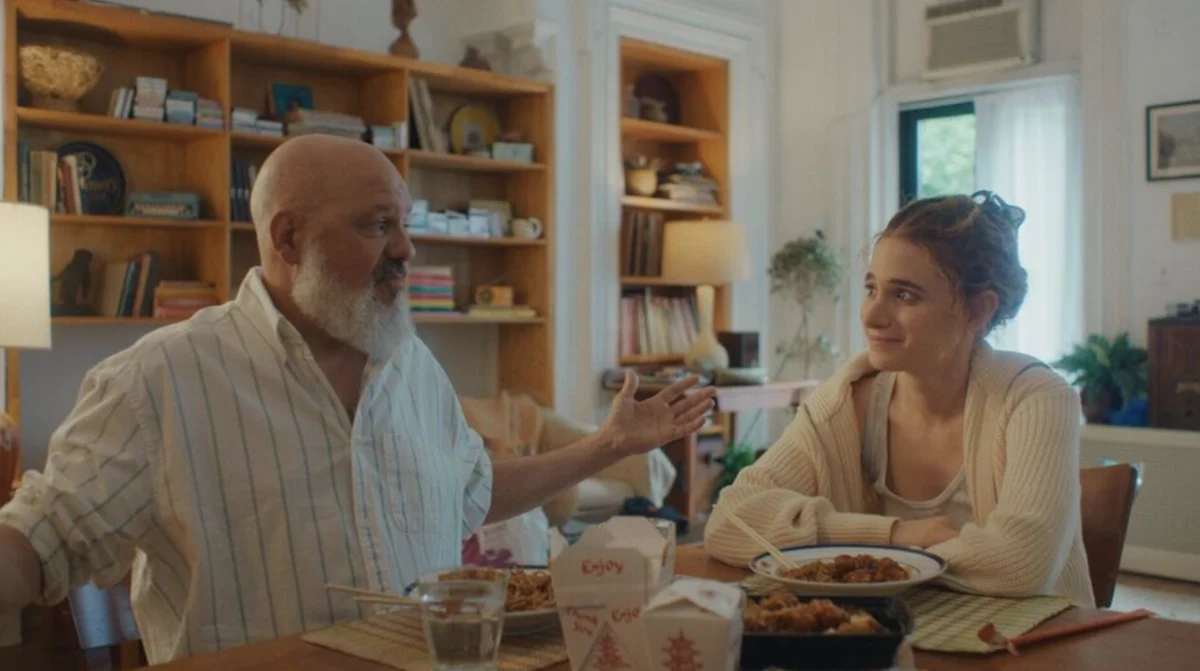
The 2026 Tribeca Festival has long been a breeding ground for high-concept dramas and boundary-pushing documentaries. However, one of the most talked-about entries this year is a film that deliberately aims for the middle. Lucy Schulman, written, directed by, and starring comedian Ellie Sachs, is a film that questions the very necessity of its own existence while simultaneously proving why audiences still crave the "New York creative in crisis" subgenre.
With a narrative that refuses to indulge in high drama or catastrophic stakes, Lucy Schulman offers a refreshing, if slight, meditation on the plateau of young adulthood. It is a film where "falling from grace" is less of a cinematic explosion and more of a clumsy stumble down a few carpeted stairs.
Main Facts: A Portrait of Stagnation and Style
At its core, Lucy Schulman is an eponymous character study of a woman who, by her own admission and the film’s design, is not particularly special. Lucy (Ellie Sachs) is a fixture of a very specific New York ecosystem: she works at an independent bookstore, possesses an enviable sense of vintage style, and populates a social circle that oscillates between genuine high-achievers and pretentious "cool posers."
The film’s primary distinction lies in its refusal to pathologize its protagonist. Lucy does not suffer from a debilitating addiction, nor does she harbor delusions of grandeur that lead to a public meltdown. Instead, she suffers from a relatable, low-grade inertia. She loves literature but dates writers rather than writing herself. She is a "nice enough" person who occasionally blows off her loyal friends to chase the dopamine hit of a new romance.
Key Production Details:
- Director/Writer: Ellie Sachs
- Lead Cast: Ellie Sachs, David Cross, Hasan Minhaj
- Premiere: Tribeca Festival 2026
- Genre: Indie Dramedy / Coming-of-Age
- Current Status: Seeking U.S. Distribution
- Critical Reception: Grade B- (IndieWire)
Chronology: The Gentle Arc of a "Stumble"
The narrative structure of Lucy Schulman follows a traditional, albeit softened, three-act arc. The film eschews the "crashing down" trope in favor of a more realistic ebb and flow of minor personal crises.
The Catalyst: The Literary Breakup
The film opens with what should be a life-altering moment: Lucy is dumped by her boyfriend, a rising-star author played with charismatic slickness by Hasan Minhaj. The breakup occurs because he cheated, a scenario that in any other film would trigger a vengeful montage or a spiral into depression. In Sachs’ world, however, the event serves merely as the catalyst for Lucy to retreat to her default safety net: her childhood bedroom.
The Regression: The Peter Schulman Safety Net
Following the breakup, the film settles into its second act, which focuses on the relationship between Lucy and her father, Peter (David Cross). This segment of the film explores the "codependent dream" of modern parenting. As Lucy reintegrates into her father’s home, the film avoids the "disappointed parent" trope. Instead, it presents a father who is endlessly accommodating, a man without "rough edges" who views his daughter’s return not as a failure, but as a welcomed opportunity for companionship.

The New Romance and Self-Correction
The final act follows a familiar trajectory. Lucy meets a new man, begins to prioritize him over her existing support systems (her friends and her father), and eventually hits a wall of self-realization. The "climax" of the film is not a grand confrontation, but a quiet understanding: Lucy cannot define her life through the men she dates. The film concludes with the modest but necessary lesson that it is okay—and perhaps vital—to be alone while figuring out one’s purpose.
Supporting Data: Tropes and Technical Restraint
Lucy Schulman leans heavily into the visual and narrative language of the "Brooklyn Indie," a genre perfected by the likes of Greta Gerwig and Noah Baumbach. However, Sachs’ approach is notably more sincere and less cynical than her predecessors.
The Setting as Character
The film utilizes the "New York City as a playground for the middle class" aesthetic to full effect. From the cramped but charming aisles of the independent bookstore to the sun-drenched apartments of Manhattan’s creative elite, the setting reinforces the "smallness" of Lucy’s world. It is a world where "tummy aches" are treated as legitimate crises and where the stakes never rise above the level of a social misunderstanding.
Performance Analysis: David Cross and Ellie Sachs
Critics have pointed to David Cross’s performance as a highlight of the film. Known for playing cynical, biting characters, Cross offers a "soft" performance here that provides the film’s emotional anchor. His portrayal of Peter Schulman as a man whose happiness is entirely derived from his daughter’s presence adds a layer of warmth that prevents the film from feeling too vapid.
Ellie Sachs, meanwhile, uses the film as a showcase for her "comedic charisma." Her performance is characterized by a "bubbly self-awareness," suggesting that she is fully aware of how "first-world" her character’s problems are. This restraint in her directing prevents the film from becoming a parody of itself.
Official Responses and Critical Context
While the film has yet to secure a major studio distributor, its premiere at Tribeca has sparked a conversation about the "Hallmark-ization" of independent cinema. Early reviews suggest that while Lucy Schulman lacks the ambition of a Frances Ha or a Lady Bird, it excels as "wholesome entertainment" for the cinephile crowd.
Critical Consensus
The general critical consensus, as exemplified by the IndieWire "B-" grade, is that the film is "pleasant to watch" despite—or perhaps because of—its lack of depth. Critics have noted that the film’s tone is its strongest asset. By treating manageable problems with the "almost none" seriousness they deserve, Sachs creates a viewing experience that is low-stress and comforting.

The "Hallmark for Cinephiles" Comparison
A recurring theme in the response to the film is its comparison to Hallmark Christmas movies. Much like those films, Lucy Schulman offers a predictable, safe environment where the viewer knows that everything will eventually be fine. The "stakes feel so low that you could comfortably walk out of the room for any half-hour period and not miss much," yet the craftsmanship ensures that whatever scene the viewer returns to will be "undeniably enjoyable."
Implications: The Future of the "Vibe" Movie
The existence and reception of Lucy Schulman at a major festival like Tribeca in 2026 suggest a shift in the independent film market. In an era often dominated by "trauma-core" or high-concept genre-bending, there appears to be a growing space for "vibe-heavy" narratives that prioritize atmosphere over action.
The Multi-Hyphenate Trajectory
For Ellie Sachs, the film serves as a significant calling card. Her ability to write, direct, and star in a project that maintains such a specific, consistent tone suggests a future in premium cable sitcoms or high-end streaming dramedies. The film’s "admirable restraint" indicates a filmmaker who understands the limits of her genre and is comfortable working within them.
Distribution Trends
The fact that Lucy Schulman is currently seeking distribution highlights a challenging landscape for mid-budget, character-driven indies. However, its "comfort watch" quality makes it an ideal candidate for streaming platforms looking for "sticky" content—films that viewers will return to for a sense of familiarity and ease.
Conclusion: Why We Still Watch
Ultimately, Lucy Schulman is a testament to the enduring appeal of the "artist-comes-of-age" trope. While the film acknowledges that "nobody needed another movie like this," it also proves that as long as there are people struggling to find their footing in their twenties and thirties, there will be an audience for stories that say: "It’s okay to just be okay."
The film does not revolutionize the medium, nor does it offer profound new insights into the human condition. Instead, it offers 90 minutes of pleasant company, a few laughs, and a reminder that even a "stumble down two or three steps" is a part of the journey. For an audience increasingly exhausted by high-stakes reality, Lucy Schulman’s low-stakes fiction might be exactly what the doctor ordered.
 Jia Lissa
 Lina Irawan
 Iffa Jayyana
