

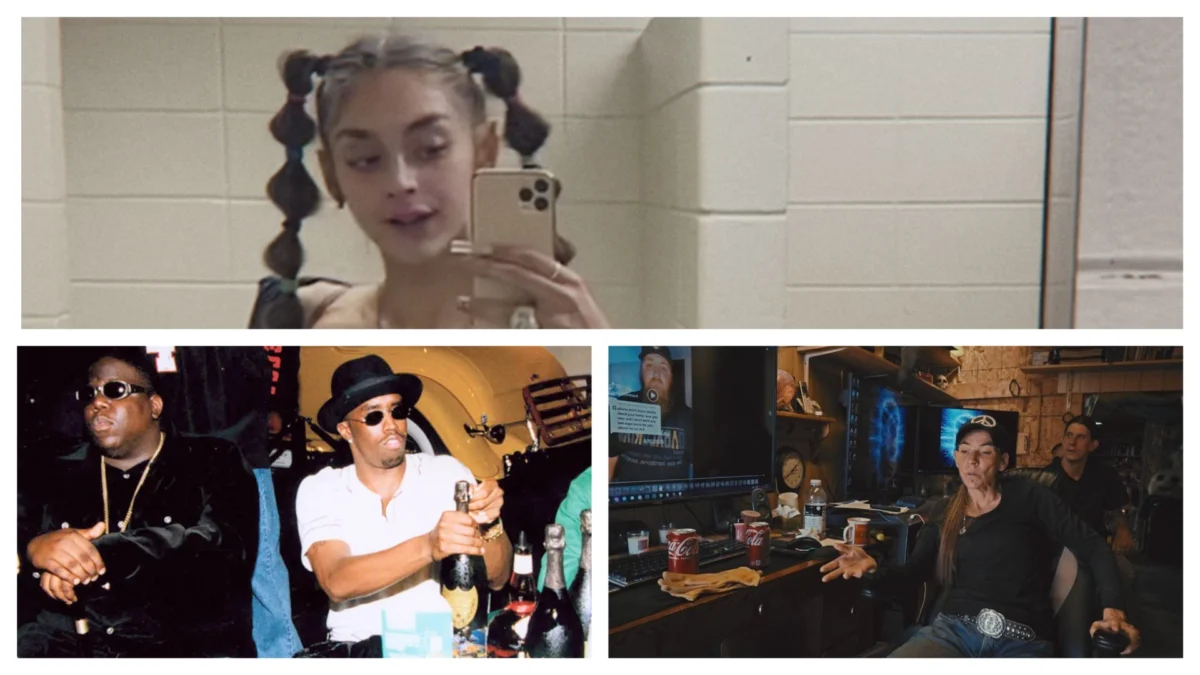
In the mid-20th century, the documentary genre was revolutionized by cinéma vérité—a "truthful cinema" that relied on the fly-on-the-wall observation of subjects who, ideally, would eventually forget the camera was there. However, in an era defined by the ubiquitous smartphone, the Ring doorbell, and the TikTok confessional, that "pure subject" may be extinct.
Recent high-profile projects, including HBO’s residential dispute series Neighbors and Netflix’s true-crime investigations The Crash and Sean Combs: The Reckoning, signal a seismic shift in nonfiction storytelling. Filmmakers are no longer fighting against the subject’s self-awareness; instead, they are leaning into it, utilizing the footage subjects record of themselves to create a new, hyper-intimate, and often meta-narrative form of documentary.
The New Landscape of Nonfiction Storytelling
The fundamental premise of the modern documentary is changing. As Dylan Redford, co-creator of the HBO series Neighbors, recently told IndieWire, the idea of a subject heedless of how they are perceived on film is likely a relic of the past. "Given the world that we live in now and the awareness of the camera, and everyone’s documenting themselves and each other," Redford noted, the "pure subject" has been replaced by a "collaborative subject."
This shift is characterized by three primary developments:

- The Integration of Amateur Tech: Footage from GoPros, 360-degree cameras, and Ring security systems is being used not just as b-roll, but as the primary visual language of storytelling.
- The Rise of the Self-Produced Archive: Subjects now enter the documentary process with thousands of hours of their own recorded history, from TikToks to self-commissioned "legacy" footage.
- The Death of the Reenactment: The availability of real-time surveillance and social media clips is rendering the "dramatic reconstruction" trope of true crime obsolete.
Chronology: From Direct Cinema to the Digital Panopticon
To understand this shift, one must look at the evolution of the documentary lens. In the 1960s, pioneers like Robert Drew and the Maysles brothers sought to capture unvarnished reality by using lightweight, shoulder-mounted cameras. The goal was total transparency.
By the early 2000s, the rise of "Reality TV" introduced a performative element, where subjects were aware of the camera but often followed a loose script or producer-driven prompts. However, the current era—the "Digital Panopticon" phase—is different. Now, the subjects are the producers, directors, and stars of their own lives long before a professional documentary crew arrives.
This chronological progression has led to a paradox: while subjects are more "camera-aware" than ever, the footage they produce in their private spaces—speaking directly to their followers or their security systems—often captures a level of intimacy that a professional crew could never achieve. As Redford observed, filmmakers "can’t really ever totally compete with that level of intimacy that a subject has with their phone and their camera."
Case Studies: Redefining the Genre Through Self-Shot Footage
HBO’s ‘Neighbors’ and the Language of Utility
Neighbors, co-created by Redford and Harrison Fishman, explores the often-absurd world of residential disputes. The series was born from viral videos of neighbor conflicts posted by the combatants themselves. Rather than trying to recreate these moments, the filmmakers integrated the subjects’ own footage—Ring cameras, phone clips, and GoPros—into the "fabric of the show."

Fishman explains that this approach is a deliberate embrace of contemporary American life. "We just fully want to lean into how contemporary and how American our show is," he said. By using surveillance footage "almost to a gratuitous level," the show highlights the reality of how modern citizens surveil one another and themselves. This creates a collaborative atmosphere where the subjects are "not naive to what it means to craft a story."
Netflix’s ‘The Crash’ and the Social Media Persona
In the Netflix documentary The Crash, director Gareth Johnson and producer Angharad Scott examine the case of Mackenzie Shirilla, an Ohio teenager convicted of murder following a high-speed car crash. The film relies heavily on Shirilla’s own social media presence to tell its story.
This footage served a dual purpose. First, it eliminated the need for dramatic reenactments. Second, it provided a chilling look at the disconnect between a digital persona and reality. A TikTok video of Shirilla soundtracked by "Bubblegum Bitch" by Marina and the Diamonds was used by prosecutors to argue a lack of remorse. The film highlights the generational divide in how social media is interpreted: Is a viral trend an authentic expression of character, or merely a performance for an audience?
‘Sean Combs: The Reckoning’ and the Manufactured Reality
Director Alex Stapleton’s documentary on Sean "Diddy" Combs faced a unique challenge. While editing the series, Stapleton received hours of self-commissioned footage showing Combs during his final week of freedom. Combs had hired a crew to document his life, intending to control his narrative.

Stapleton integrated this footage into the documentary to show the "nuance of who Sean is." The footage captured "in-between" moments—the things said in the back of a car when he thought he was in total control. This allowed Stapleton to present a "vérité experience" that was actually manufactured by the subject himself, providing a window into how a powerful figure attempts to "produce" their own reality.
Official Responses: The Filmmaker’s Perspective on "Magic" and Context
The consensus among modern documentary filmmakers is that self-shot footage does not replace the traditional interview; rather, it provides the necessary "magic" through contrast.
Angharad Scott (Producer, The Crash):
"That’s where the real magic I think happens, because you can have that deeper analysis [in an interview], but you still see the truth of this person coming through in their social media."
Gareth Johnson (Director, The Crash):
Johnson notes that while social media provides immediacy, the interview provides reflectiveness. He points to a meta-moment in his film where Shirilla asks her lawyer for feedback after an interview question. "It was important for the audience to know the circumstances of the interview… she’s still in the process of appealing."

Dylan Redford (Co-creator, Neighbors):
Redford rejects the idea that a TikTok is inherently more "authentic" than a professional interview. "They do different things," he says. The phone footage captures the subject in their personal space, while the documentary crew brings out something "special and unique" through the act of external observation.
Alex Stapleton (Director, Sean Combs: The Reckoning):
Stapleton emphasizes that the filmmaker’s role has shifted from "capturer" to "contextualizer." "Context is a really big part of the documentary process," she said. "You should never underestimate your audience, and you should never think that an audience won’t be able to comprehend [the layers of a manufactured reality]."
Implications: The Future of Truth in the Age of the Influencer
The integration of self-shot footage into professional documentaries has profound implications for the future of the medium, the legal system, and our understanding of "truth."
1. The Legalization of the Lens
As seen in The Crash, social media is no longer just a hobby; it is evidence. Documentary filmmakers are increasingly becoming archivists of digital footprints that carry heavy legal weight. The "performance" of a subject on TikTok can influence a jury’s perception of "remorse" or "intent," creating a dangerous feedback loop between digital expression and judicial reality.

2. The Blurring of Professional and Amateur Aesthetics
The "gratuitous" use of Ring cameras and GoPros in shows like Neighbors suggests that audiences are no longer deterred by low-resolution or distorted footage. In fact, these "ugly" aesthetics are often perceived as more "real" than high-definition cinematography. This shift is forcing professional cinematographers to find ways to "braid" disparate formats together into a cohesive narrative structure.
3. The Death of the "Pure" Observer
If the subject is always aware of the lens—and is often the one holding it—the role of the director changes. The filmmaker is no longer a silent observer; they are a curator of the subject’s self-curation. This "collaborative approach" requires a higher level of transparency from the filmmakers, who must now show the "meta" aspects of the production—such as lawyers being present during interviews or the subjects asking for "playback"—to maintain credibility with the audience.
4. Authenticity vs. Performance
Ultimately, these documentaries suggest that "performance" is now a part of "authenticity." If a person spends four hours a day filming themselves for an audience, that performance is their reality. By utilizing this footage, filmmakers are not capturing a "fake" version of the person; they are capturing the authentic way that person chooses to exist in a camera-saturated world.
As Dylan Redford concluded, this deeply embeds the documentary into the "real fabric of these people’s lives." In the 21st century, the most truthful thing a filmmaker can show is how a person chooses to see themselves.
 Nila Kartika Wati
 Lina Hope
 Asep Darmawan
