

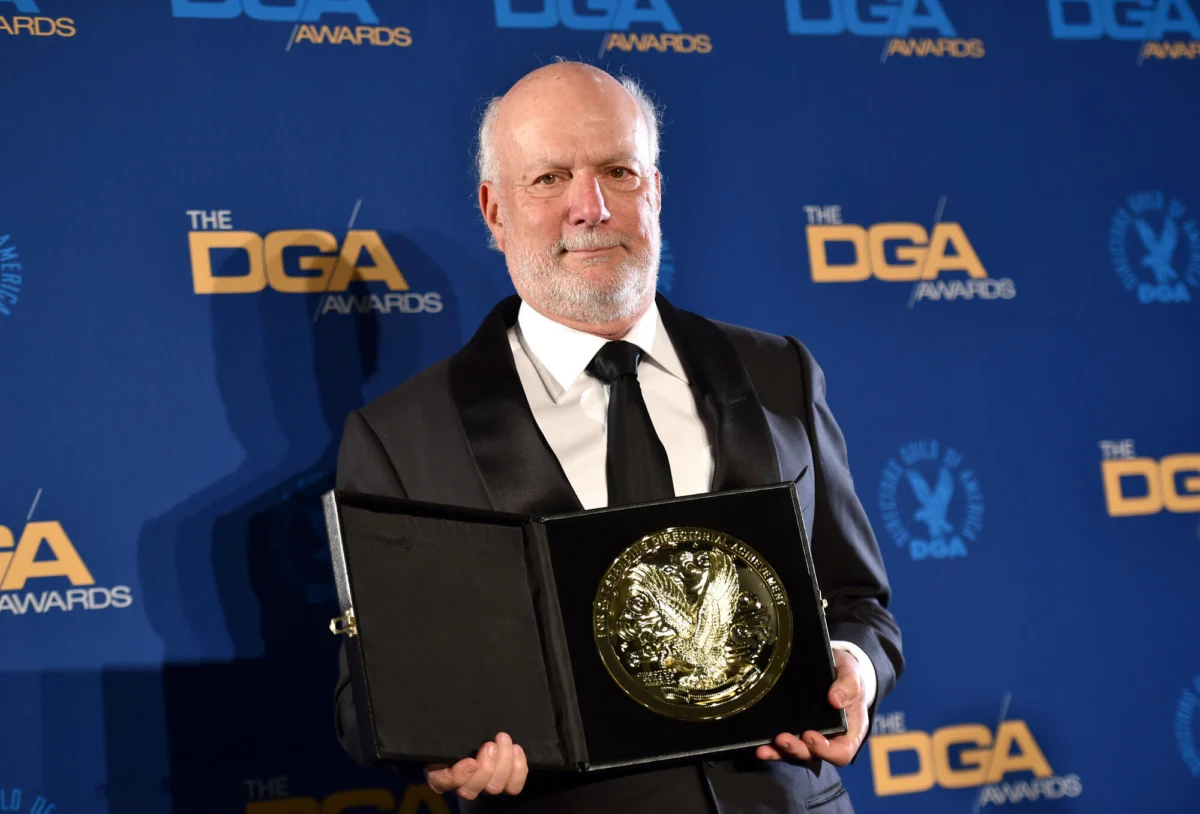
The television landscape, as we know it today, was etched in the creative vision of James Burrows. As a director, producer, and co-creator, Burrows did not merely film television programs; he authored the grammar of the modern sitcom. Following his passing this past Friday, the industry finds itself mourning not just a titan of the craft, but the man who served as the invisible hand behind the most successful comedy series in history. From the bustling taxi garage in New York to the iconic corner booth at Cheers and the coffee-fueled living rooms of Friends, Burrows’ influence remains an omnipresent force in global pop culture.
A Career Defined by Excellence
James Burrows was a master of the multi-camera format, a technical discipline he elevated to an art form. Over a career spanning more than four decades, he amassed a staggering 48 Emmy Award nominations and 11 wins, alongside five Directors Guild of America (DGA) Awards. His induction into the Television Hall of Fame in 2006 was merely a formal recognition of what the industry had known for years: James Burrows was the gold standard.
His reach was profound. Whether it was The Mary Tyler Moore Show, The Bob Newhart Show, Laverne & Shirley, or the massive cultural phenomena of Cheers, Frasier, Friends, and Will & Grace, Burrows’ name on a project was a shorthand for quality. He directed more than 50 television pilots, a role in which he was consistently sought out, not just for his technical precision, but for his uncanny ability to identify the comedic heartbeat of a show before it ever aired.

Chronology: From Broadway Roots to Television Legend
Born on December 30, 1940, in Los Angeles, James Edward Burrows was the son of legendary writer-director Abe Burrows. Growing up surrounded by the titans of the American stage—his father was the mastermind behind Broadway classics like Guys and Dolls and How to Succeed in Business Without Really Trying—Burrows was steeped in the language of performance from birth.
After his family relocated to New York City, he was naturally drawn to the theater, eventually graduating from the prestigious Yale University School of Drama. His early career saw him cutting his teeth on Broadway productions, learning the intricacies of pacing, blocking, and the relationship between performer and audience. This theatrical foundation proved pivotal when he eventually returned to Los Angeles.
His transition to television was serendipitous. His growing reputation as a director of theater landed him an opportunity to helm an episode of The Mary Tyler Moore Show. That single assignment served as the catalyst for a career that would encompass more than 1,000 episodes of television. By the 1980s, he had become the primary architect of the sitcom, taking home back-to-back Emmys in 1980 and 1981 for his work on Taxi.

The 1990s and 2000s saw him cement his legacy. His work on Cheers—which he co-created with brothers Glen and Les Charles—remains his most significant contribution to the medium. Directing 236 episodes of the show, he garnered 23 Emmy nominations for that single series alone, setting a standard for narrative and comedic consistency that few have matched since. Even in his final years, Burrows remained active, notably appearing in the 2026 Emmys ballot for his work on The Comeback, where he played himself in an episode exploring the intersection of traditional comedy and artificial intelligence—a fitting swan song for a man who spent his life evolving with the medium.
The "Burrows Touch": Technical Innovation and Actor Development
To understand Burrows’ impact, one must look at both the technical and the interpersonal. Technically, he is widely credited with adding a fourth camera to the traditional three-camera sitcom setup. While seemingly a minor adjustment, this innovation fundamentally changed the way sitcoms were shot, providing directors with greater flexibility and allowing actors more natural movement across the set.
However, Burrows’ true genius lay in his philosophy toward actors. He famously eschewed the role of the "dictator" director. Instead, he preferred to act as a facilitator, focusing on chemistry and character development. He believed that if a cast truly liked one another off-screen, that affection would manifest as tangible, infectious energy on-screen.

His methods were legendary. For the cast of Friends, he famously organized a trip to Las Vegas before the show’s premiere, offering them a prophetic warning: "Put your seatbelt on, because this is your last shot at anonymity. Once the show comes on the air, you guys will never be able to go anywhere without being hounded." This dedication to nurturing talent, particularly inexperienced stars, became a cornerstone of his success. He created environments where actors felt safe to take risks, which in turn allowed for the authentic, grounded performances that defined his most successful shows.
Reflections and Industry Legacy
Burrows remained remarkably humble about his stature. In a 2023 interview with IndieWire, he distilled his philosophy to its essence: "The camera, I leave that to Spielberg and Scorsese. I understand characters. I understand what’s funny. I understand the essence of keeping it moving and keeping the energy going. It’s all theatrical."
This modesty belied the massive scope of his influence. In 2016, NBC dedicated a two-hour prime-time special, Must See TV: An All-Star Salute to James Burrows, to honor his career. The event was a testament to his impact; the stage was filled with hundreds of performers and collaborators whose careers he had either launched or significantly shaped. That a major network would devote such significant airtime to a man who preferred to remain behind the scenes speaks volumes about his status as a pillar of the television industry.

The Lasting Implications for Television
As the television industry shifts toward new formats and technologies, the shadow of James Burrows will continue to loom large. He proved that the "multi-cam" sitcom, when executed with precision and heart, is a durable, powerful vessel for storytelling. He taught generations of directors that comedy is not just about the joke—it is about the rhythm, the space, and the humanity of the characters.
His death marks the end of an era, but his imprint is permanent. Every time a new pilot is filmed with the intent of creating a lasting ensemble, or every time a director focuses on the chemistry of a cast over the technical constraints of a set, they are practicing the "Burrows way." He left the industry not just with a list of accolades, but with a blueprint for how to create television that resonates with millions of people for decades.
In the final assessment, James Burrows was more than a director; he was the orchestrator of the American living room. He brought families together around the television set, taught us to laugh at the absurdities of life, and defined the standard for what a sitcom could be. Though he is gone, the laughter he cultivated remains, echoing through the thousands of episodes he left behind—a legacy that is, by any measure, immortal.
 Ammar Sabilarrohman
 Siti Muinah
 Iffa Jayyana
