

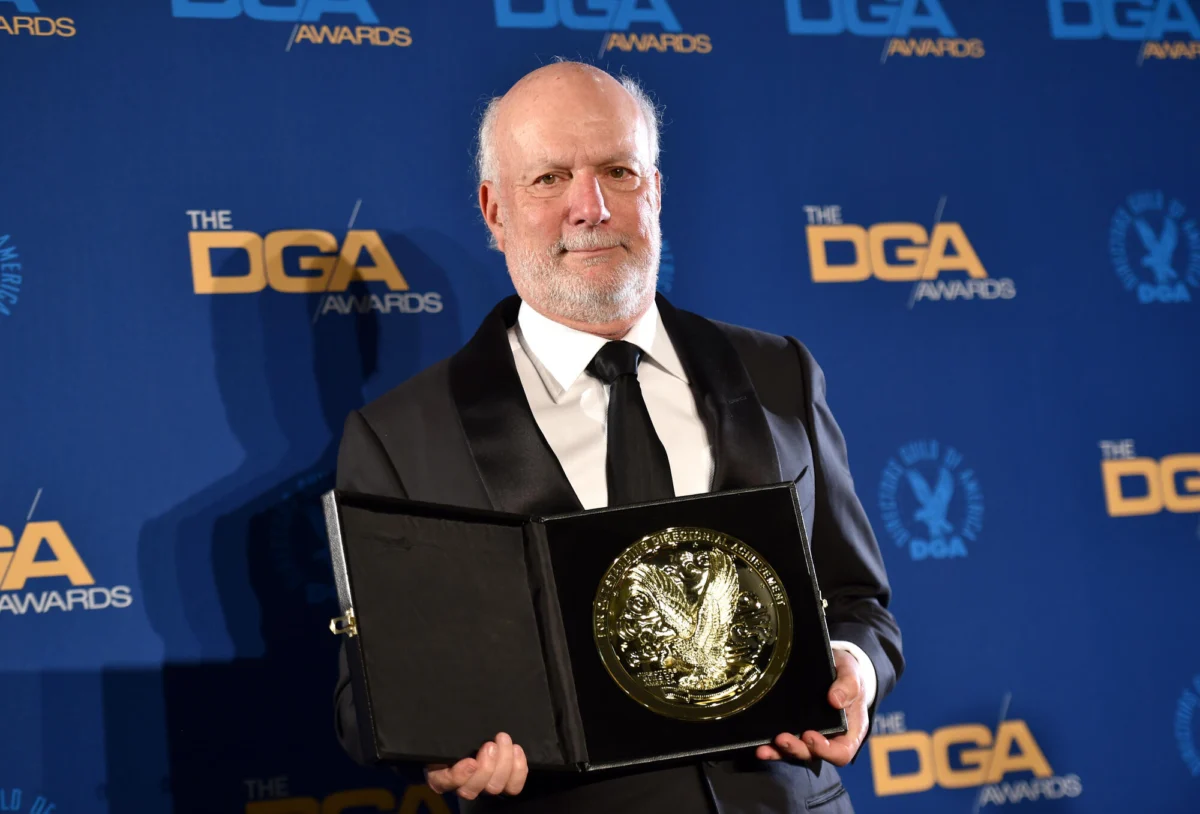
The television landscape is often defined by its stars—the actors who deliver the punchlines and the writers who craft the wit. Yet, for over half a century, the true architect of the American sitcom remained largely behind the camera, meticulously calibrating the timing, rhythm, and heart of the shows that defined generations. James Burrows, the legendary director and producer whose creative vision shaped the bedrock of modern television comedy, passed away this past Friday at the age of 85. His departure marks the end of an era, leaving behind a legacy that is not merely measured in episodes directed, but in the collective joy of millions.
A Legacy Written in Laughter: The Core Facts
James Burrows was more than a director; he was the primary craftsman of the multi-camera sitcom format. Over a career spanning five decades, he brought his unparalleled sensibility to some of the most critically acclaimed and commercially successful programs in history, including The Mary Tyler Moore Show, Cheers, Friends, Frasier, Will and Grace, and The Big Bang Theory.
His influence was so profound that he is widely regarded as the most influential television comedy director of all time. An 11-time Emmy Award winner and a 2006 inductee into the Television Hall of Fame, Burrows’s technical precision and deep understanding of character dynamics ensured that his shows did not just survive; they thrived, becoming cultural touchstones that transcended their original broadcast dates.
A Chronology of Mastery: From ‘Mary Tyler Moore’ to ‘The Big Bang Theory’
To trace the career of James Burrows is to trace the history of the modern American sitcom. Born into a family of talent—his father was the famed playwright and director Abe Burrows—James carved his own path, initially in the theater before finding his calling in the burgeoning world of television.

The Formative Years: The 1970s
Burrows cut his teeth during the golden age of the 1970s. His early work on The Mary Tyler Moore Show demonstrated an uncanny ability to balance workplace dynamics with genuine human emotion. It was here that he began to refine the "Burrows style"—a focus on the intimacy of the performance, even within the rigid constraints of a multi-camera studio setup. He understood that the laugh track was only as effective as the vulnerability of the actor delivering the line.
The ‘Cheers’ Era: Setting the Standard
If there was a definitive moment in Burrows’s career, it was the inception of Cheers in 1982. Alongside his creative partners, Burrows built a world that felt lived-in, warm, and endlessly repeatable. His direction allowed Cheers to become a masterclass in ensemble acting. He taught the industry that a sitcom didn’t need to be frantic to be funny; it just needed to be true.
The 1990s and Beyond: Defining Generations
As the medium evolved, so did Burrows. He was the visionary behind the pilot of Friends, establishing the visual language for a show that would become a global phenomenon. In the late 90s, he transitioned to Will and Grace, where his direction brought a sharp, contemporary edge to the sitcom format. Even in his later years, his touch remained steady, as evidenced by his contributions to The Big Bang Theory, a show that proved the multi-camera format still held immense power in the 21st century.
Supporting Data: By the Numbers
The sheer volume of Burrows’s output is staggering. Throughout his 50-year career, he directed over 1,000 episodes of television. His involvement was often the "golden seal" of approval for a new series; networks knew that if Burrows was in the director’s chair, the show stood a fighting chance at longevity.

- 11 Emmy Awards: A record-breaking achievement that cements his status as the most decorated director in the history of the sitcom.
- The "Burrows Touch": While impossible to quantify, industry insiders often spoke of his ability to "fix" a script on the floor. He could identify why a joke wasn’t landing in a matter of seconds, often rearranging the staging or the delivery to unlock the humor inherent in the writing.
- A Mentor to Many: Beyond his technical skills, Burrows was known for his generosity. He mentored dozens of younger directors, actors, and writers, many of whom have gone on to lead their own successful productions, carrying forward his principles of timing and character-driven comedy.
Official Responses: A Chorus of Grief
The news of Burrows’s passing has prompted an outpouring of grief from across the entertainment industry, reflecting the deep affection he inspired in those who worked with him.
Christopher Nolan, president of the Directors Guild of America, issued a poignant statement: "Our Guild has lost a legend. With more than 40 years directing more than 1,000 episodes of the most critically acclaimed and audience-beloved sitcoms of all time, James Burrows was the modern master of the sophisticated comedy… He was truly incomparable and will be profoundly missed."
Former collaborators were equally vocal. Eric McCormack, who starred in Will and Grace, shared an emotional tribute on Instagram: "We lost a giant today, a mentor to me, and a dear friend. The 800 lb gorilla of television comedy for 50 years, he was beloved by everyone, and has left not a mark but a footprint. An incredible legacy."
Tony Danza, who gained fame on the Burrows-directed Taxi, wrote on X: "We have lost the greatest of all time. Jimmy Burrows. I know I wouldn’t be here without him."

Cedric the Entertainer, who worked with him on The Neighborhood, remarked on his technical prowess: "He put the Direct in TV. The amount of laughs and joy his vision has brought into our homes is unmeasurable."
NBC, the network that served as the home for many of his most iconic series, noted in a statement: "Jimmy Burrows was the man behind the curtain. He knew how to make us laugh, what buttons to push and was the absolute master of getting the most out of every joke."
The Implications: What Remains?
The loss of James Burrows is a seismic event for the television industry, but it also prompts a reflection on the future of the sitcom. As streaming platforms move toward more cinematic, single-camera styles, the traditional multi-camera format—which Burrows championed—is often viewed as a relic of the past. However, the endurance of the shows he directed suggests that the "Burrows style" of comedy remains fundamentally linked to how audiences experience joy.
The End of the "Studio Audience" Era
Burrows was a fierce defender of the live studio audience. He believed that the feedback loop between the actors and the viewers was essential to the rhythm of a comedy. His death marks the loss of the most prominent voice advocating for that connection. The industry now faces the challenge of maintaining that high standard of live-performance energy without its greatest mentor.

A Legacy of "High Art"
Perhaps the most significant implication of Burrows’s career is the elevation of the sitcom from "low-brow" entertainment to "high art." He took the mundane—a bar, a coffee shop, a workplace—and turned them into stages for profound human connection. He proved that a laugh could be a vehicle for empathy.
As the television industry moves forward, the "Burrows standard"—that relentless pursuit of the perfect comedic beat—will remain the benchmark against which all future sitcom directors are measured. While the man himself is gone, his footprint is indelible. Every time a new generation discovers the warmth of Cheers or the camaraderie of Friends, James Burrows is there, ensuring that the laughter continues.
He was, in the words of those who knew him best, the giant upon whose shoulders the modern comedy world stands. His life was a testament to the idea that laughter is not merely an escape, but a way of understanding ourselves and each other. The screen may be dark for now, but the joy he created remains as bright as ever.
 Ammar Sabilarrohman
 Siti Muinah
 Iffa Jayyana
