

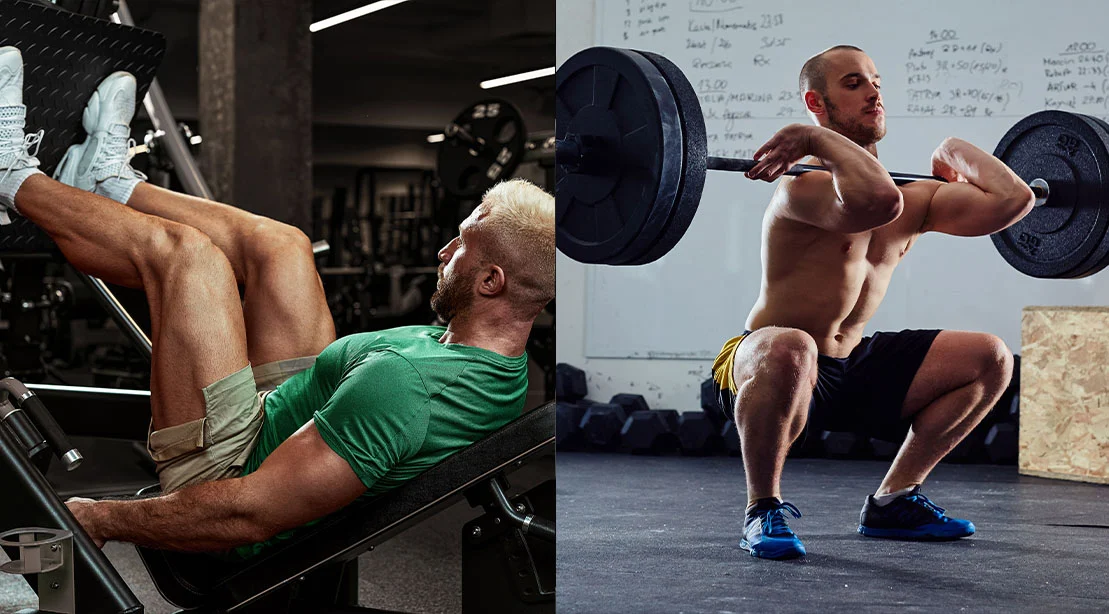
For decades, the barbell squat has worn the crown as the undisputed king of leg exercises. Walk into any hardcore gym, from the dust-caked powerlifting dungeons to the gleaming, high-end commercial clubs, and you will inevitably hear the mantra: "If you want big legs, you have to squat." It is a sentiment repeated with the fervor of religious dogma. But is it accurate?
The reality is that for many beginners, the barbell squat is arguably one of the most inefficient—and potentially dangerous—choices for lower-body development. This isn’t a condemnation of the exercise itself, but rather a long-overdue reality check regarding biomechanics, structural integrity, and the evolution of modern strength training.
The Myth of the "Universal" Exercise
The fitness industry has long been obsessed with absolutes. Deadlifts are mandatory; the bench press determines your worth as a lifter; and if you aren’t squatting, you aren’t training legs. This romanticization of "old-school" movements ignores the cold, hard science of human physiology.
Not everyone is built to squat. This isn’t a matter of opinion or a lack of willpower; it is a matter of skeletal architecture. Research consistently demonstrates that biomechanical variables—including hip joint structure (acetabular orientation), femur length, pelvic geometry, muscle origin and insertion points, and ankle dorsiflexion—vary dramatically from person to person.
When you place a barbell on your back, you are introducing a high-stress, technical movement that requires a perfect alignment of these variables. If a lifter possesses long femurs and limited ankle mobility, the body will naturally force an excessive forward lean to maintain a center of gravity. This shifts the stress from the quadriceps to the lumbar spine, effectively turning a "leg builder" into a high-risk spinal compression event.
Chronology of a Training Misconception
The obsession with the barbell squat can be traced back to the mid-20th century, a time when specialized gym equipment was scarce. In the absence of sophisticated leverage machines, the barbell was the only tool available for overloading the lower body.
The Early Era: Survival of the Fittest
In the 1960s and 70s, the "Squat or Nothing" mentality was born out of necessity. Bodybuilders and powerlifters trained with what they had. If an athlete couldn’t squat safely, they were often labeled as lacking "grit." This cultural stigma persisted for decades, ignoring the fact that many lifters were retiring with chronic disc issues, hip impingements, and knee degeneration.
The Technological Pivot
As we entered the 1990s and 2000s, the engineering of fitness equipment underwent a revolution. The introduction of the plate-loaded pendulum squat, the modern leg press, the belt squat, and advanced hack squat machines provided a way to isolate the legs while removing the "balancing act" required by free weights. Despite these advancements, the "Barbell First" culture remained, often pushed by coaches who had not yet integrated modern biomechanical insights into their programming.
Supporting Data: The Case Against Compulsory Squatting
The argument against the universal squat is supported by clinical observations. According to studies examining hip joint structure and its impact on performance, the "ideal" squat depth is not a standardized metric for every human.
When a lifter enters a squat, they are attempting to reach a degree of hip flexion that their specific socket depth may not permit. If the femoral neck hits the edge of the acetabulum (the hip socket) before parallel, the lifter will experience a "butt wink" (posterior pelvic tilt). Repeatedly forcing this movement under a heavy barbell creates an environment for labral tears and long-term spinal degradation.
Furthermore, the "kinetic chain" argument—that squats are superior because they train stabilization—is often overstated for beginners. A beginner’s primary goal is hypertrophy and structural adaptation. By introducing a complex, high-risk movement before the lifter has mastered basic motor patterns or gained the necessary joint stability, we are essentially asking them to build a house on a foundation that hasn’t cured.
Official Perspectives: Why "The King" Has Been Dethroned
Leading strength coaches and physical therapists are increasingly advocating for a "machine-first" approach for the general population. The consensus is shifting: the barbell squat is a skill, not a mandatory exercise.
"The goal of leg training is to stimulate the muscles of the lower body," says one leading physical therapist. "The goal is not to prove you can balance a metal bar on your shoulders while navigating your unique, and potentially restrictive, skeletal geometry."
The professional community is now emphasizing the stimulus-to-fatigue ratio. The barbell squat offers a high stimulus for the legs but also a massive cost to the central nervous system and the lower back. Conversely, a leg press or a pendulum squat offers a high stimulus for the quadriceps with significantly lower spinal loading. For the vast majority of lifters—those who are not competitive powerlifters—the risk-to-reward ratio of the barbell squat is simply unfavorable.
Implications for the Modern Lifter
If you are a beginner, or even an intermediate lifter who has struggled with chronic back pain, the implications of these findings are profound.
1. The Death of Ego Lifting
The "ass-to-grass" obsession seen on social media is a recipe for orthopedic disaster. Depth should be determined by your individual range of motion, not by what a fitness influencer dictates. If you cannot reach deep without your spine rounding, you are not failing the exercise; you are failing to respect your anatomy.
2. Prioritize Machine Variation
There is no shame in utilizing a pendulum squat or a hack squat. These machines provide a fixed path of motion, which removes the instability of the barbell. This allows the lifter to reach near-failure with confidence, knowing they won’t be trapped under a heavy load if their core strength gives out.
3. The Role of the Smith Machine
The Smith machine, long maligned by the "hardcore" community, is an excellent tool for those who want to learn the mechanics of the squat without the stability requirements of a free bar. It allows for perfect, vertical tension on the quads, which is the ultimate goal of hypertrophy training.
4. A Path to Long-Term Longevity
The most important metric for any lifter is the ability to train for decades. If you are 20 years old, you might be able to get away with bad form for a while. But your lower back has a "long memory." By choosing movements that provide the same muscular stimulation without the unnecessary orthopedic drama, you are investing in your future ability to walk, run, and squat pain-free well into your 50s and 60s.
Conclusion: Redefining "Hardcore"
The true mark of a serious lifter isn’t the weight on the bar; it’s the intelligence of their programming. We must stop viewing the barbell squat as the sole gatekeeper of physical development.
Squats are not "bad," but they are not the only way. For the beginner, the path to massive legs is paved with consistency, controlled intensity, and safe biomechanical patterns. If you can build world-class legs using a leg press, a belt squat, and a hack squat, you are not "cheating." You are simply training smarter.
The next time you walk into the gym, ignore the dogma. Don’t ask, "Should I squat?" Ask yourself, "What is the most effective and safest way for my body to reach its full potential?" If the answer involves a machine, embrace it. You’ll be the one with healthy hips and a strong back in twenty years, while the others are busy looking for a surgeon.
 Lina Hope
 rifanmuazin
 Laily UPN
