

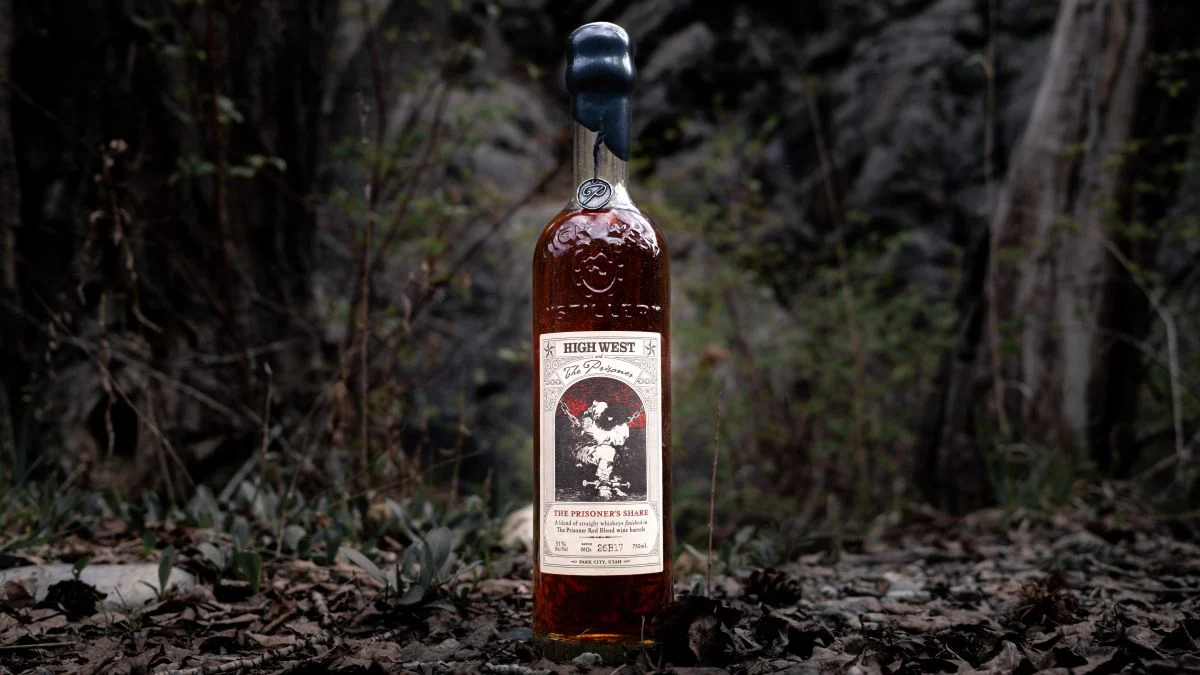
The world of secondary-maturation whiskey has become a crowded, often chaotic marketplace. In an era where distillers are experimenting with everything from tequila and rum to obscure craft beer casks, the "red wine finish" remains one of the most polarizing techniques in the industry. When executed poorly, it acts as a blunt instrument, masking the nuanced character of the spirit with cloying fruit notes and excessive, astringent tannins. However, when handled with surgical precision, it elevates a blend into something transcendent.
High West Distillery, the Utah-based powerhouse that helped define the modern blending movement, has once again demonstrated its mastery of this delicate balance. With the highly anticipated 2026 release of "The Prisoner’s Share," the distillery has not only refined its approach to the wine-barrel finish but has also signaled a pivotal shift in its production philosophy: a move toward total vertical integration.
The Main Facts: A Complex Evolution
The 2026 iteration of The Prisoner’s Share is a masterclass in blending. Priced at an SRP of $175, this release is a non-chill filtered expression bottled at 101 proof (50.5% ABV). It represents a collaborative spirit, blending sourced liquids from industry stalwarts with the distillery’s own increasingly prominent house-distilled inventory.
The whiskey is finished for a period ranging from six months to over two years in barrels previously seasoned with The Prisoner Red Blend, a California wine known for its bold, concentrated profile. This secondary aging is the crucible in which the whiskey transforms, picking up subtle layers of blueberry, dark chocolate-covered espresso beans, fig, and warm baking spices like allspice and cinnamon. Unlike many competitors that allow the wine barrels to suffocate the spirit, High West’s latest release utilizes the fruit-forward notes as a scaffold, supporting the robust backbone of the underlying bourbon and rye.
A Chronology of Craft: From Sourcing to Sovereignty
To understand the significance of the 2026 Prisoner’s Share, one must look at the history of High West. Founded in 2006 by David Perkins and his wife, Jane, in the mountains of Park City, Utah, the distillery began as a pioneer in the art of blending. In its formative years, High West relied on sourcing high-quality stocks from legendary distilleries like MGP in Indiana. This strategy allowed them to create iconic profiles like the "Bourye" (a blend of bourbon and rye) while they built their own distilling capacity.
- 2006: High West is founded, establishing the first legal distillery in Utah since the 1870s.
- 2010s: The distillery gains international acclaim for expressions like A Midwinter Night’s Dram, setting a gold standard for port-finished rye whiskey.
- 2022: The inaugural release of The Prisoner’s Share debuts, marking the first formal collaboration with The Prisoner Wine Company. The release is met with critical praise for its restraint.
- 2025: The brand continues to iterate on the blend, fine-tuning the ratios of corn and rye.
- 2026: The current release signifies a "coming of age" for the distillery, as it incorporates High West’s own pot-distilled bourbon alongside its house-made rye for the first time in this specific expression.
Supporting Data: The Anatomy of the Blend
The complexity of The Prisoner’s Share 2026 lies in its technical composition. The blending team at High West has synthesized six distinct whiskey components, each chosen for its specific chemical contribution to the final palate.
The breakdown of the 2026 blend includes:
- MGP Straight Bourbon: 75% corn, 21% rye, 4% barley malt.
- Bardstown Bourbon Company Straight Bourbon: 60% corn, 40% rye.
- Unnamed Kentucky Straight Bourbon: 78% corn, 10% rye, 12% malted barley.
- High West Straight Bourbon: 80% corn, 20% malted barley.
- MGP Straight Rye: 95% rye, 5% barley malt.
- High West Straight Rye: 80% rye, 20% malted rye.
This granular approach to blending—combining corn-heavy bourbons with high-rye bourbons and traditional rye whiskeys—creates a texture that is remarkably viscous. The presence of High West’s own pot-distilled bourbon, in particular, adds a distinct "ester-driven" profile, which refers to the fruity, aromatic compounds developed during the fermentation and distillation process. The aging of these components spans a significant range, from four to 12 years, ensuring that the younger, punchier whiskies are tempered by the mellow, oak-derived depth of the older stocks.

Official Responses and Sensory Vision
The transition toward using more in-house juice is not merely a logistical milestone; it is a creative one. Tara Lindley, the Director of Sensory and New Product Development at High West, notes that this release serves as a bridge between the distillery’s past and its future.
"This year’s release of The Prisoner’s Share marks a meaningful step forward for us," Lindley stated during the pre-release briefing. "It marks the first time we’ve brought together both our own bourbon and rye in the same expression. Adding our own pot-distilled bourbon alongside the rye creates a richer, more ester-driven profile that brings greater depth, texture, and balance to the wine barrel finish."
Lindley further highlighted the inclusion of a specific legacy component: a 60 percent corn, 40 percent rye bourbon sourced from the distillery’s earliest production runs. By incorporating these "earliest distillations," High West is effectively anchoring the new, modern finish to the original DNA that established the brand two decades ago. This provides a sense of continuity that is often lost in rapidly expanding craft distilleries.
Implications for the Whiskey Market
The implications of the 2026 Prisoner’s Share are twofold. First, it sets a high bar for "finished" whiskeys. As the market becomes saturated with gimmick-driven finishes, the success of this blend serves as a reminder that the quality of the base spirit is non-negotiable. By refusing to let the red wine finish overpower the base, High West is positioning itself as a leader in "thoughtful finishing," a practice that treats the cask as a seasoning agent rather than a mask.
Second, the release underscores a broader trend in the American whiskey industry: the maturation of craft distilleries. Many brands that began as "bottlers" or "blenders" are now hitting a critical mass where their own aged inventory is finally ready for the spotlight. High West is no longer just a curator of other people’s whiskey; they are now the architects of their own profile.
For the consumer, this translates to a more authentic experience. When you sip the 2026 Prisoner’s Share, you aren’t just tasting a wine-finished bourbon; you are tasting a deliberate engineering of flavors that spans a decade of inventory. The interplay between the spice of the rye and the sweetness of the corn, layered over the tannins and dark fruits of the wine casks, creates a profile that is distinctly "High West."
As the bottle hits shelves at select retailers, collectors and enthusiasts should take note. The 2026 release is not merely a continuation of a series—it is a proof-of-concept for the future of the distillery. It proves that a blend can be both complex and balanced, and that in the world of high-end whiskey, the most important ingredient remains the patience of the blender. Whether you are a fan of the specific "Prisoner" wine profile or simply an aficionado of well-aged American spirits, this release demands attention, not for its novelty, but for its profound sense of equilibrium.
 Evan Lee Salim
 Asep Darmawan
 Laily UPN
